
BUSINESS
NSE IPO Sends Rs 12,802 Crore to Public Sellers
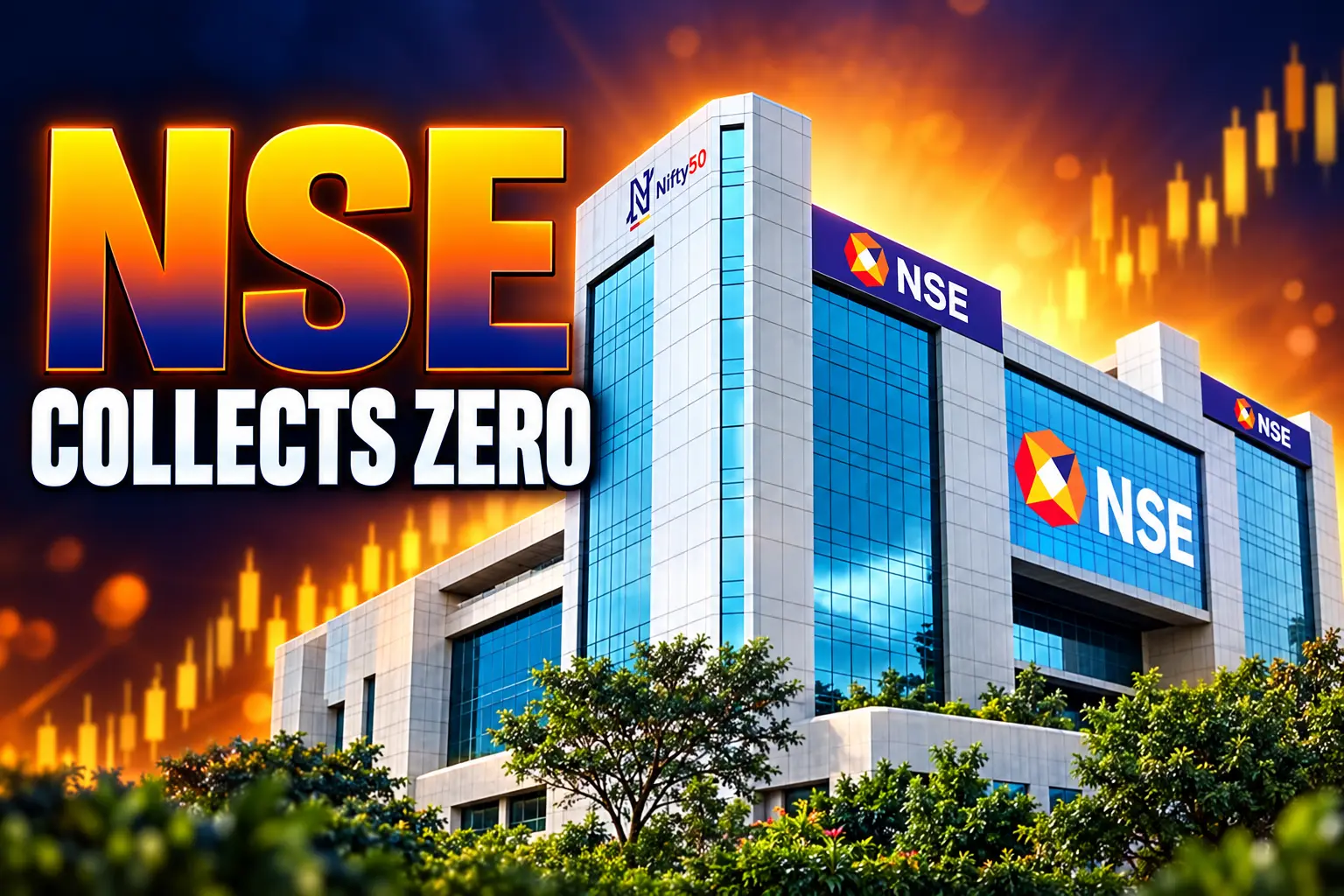
Ten PSUs could book Rs 12,802 crore from the NSE IPO, a pure offer for sale that tops up weak public insurers while NSE raises nothing.

Ten public-sector shareholders stand to book about Rs 12,802 crore of profit from the NSE IPO, on stock that cost them roughly Rs 9.20 crore. Bidding opens on September 17 at Rs 1,700 to Rs 1,785 a share, and the issue is a pure offer for sale.
NSE itself will take home nothing. The cash goes to old owners, and the slice that matters most sits with three general insurers that have been below the solvency line, plus State Bank of India.
NSE Collects Zero From Its Own Listing
The Red Herring Prospectus files an offer of up to 12,64,36,650 equity shares of Rs 1 face value, with no fresh issue. At the cap of Rs 1,785 that is an issue of Rs 22,569 crore, second only to Hyundai Motor India’s Rs 27,870 crore sale in 2024, and it values the exchange at Rs 4.42 lakh crore on 247.5 crore shares.
About 5.1 percent of the equity is changing hands. After issue expenses, every rupee goes to selling shareholders. The company, founded in 1992, has no identifiable promoter, and the shares will list on BSE because a recognised exchange cannot list on its own board.
THE ISSUE IN BRIEF
- Offer type: A 100 percent offer for sale; NSE receives Rs 0 of the proceeds.
- Price and lot: Rs 1,700 to Rs 1,785 a share, eight shares a lot, Rs 14,280 at the cap.
- Employee slice: Up to Rs 70 crore reserved, with a Rs 170 discount for eligible staff.
- Retail share: 35 percent of the net offer is set aside for retail individual bidders.
The draft filed in June had contemplated about 14.89 crore shares and a sale near Rs 30,000 crore. Several holders then cut their tickets, trimming the offer by about 15 percent. Full papers sit in the exchange’s offer-documents library, and the abridged prospectus names the top sellers with the weighted average cost of each block.
A SEBI settlement in 2026, later revised to about Rs 1,491 crore, had cleared a path that was blocked for years by regulatory disputes. The public is being invited in after that wait, at a multiple the sellers locked in decades ago.
Three Insurers Need the Cash More Than SBI Does
SBI is the largest single seller, offering up to 1,59,69,410 shares. Grouped with SBI Capital Markets, the bank’s family still looks like the headline winner. The quieter cluster is insurance.
New India Assurance, General Insurance Corporation of India, United India Insurance, Oriental Insurance and National Insurance could together take Rs 5,648.54 crore at Rs 1,785. That is 44 percent of the Rs 12,811 crore the 10 public sellers stand to raise, and it lands on balance sheets that have already absorbed large government cheques.
The Union Cabinet had earlier given in-principle backing for capital infusion for three insurers, Oriental, National and United India, after they breached solvency rules. A Lok Sabha reply from the Department of Financial Services later tallied Rs 17,450 crore of past support across 2019-20 to 2021-22.
It was not enough. The Reserve Bank’s June Financial Stability Report said the three stayed below the 1.5 regulatory solvency ratio in every quarter from the fourth quarter of FY25 through the fourth quarter of FY26. As of March 31, 2026, National Insurance’s ratio was -1.1, Oriental Insurance’s -1.6 and United India Insurance’s -1.4. New India Assurance, the only listed state general insurer, stood at 1.84.
WHERE THE SOLVENCY LINE SITS
- The rule: IRDAI requires a solvency ratio of 1.5, meaning capital must cover one-and-a-half times the required buffer.
- The three below: Oriental, National and United India printed negative ratios on March 31, 2026, so liabilities exceeded the capital set aside to back them.
- The gap: Icra Ltd estimated an equity top-up of Rs 38,900-39,800 crore to restore the 1.5 ratio by March 2027.
- The IPO slice: Those three would raise Rs 2,669.82 crore at the cap, a useful cheque that still leaves the Icra hole almost intact.
General Insurance Council figures compiled for FY26 show the four state general insurers’ combined underwriting loss at Rs 29,070.57 crore, up 58.3 percent from a year earlier. United India had the sharpest slide. New India still reported a net profit.
Sanjay Joshi, chairman and managing director of Oriental Insurance, has already said how his firm will treat the sale. Oriental holds 3.52 crore NSE shares and is offering 49.57 lakh of them, about 14 percent of the block, for Rs 884.82 crore at the cap.
The proceeds from the NSE IPO would be booked as profit. It will improve the company’s financials. Besides, it is going to provide liquidity.
Sanjay Joshi, Chairman and Managing Director, Oriental Insurance Company
He also said the firm is targeting a profit in 2026-27 and that the inflow should help solvency. That is the second-order use of this IPO: a listed-market cheque doing work the budget has been asked to do for years.
Why SBI’s Smaller Ticket Is Not a Retreat
On paper, SBI cut its offer from 2.475 crore shares in the draft to 1.597 crore in the RHP. SBI Capital Markets was then added as a seller for 87,80,590 shares, the same block the parent had moved across. Combined, the SBI group is still offering 2,47,50,000 shares, worth Rs 4,417.88 crore at Rs 1,785.
SBI paid a weighted average of Rs 0.80 a share. SBI Caps paid Rs 0.38. The group’s buy cost on the stock now on sale is a rounding error beside the proceeds. Because SBI Caps is a seller, merchant-banker rules confine it to marketing the issue rather than running the books.
Other public holders did shrink their offers. Bank of Baroda moved from 1.099 crore shares to 76.90 lakh, Stock Holding Corporation of India from 1.089 crore to 61.88 lakh, GIC from 1.066 crore to 61.88 lakh, National Insurance from 60 lakh to 40 lakh, and Indian Bank from 24.8 lakh to 15 lakh. New India and United India left their tickets unchanged. The prospectus does not give a single reason for the cuts. Holding more of a listing they still like is the simplest reading.
LIC Stays Put at 10.72%
Life Insurance Corporation of India is NSE’s largest shareholder at 10.72 percent, or about 26.53 crore shares, and it is not in the offer. At Rs 1,785 that block is worth Rs 47,356 crore on paper. LIC also has a right to nominate a director to the governing board. The listing will mark that holding to market every session, without putting a single share in the sale.
Premji Invest’s PI Opportunities Fund and Radhakishan Damani, who hold 2.35 percent and 1.58 percent, are also staying out. The people selling beside the PSUs are mostly financial sponsors: Canada Pension Plan Investment Board (up to 1,18,74,060 shares, bought at a weighted Rs 324.13), Temasek-owned Aranda Investments (1,12,46,336 shares at Rs 62.38) and Morgan Stanley’s MS Strategic (1.10 crore shares at Rs 66.54). Those three blocks alone are worth about Rs 6,090 crore at the cap.
Even after the sale, SBI will still hold roughly 2.6 percent and SBI Caps about 4.0 percent. Banks and insurers may own up to 15 percent of a recognised exchange. Other residents face a five percent cap on individual holdings unless SEBI gives prior approval, and non-resident ownership is capped at 49 percent. Anyone at 2 percent or more must meet fit-and-proper tests in the bid form.
The 10 Public Sellers, Ranked by Proceeds
The 10 public-sector names account for about 57 percent of the issue at the cap, or Rs 12,811 crore of proceeds. Against the stated Rs 9.20 crore combined buy cost, that is a profit of Rs 12,802 crore before tax. Most of that cost sits with GIC, whose weighted average of Rs 5.26 a share is far above the sub-rupee prices paid by SBI, New India and the other early holders.
PROCEEDS AT RS 1,785
| Seller | Shares offered | Buy cost (Rs/share) | Proceeds (Rs crore) |
|---|---|---|---|
| State Bank of India | 1,59,69,410 | 0.80 | 2,850.54 |
| The New India Assurance Co. | 1,05,00,000 | 0.32 | 1,874.25 |
| SBI Capital Markets | 87,80,590 | 0.38 | 1,567.34 |
| Bank of Baroda | 76,90,375 | 0.54 | 1,372.73 |
| Stock Holding Corporation of India | 61,87,500 | 0.46 | 1,104.47 |
| General Insurance Corporation of India | 61,87,500 | 5.26 | 1,104.47 |
| United India Insurance Co. | 60,00,000 | 0.50 | 1,071.00 |
| Oriental Insurance Co. | 49,57,000 | – | 884.82 |
| National Insurance Co. | 40,00,000 | – | 714.00 |
| Indian Bank | 15,00,000 | – | 267.75 |
Buy-cost cells are blank where the abridged prospectus did not list a weighted average among the top 10. New India’s Rs 0.32 cost implies a return of about 5,578 times at the cap. SBI’s Rs 2,849.26 crore profit on a Rs 1.28 crore cost is the single largest gain. Actual cheques will move with the final offer price and with how many of the offered shares are sold.
What the Public Is Being Asked to Pay
FY26 profit after tax was Rs 10,302 crore, on operating revenue of Rs 16,601 crore. At Rs 1,785 the stock is priced at 42.9 times those earnings. SAMCO Securities put the same multiple at 42.89 times, with 13.76 times book and 26.61 times FY26 revenue. Operating EBITDA margin was 66.85 percent, and the exchange had no fund-based borrowings, with treasury investments of Rs 64,771.28 crore.
On a plain earnings multiple, that cap price still screens cheaper than listed BSE, which has been changing hands nearer 49 times. BSE’s profit has also been growing faster in recent quarters, so the listing is being sold as scale and cash generation rather than as a growth re-rating. Options fees remain a large share of revenue, which is the risk several brokers have flagged around tighter F&O rules.
Grey-market quotes on September 15 were about Rs 190 a share over the cap, implying Rs 1,975, a 10.6 percent listing premium if that unofficial print holds. Those quotes had been higher earlier in the month. Grey-market premia are not a promise of the listing price.
THE OFFER CALENDAR
- September 16, 2026: Anchor investor bidding, one working day before the public offer.
- September 17, 2026: Public bidding opens (Thursday).
- September 21, 2026: Bidding closes (Monday), with UPI mandates due by 5 p.m.
- September 22, 2026: Basis of allotment expected.
- September 24, 2026: Shares proposed to list on BSE (Thursday).
Book-running managers include Kotak Mahindra Capital, JM Financial, Morgan Stanley, Citigroup, J.P. Morgan, HSBC and a long tail of domestic houses. Morgan Stanley and ICICI Securities are associates of selling shareholders, so they are limited to marketing, the same constraint that applies to SBI Caps.
Oriental’s Chairman Is Already Booking the Gain
Joshi’s line is the cleanest statement of what this sale does. Oriental will book the NSE shares as profit, improve reported financials, and take in cash. United India and National Insurance, which share the same solvency problem, get the same accounting outcome on Rs 1,071 crore and Rs 714 crore if they sell in full at the cap. New India and GIC, which are in better shape, still take the two largest insurance cheques.
SBI and Bank of Baroda will report investment gains rather than a solvency rescue. SHCIL, owned in part by IFCI, LIC and GIC, monetises a 4.44 percent holding. Indian Bank’s Rs 267.75 crore is the smallest public ticket and still several hundred times its original outlay.
Buyers should be clear about the other side of that ledger. They are not funding new matching engines, data centres or clearing capital at NSE. They are buying stock from the government-owned banks and insurers that helped set the exchange up, at 42.9 times last year’s earnings, while LIC, Damani and Premji Invest keep theirs. If the three weak insurers still need tens of thousands of crore after this cheque clears, the listing will have paid a dividend, not closed the gap.
Anchor books open on September 16. Public bids follow on September 17.
Disclaimer: This article is news reporting and analysis for information only, and it is not a recommendation to bid for, buy, or sell NSE shares or any other security. It does not constitute investment advice, a research report, or a solicitation under SEBI rules. Readers should consult a SEBI-registered investment adviser or research analyst and read the Red Herring Prospectus before acting, because allotment, pricing, and listing gains are uncertain. Share counts, prices, proceeds, and solvency figures reflect the offer documents and official statements available on September 15, 2026, and they may change with the final offer price, the number of shares sold, and later company disclosures.

A CubeSat Will Age Whisky That Never Comes Home

A Charity Quote Cost Shia LaBeouf the FKA twigs NDA

Looker Turned a Model’s Body Into Ad Inventory

Infinity Ward Bets a Paid DMZ Will Stick This Time

Disney Sidesteps a Kimmel Renewal as Failla Cites Losses

How to Get Pre Boarding on Southwest – Skip the Line with These Tricks

False AI Intel Nearly Put US Crews on a Chinese Ship

Tim Cook’s $4.6 Trillion Apple Still Runs on One Phone

Dunes Air Sues Nora Fatehi Over Its Luxury Jet

Australia Treats Cloud Software Payments as Taxable Royalties
-
 TRAVEL3 years ago
How to Get Pre Boarding on Southwest – Skip the Line with These Tricks
-
 NEWS1 month ago
False AI Intel Nearly Put US Crews on a Chinese Ship
-
 BUSINESS2 months ago
Tim Cook’s $4.6 Trillion Apple Still Runs on One Phone
-
 ENTERTAINMENT1 month ago
Dunes Air Sues Nora Fatehi Over Its Luxury Jet
-
 NEWS1 month ago
Australia Treats Cloud Software Payments as Taxable Royalties
-

 NEWS1 month ago
OpenAI Posts a Navier-Stokes Proof Clay Has Not Touched
-

 LIFESTYLE3 years ago
How Long Does It Take for Armpit Hair to Grow? The Stages of Hair Growth and How to Shave It
-

 LIFESTYLE3 years ago
How Often Do You Have to Change a Monkey’s Diaper? The Truth About Pet Monkeys