
BUSINESS
Washington Bets US Energy Can Replace India’s Russian Oil
A State Department pitch to supply India with US gas and Venezuelan crude lands as a 100% tariff law starts its 30-day clock.

Washington wants to become a huge source of India’s energy, a senior State Department official said, after a new law authorized 100% tariffs on buyers of Russian oil. The pitch is not a future cargo list. US cooking gas and LNG already move into India. Russian crude still pays most of the oil bill.
The official tied the sales talk to the Lindsey O. Graham Sanctioning Russia and Iran Act of 2026, which President Donald Trump signed on September 18, 2026. The law can tax every US-bound good from a top buyer of Russian oil or gas. It also lets the president park that tax with a national-interest waiver. That is the wager: sell India a replacement barrel, and keep the hammer in the drawer.
The Cooking-Gas Trade Already Shifted to America
The official said the United States is now the world’s largest exporter of LPG and the second-largest exporter of LNG, and that hydrocarbon shipments are rising. The LPG half of that claim already shows up in Indian kitchens. After strikes on Iran closed the Strait of Hormuz on February 28, 2026, Gulf cooking-gas cargoes thinned and US ships filled the gap.
A late-2025 supply deal for 2.2 million tonnes a year had already booked American LPG as a slice of India’s import mix. The war turned that slice into the main course for several months. In August, the United States was still India’s biggest single supplier of both fuels, even as Gulf volumes began to recover once more cargoes cleared the waterway.
INDIA’S AUGUST SNAPSHOT OF US GAS
| Fuel | US cargoes | US share | India’s total imports |
|---|---|---|---|
| LPG | 719,300 tonnes | just above 50% | 1.43 million tonnes |
| LNG | 858,500 tonnes | 34.8% | 2.46 million tonnes |
Those August loads sat on a much larger US export machine. The US Energy Information Administration found that American LNG exports averaged 17.4 billion cubic feet per day in the first half of 2026, 23% more than a year earlier, after new Gulf Coast trains started up. Shipments to Asia more than doubled as Hormuz cut off about 20% of global LNG, much of it Qatari. EIA figures for India alone show US LNG volumes jumping from 6,867 million cubic feet in January to 46,249 million cubic feet in June.
Gulf suppliers have started taking LPG share back as the waterway reopened, which is the limit of the cooking-gas story. Propane in a cylinder is not a barrel of Urals. The State Department is selling a full energy relationship. The crude ledger still belongs to Moscow.
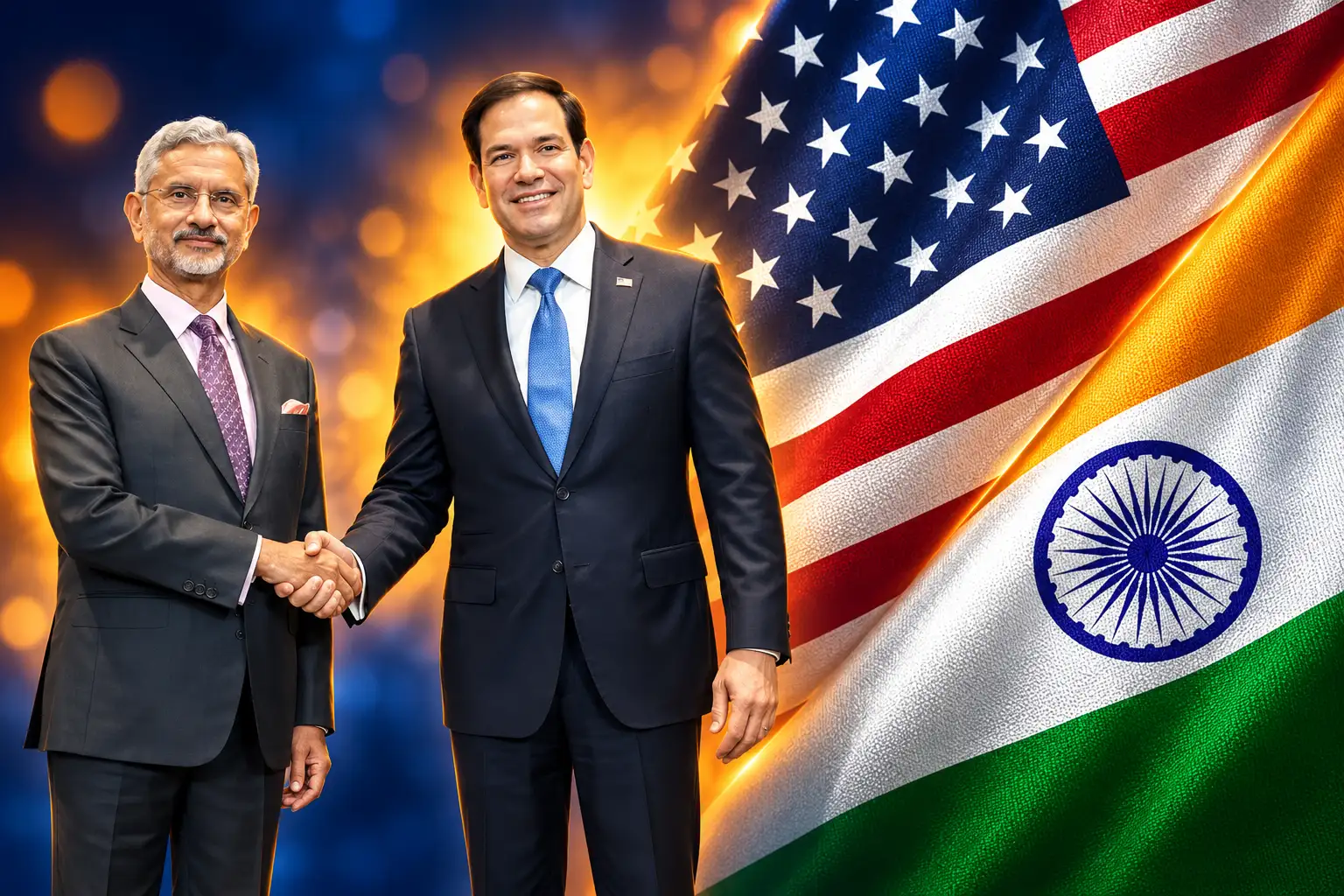
Russian Crude Still Covered More Than Half of July
India buys more than 88% of the crude it refines. In July 2026, Russia supplied $7.27 billion of a $14.21 billion crude import bill, or 51.1%. That is the number the new US law is built to move. It is also the number that makes a 30-day sprint off Russian barrels look fanciful while Hormuz is still a problem.
WHERE THE OIL MONEY WENT
- India’s July bill: Russia’s $7.27 billion was 51.1% of crude imports, ahead of the UAE at 10.8% and Saudi Arabia at 9.6%.
- Russia’s customer list: The Centre for Research on Energy and Clean Air counted India as the second-largest buyer of Russian fossil fuels in June, at €5.5 billion, with crude 83% of that ticket.
- Share of Moscow’s crude: The same tracker put China’s take of Russian crude near 50% and India’s near 36%, with Turkey and the EU far behind.
- The legal tripwire: The Graham Act aims at countries that sat in the top five buyers over the year before it became law and then make new purchases.
Those two percentages describe different piles of oil. India’s 51.1% is Russia’s weight inside India’s July bill. The 36% figure is India’s weight among Russia’s crude customers. Either way, New Delhi is not a side buyer. It is the large non-China outlet the statute can still reach.
Venezuelan Barrels Arrive Under a US Ledger
The official’s other substitute is Venezuelan crude, reopened after the US operation that removed Nicolás Maduro. “Unfortunately” for a long time, he said, Venezuelan and Iranian barrels were cut off and the options were thin. India, he added, is “very interested.” Indian companies once held refining positions in Venezuela, and bringing those plants back is hard after the damage of the Maduro years.
The interest is already visible in cargo data. India took almost no Venezuelan crude for nine months, then started lifting again in April after Washington eased the rules. In May, Venezuela sent about 417,000 barrels a day to India, enough to rank among the top suppliers that month. Reliance Industries, which runs a combined 1.4 million barrels a day at Jamnagar, won a US general licence in February to buy the heavy grades its complex was built to run. Indian Oil, Hindustan Petroleum and Nayara have lifted barrels too.
Those cargoes do not land in a normal market. Sale proceeds sit in accounts under US Treasury control, still tagged to Venezuela and PDVSA but released on Washington’s terms. When an Indian refiner buys Merey today, the molecules come from the Orinoco and the cash passes through an American ledger. That is a different offer from discounted Urals paid to Russian sellers.
It is also a narrower offer than the talking point. Venezuelan extra-heavy crude fits Jamnagar and a handful of other complex plants. It does not drop into every Indian unit the way a lighter Russian grade can. US refiners still take a large share of Venezuelan output. The official can point to a reopened supplier. He cannot point to a barrel-for-barrel swap for 51.1% of India’s July slate.
What the Graham Act Requires by Mid-October
H.R. 5334 became Public Law No. 119-111 on September 18, 2026, after the Senate passed it 86-11 on August 7 and the House followed 262-159 on September 16. The package is named for the late Senator Lindsey Graham. An earlier draft floated 500% tariffs on countries that buy Russian oil. The version that became law is tighter and, on paper, more usable.
THE PATH FROM GRAHAM’S BILL TO A LIVE TARIFF
- July 16, 2026: Senate sponsors circulate a one-pager that cuts the old 500% buyer tariff to duties of up to 100% on the world’s top five purchasers of Russian crude or gas, plus a national-interest waiver.
- August 7, 2026: The Senate passes the Act 86-11.
- September 16, 2026: The House passes it 262-159.
- September 17, 2026: India’s Ministry of External Affairs warns that the bill can hit the bilateral relationship and the world energy market.
- September 18, 2026: Trump signs it. The 30-day implementation window starts.
- September 23, 2026: External Affairs Minister S. Jaishankar raises the law with Secretary of State Marco Rubio in New York.
- October 18, 2026: The statutory 30th day after enactment.
Section 113 tells the president to raise duties on all goods from listed countries to a rate of up to 100%. A country qualifies if it was among the five largest importers of Russian crude or natural gas in the 12 months before enactment and then knowingly makes new purchases on or after the 30th day. A separate clause hits the top five facilitators of oil-sanctions evasion. Section 112, aimed at Russia itself, allows duties of up to 500% on Russian goods. The Iran Sanctions Act of 1996 is extended through 2031. Most of the Russia titles sunset after five years.
The sponsors’ own summary says the law imposes tariffs on the top five purchasers of Russian crude or gas, with an exception for some gas buyers under a 15% threshold, and asks the US Trade Representative to reassess that list every 180 days and move rates as buying rises or falls. The president may waive sanctions, restrictions or duties after certifying to Congress that the waiver is in the national interest.
A Congressional Research Service legal note, written before the signing, flagged a drafting snag. The president “shall” impose the secondary tariffs no later than 30 days after enactment, yet a country only becomes eligible through new purchases on or after that same 30-day mark. Read literally, the two clocks overlap by at most a day. In practice the White House still holds the list, the rate (any figure above zero and up to 100%) and the waiver. That is why the State Department official could say the bill is a new tool and not a tariff that lands in the morning.
That doesn’t necessarily mean he deploys it tomorrow, but he has the opportunity to. His focus is on ending this war. We’re looking for our friends, especially like India, to help support that effort. But I think you’ll have to stay tuned on how the bill gets implemented. But there is a broad national security waiver, so you can imagine there’s a scenario, and the President uses that as well.
Senior State Department official, briefing on the Graham Act and India
He also said Congress took a hard public line, that members had called out India in particular, and that New Delhi had to answer for a domestic audience. “There is no sort of hard feelings on any of that kind of activity.” The softer reading is diplomatic cover. The harder reading is that the waiver exists so the tariff can be walked up to the table and then taken off it, once the shopping list changes.
WHAT WE KNOW
- The statute: The president has a written power to put extra duties of up to 100% on all goods from top-five buyers of Russian oil or gas that make new purchases.
- The off-ramp: A national-interest waiver, a 180-day USTR review, and discretion on the exact rate all sit inside the same law.
- The substitute on offer: US LPG and LNG already flowing, plus Venezuelan heavy crude under US licence and Treasury-controlled payment.
WHAT IS UNCONFIRMED
- The country list: No public presidential determination has named India, or set a rate, since the September 18 signing.
- The China problem: Whether Beijing is treated as in-scope if a separate tariff truce is still in force.
- The crude math: How much Russian volume India would have to drop, and how fast, to count as “significant steps.”
Energy economist Anas Alhajji has argued that the Act mostly dresses up power the president already had, and that the 180-day review gives buyers time to reshuffle supply. That reading fits the text. It does not make the ceiling go away. Indian textile exporters have already said another duty stack would be hard to absorb. The threat does not have to be used at 100% to change a contract.
China Locked In a Tariff Truce Through January
The reason the Indian file is so live is that the other giant buyer looks harder to hit. Ajay Srivastava of the Global Trade Research Initiative said the United States and China have extended the Busan Agreement to January 10, 2027, blocking new bilateral trade tariffs, and that this “leaves India as the sole major country targeted” under the new law. That is a think-tank reading of a separate deal, not a clause inside Public Law 119-111. It is also the reading that makes the State Department’s energy sales pitch urgent.
If Beijing is politically expensive to tariff, New Delhi is the remaining large customer on whom a secondary duty would still hurt. US goods trade with India is smaller than with China, but Indian apparel, gems, engineering goods and other exports still land in a market that can close overnight at a 100% rate. The official’s line about friends helping to end the war sits next to that arithmetic.
Commerce Minister Piyush Goyal is due to meet US officials on the sidelines of the G20 trade ministers’ gathering in Milwaukee, where the Graham Act is expected to come up. Oil Minister Hardeep Singh Puri has said he feels no pressure and has pointed to talks with Guyana, Brazil, Canada, Suriname and Namibia as other barrels India can chase. Those names are a reminder that Washington is not the only alternative to Urals. They are also a reminder that none of them yet matches Russia’s 51.1% of the July bill.
Indian Refineries Were Built Around Discounted Heavy Crude
The State Department wants speed. “Even before the war, India had been looking to diversify when it came to energy for a long time. It’s not a new concept. We just need to expedite it faster,” the official said. Refinery hardware does not expedite. A plant set up for sour, heavy barrels cannot be wished onto light US grades in a month, and Venezuelan Merey is a cousin of some Russian grades, not a twin.
WHY A FAST SWAP IS HARD
- The slate: Russia’s 51.1% share in July is too large to replace with spot US crude while Hormuz still squeezes Gulf supply.
- The kit: Jamnagar and a few other complex sites can run Venezuelan extra-heavy crude. Most Indian plants cannot take that diet at scale.
- The price: Indian refiners bought Russian barrels because the discount paid for freight, insurance and political noise. US LPG in the Hormuz months often came at a spot premium.
- The control: Venezuelan cargoes move under US licences and a Treasury-run payment channel, which trades one kind of political risk for another.
Strategic affairs scholar Brahma Chellaney has put the same facts in a harsher order: US gas is already India’s largest LNG and LPG supply, Venezuelan payments already flow through US-controlled accounts, and a hanging tariff is leverage for more trade concessions. Yielding, in that view, teaches the other side to push again. The State Department official is selling the opposite lesson, that India can move barrels, keep the waiver in its pocket, and call it diversification rather than surrender.
Both cannot be fully true at once. If US LPG fades as Gulf cargoes return, the cooking-gas “partnership” was a wartime detour plus a 2.2-million-tonne contract, not a new energy order. If Russian crude stays above half the bill into the autumn, the waiver becomes the whole story, because the substitution on offer cannot clear the statute’s top-five test on its own.
Jaishankar Carried the File Into a Room With Rubio
India did not wait for the official’s soothing briefing. On September 17, a day before the signing, the Ministry of External Affairs said it had noted the Act, was watching what came next, and remained committed to energy security for its 1.4 billion people through diversified sourcing and market conditions. It said the risks for the bilateral relationship and for the world energy market had already been spelled out at a high level, and that India would take “all necessary measures” to protect trade and economic interests.
On September 23 in New York, Jaishankar put that line on the table with Rubio.
Good to meet @SecRubio of the US #UNHighLevelWeek
Reiterated India’s interests and concerns with regard to SRIA. Also discussed the Gulf and Ukraine situations.
🇮🇳 🇺🇸 pic.twitter.com/163YRVlMZG
— Dr. S. Jaishankar (@DrSJaishankar) September 23, 2026
“Reiterated India’s interests and concerns with regard to SRIA. Also discussed the Gulf and Ukraine situations,” he wrote after the meeting. The acronym is the Act. The Gulf item is the same Hormuz shock that pushed US LPG into India. The Ukraine item is the war the official says Trump wants ended, and the reason Congress wrote a tariff on Russia’s remaining oil customers.
Members of Congress called India out, the official said, so India had to answer, and nobody should take it personally. New Delhi’s answer is on paper: it will keep buying what 1.4 billion people need, at the price the market offers, and it will not pretend a parked 100% tariff is a friendship token. The United States can still win the bet if Venezuelan barrels and US gas crowd out enough Urals that a waiver looks cheap. It can lose it on October 18 if the only new fact is a law, a sales pitch, and a crude bill that is still more than half Russian.

A CubeSat Will Age Whisky That Never Comes Home

A Charity Quote Cost Shia LaBeouf the FKA twigs NDA

Looker Turned a Model’s Body Into Ad Inventory

Infinity Ward Bets a Paid DMZ Will Stick This Time

Disney Sidesteps a Kimmel Renewal as Failla Cites Losses

How to Get Pre Boarding on Southwest – Skip the Line with These Tricks

False AI Intel Nearly Put US Crews on a Chinese Ship

Tim Cook’s $4.6 Trillion Apple Still Runs on One Phone

Dunes Air Sues Nora Fatehi Over Its Luxury Jet

OpenAI Posts a Navier-Stokes Proof Clay Has Not Touched
-
 TRAVEL3 years ago
How to Get Pre Boarding on Southwest – Skip the Line with These Tricks
-
 NEWS1 month ago
False AI Intel Nearly Put US Crews on a Chinese Ship
-
 BUSINESS2 months ago
Tim Cook’s $4.6 Trillion Apple Still Runs on One Phone
-
 ENTERTAINMENT2 months ago
Dunes Air Sues Nora Fatehi Over Its Luxury Jet
-
 NEWS2 months ago
OpenAI Posts a Navier-Stokes Proof Clay Has Not Touched
-

 LIFESTYLE3 years ago
How Often Do You Have to Change a Monkey’s Diaper? The Truth About Pet Monkeys
-

 NEWS2 months ago
Australia Treats Cloud Software Payments as Taxable Royalties
-

 LIFESTYLE3 years ago
How Long Does It Take for Armpit Hair to Grow? The Stages of Hair Growth and How to Shave It