
NEWS
Iran Threatens Neighbor Airports After US Airline Sanctions
Iran warned neighbors that their airports could stop working if they enforce U.S. aviation sanctions, after the UAE and others grounded Iranian airlines.

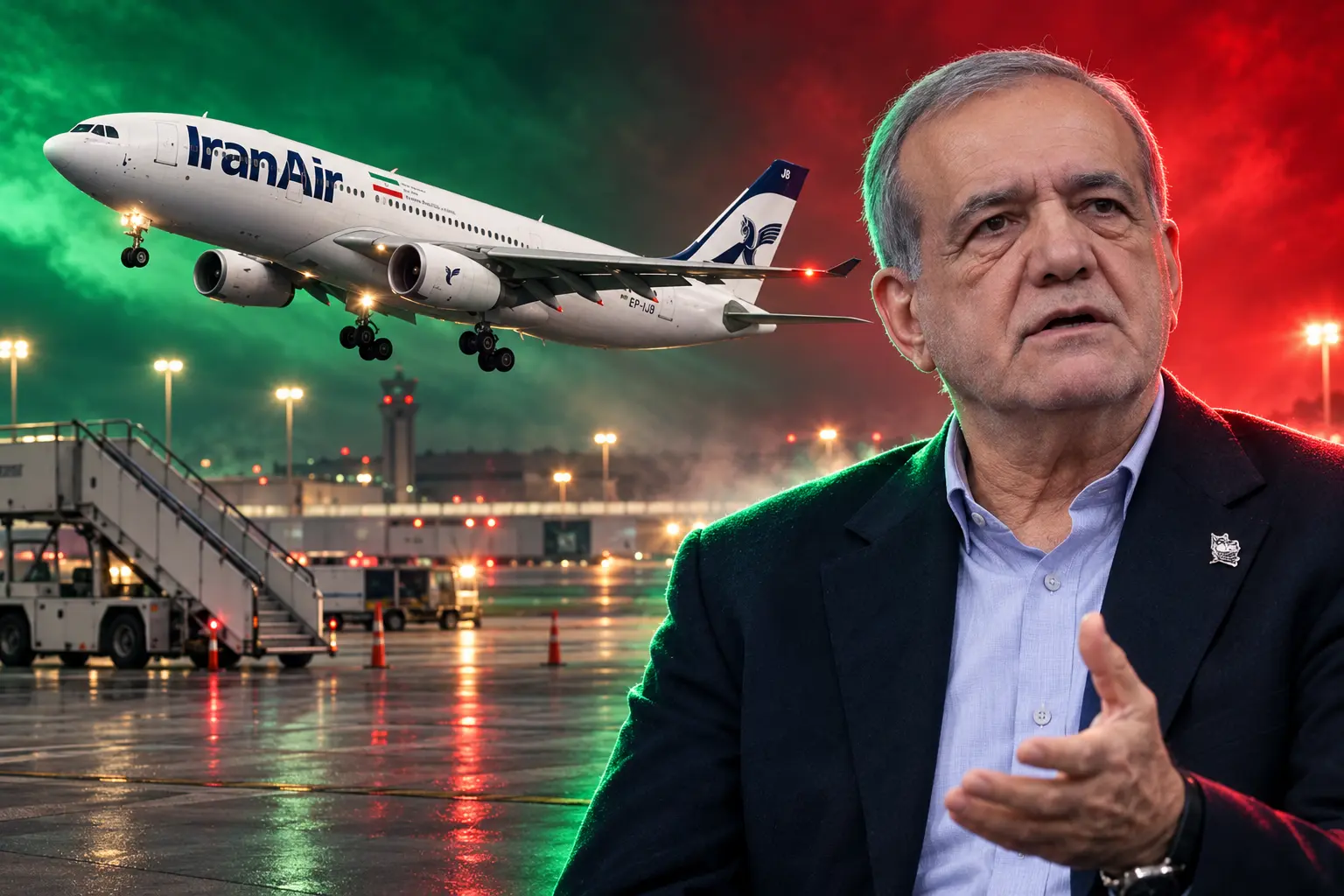
Iran has warned nearby countries that their airports will stop working if they enforce new U.S. rules meant to ground Iranian airlines. The threat came from Mohsen Rezaei, secretary of Iran’s Supreme National Security Council, after Washington told fuelers, handlers and ticket sellers they could lose dollar access for servicing those carriers.
On September 24, the UAE’s General Civil Aviation Authority suspended flights by Iranian airlines until further notice. Georgia, Azerbaijan, Muscat and Baghdad had already moved. The fight is no longer over Iranian airspace. It is over who still dares to fuel a jet at a foreign gate.
Rezaei’s Airport Threat Follows the September 23 Deadline
Rezaei spoke after the U.S. wind-down clock ran out at 12:01 a.m. Eastern Time on September 23. He told nearby states to stay out of what he called an American adventure, and he tied their airport operations to that choice.
I urge all our neighbouring countries not to get involved in the United States adventure. This adventure will very soon end in failure.
Mohsen Rezaei, secretary of Iran’s Supreme National Security Council, on Iranian state television
If a country cooperates with the United States, he said, its airports will no longer be able to operate flights to Iran, and Iran would see that those airports “cannot function.” He did not say whether that answer would be diplomatic, economic or military.
Negar Mortazavi, a senior fellow at the Center for International Policy, said the warning is coercive deterrence aimed at Iran’s neighbors. Tehran, she said, will not treat compliance with U.S. aviation sanctions as a neutral commercial decision. It will treat it as joining Washington’s pressure campaign, and that stance pulls third countries deeper into the war that began on February 28.
Why Neighboring Airports Became the Pressure Point
The United States cannot legally close a foreign runway, and Iran cannot legally decide which aircraft another country accepts. What Washington can do is make the ordinary work of an airport expensive. On September 8, the Treasury Department’s Office of Foreign Assets Control, under Operation Economic Outcast, designated 36 targets for supporting Iran’s aviation sector, including the remaining 27 active Iranian airlines.
Those 27 names sit on top of older listings. Mahan Air has been designated since October 12, 2011, for support to the Islamic Revolutionary Guard Corps-Qods Force. Iran Air was already under separate U.S. measures. The September action used an August 24 decision that placed Iran’s aviation sector under Executive Order 13902, the same day Treasury launched what it called Economic D-Day.
Treasury Secretary Scott Bessent said anyone still doing business with Iran’s remaining airlines risked being cut off from the global financial system. Before the September 23 deadline he was blunter about the ground chain. If the jets land, he said, you cannot give them fuel, landing services or tickets, or you will be knocked out of the dollar system. On September 23 he told Fox News that external flights from Iran, “probably more than 80 or 90% of them, got shut down,” and that he was not sure how Iran’s U.N. delegation in New York would get home. That share is his estimate. It is not a published capacity census, and it sits beside a different, earlier reading from Cirium, the aviation analytics firm, which found Iran’s international seat capacity in August already 49 percent lower than a year earlier, before this deadline.
THE LICENSES WASHINGTON PULLED
- Temporary sojourns: General License J-1, issued December 15, 2016, had let non-U.S. airlines fly U.S.-origin jets, or jets with enough U.S. content, into Iran on short visits. OFAC suspended it.
- Overflight pay: Rules that had allowed payments for flying over Iranian airspace were suspended, cutting a fee stream Tehran collected from other airlines.
- Bunkering and repairs: Permissions for fueling and emergency work tied to Iran routes were pulled, with safety requests now taken case by case.
A short wind-down license, General License DD, covered some older activity through that September 23 Eastern Time cutoff. OFAC also listed eight third-country firms and one person for support to Mahan Air, in the UAE, the United Kingdom, Turkey, Malaysia and Kazakhstan. Treasury said Mahan Air took in at least three Boeing 777s in summer 2026 after the jets were diverted through the UAE and Oman. FinCEN, Treasury’s financial-crimes unit, issued an alert on Iranian aviation procurement networks and told banks to watch for front companies buying parts.
That is why a civil aviation authority in Dubai or Baku becomes the enforcer. The local fueler, handler and ticket office have to choose between an Iranian turnaround and access to dollars. Iran’s reply is the same bargain pointed the other way. If servicing the jet counts as picking a side, then the neighbor’s airport is now on the bill.
A Split Map of Who Folded and Who Still Flies
The cutoff did not land as a single global switch. Only a few aviation authorities announced a blanket bar. Others blocked a capital, left a shrine airport open, or asked one carrier to stay away while smaller Iranian airlines kept selling seats.
WHERE IRANIAN AIRLINES CAN STILL LAND
| Market | Status of Iranian carriers | When it changed |
|---|---|---|
| United Arab Emirates | Suspended until further notice | September 24 |
| Georgia | Barred | September 21 |
| Azerbaijan | Suspended | September 23 listings |
| Baghdad | Not accepting Iranian flights | From midnight September 23 |
| Muscat | Not accepting Iranian flights | From midnight September 23 |
| Najaf | Still handling Iranian flights | Still open September 24 |
| Turkey | Mahan Air out; other Iranian airlines still listed | Mahan halted on Ankara’s request |
| China, Russia, Pakistan | Operating | Still listed September 24 |
| Armenia, Afghanistan | Operating | Still listed September 24 |
Majid Akhavan, spokesman for Iran’s Civil Aviation Organization, said Baghdad and Muscat would stop taking Iranian flights from midnight on September 23, and that Tehran was trying to shift Baghdad traffic to Najaf. Behrouz Safari, who heads the Tehran Province Association of Travel Agencies, said only Mahan Air had dropped Turkey, while other Iranian airlines still showed Istanbul, Ankara, Gazipasa, Izmir and southern coastal cities. Fuel for those jets in Turkey is already a live argument, because an earlier sanctions round left Iranian aircraft short of fuel on the ramp.
Foreign airlines have largely stayed out of Iran since February. Turkish Airlines, Emirates, Qatar Airways and Lufthansa have not resumed those services. The pattern on the map is dollar exposure in the Gulf and the Caucasus, set against China, Russia, Pakistan and pilgrimage traffic that still pays.
Gulf Airlines Face a $4.3 Billion Loss
The neighbors now being asked to police Iranian jets are the same hubs that lost a large share of their connecting business when the war opened. The International Air Transport Association in June put Middle East airlines a $4.3 billion loss for 2026, after a $7.2 billion profit in 2025. It is the only world region IATA expects to finish in the red.
IATA’S 2026 MIDDLE EAST OUTLOOK
- The result: A forecast net loss of $4.3 billion and a -6.1% margin, against a 9.4% margin a year earlier.
- Per passenger: A $21.40 loss, after a $31.50 profit in 2025.
- Traffic: Demand down 11.4% in RPK, capacity down 4.4% in ASK.
- The fuel bill: Jet fuel seen at $152 a barrel, almost 70% above $90 in 2025, while global airline profit halves from $45 billion to $23.0 billion.
Willie Walsh, IATA’s director general, said Gulf carriers face operational uncertainty after a near complete airspace shutdown at the outbreak of the war, and that major financial hits are unavoidable even as those airlines keep some connectivity alive. In 2025, Middle Eastern airlines held 10% of global passenger traffic, more than 900 billion RPK, and more than 67 million connecting passengers moved through the region. Transfer traffic made up about 42% of Middle East volumes, against about 16% worldwide, which is why a closed Gulf hub shows up in Delhi and Shanghai, not only in Dubai.
Dubai International handled 31.5 million passengers in the first half of 2026, 31.3 percent below a year earlier, according to Dubai Airports, which called it one of the most challenging stretches in the airport’s history. Traffic rebuilt through the second quarter, from 3.5 million in April to 4.5 million in May and 5 million in June, for 13 million in the quarter. Aircraft movements fell 32.1% to 150,600. In March, the World Travel and Tourism Council put lost international visitor spending in the region at about $600 million a day, and Tourism Economics forecast a 25% drop in international travel to Gulf countries in 2026.
So the UAE’s September 24 ban is not a small bilateral cut. It is another compliance cost on a hub that had just started filling seats again, taken because the alternative is a fight with the dollar system.
The March Shutdown Gulf Hubs Have Not Forgotten
Rezaei’s line about airports that “cannot function” lands on cities that already watched that happen. Iranian missiles and drones, fired from February 28, hit the Dubai, Abu Dhabi, Kuwait and Bahrain airports, either on the ground or after interception. Gulf states closed airspace in whole or in part. Wolfgang Pusztai, a security analyst and former Austrian defence attaché, said he does not expect Iran to attack those airports over this sanctions round, calling that “extremely unlikely.” The memory still sits in every schedule meeting.
HOW GULF AIRSPACE SHUT IN MARCH
- February 28, 2026: The U.S.-Israel war on Iran begins, and Gulf states start shutting airspace as Iranian projectiles fly.
- March 1 to 7, 2026: Roughly 85 percent of flights at Gulf airports are cancelled in the first seven days, IATA’s disruption paper found.
- March 3, 2026: Emirates restarts a few flights from Dubai, with military jets escorting the early movements.
- March 6, 2026: Etihad follows from Abu Dhabi; Qatar Airways returns the following week. IATA recorded Qatar’s March traffic down 97% year on year, the UAE down 57%, and the rest of the region down 44%.
- Late March 2026: Fewer than half of the flights originally scheduled from those airports are operating, and Gulf carriers then spend months putting timetables back together.
Pusztai argued the practical bite of the new U.S. rules could stay limited if Turkey, Pakistan and China keep working with Iranian carriers, and if other airlines still serve Iran from outside. The larger effect, he said, is psychological, because empty departure boards are visible in a way a frozen bank account is not. An air blockade, he said, “is definitely seen immediately.” He also said aviation sanctions alone will not break the country’s will.
Which Flights Still Leave Iran
Iran’s Civil Aviation Organization said on September 24 that flights to China, Russia, Turkey, Pakistan, Armenia and Afghanistan were operating, with the Turkey restriction aimed at Mahan Air. Imam Khomeini Airport in Tehran still showed China, some Turkey services, Dubai listings that then collided with the UAE ban, and Najaf. A Shanghai departure was still on the board on September 23, and a Mahan flight from Kabul was expected in.
That leftover network is thin, and it is unstable. A Tehran travel agent said the situation was too shaky to keep selling some international tickets, for fear of more cancellations. Safari said talks on fuel in Turkey were underway. Akhavan told passengers to check with their airline before going to the airport. The holdouts are states less tied to the dollar clearing system, plus Najaf’s pilgrimage traffic, which Iraqi authorities left standing when they closed Baghdad to Iranian jets.
Pusztai’s bet on Turkey, Pakistan and China still describes the live map, with one edit: Turkey has already pushed Mahan off the route at the government’s request, and the smaller Iranian airlines that remain there now depend on local fuelers who have been told, in public, what dollar exclusion looks like.
Overland Routes and the Isolation Iran Can See
When the flights drop, the queues move to the border. Thousands of travellers have been pushed toward land crossings with Turkey and Armenia, then onward flights from those airports. Everyday passenger travel into Azerbaijan by road remains restricted, so Iranians cannot simply cross and fly out of Baku. The Shalamcheh and Chazabeh crossings with Iraq closed earlier in September and reopened to passengers on September 13. Domestic fares on busy routes inside Iran have climbed faster than many international ones, which puts more people on the highways.
Jobs in Iranian aviation, tourism and hospitality sit behind those cancellations, and so does a public that can see, on a single departures screen, how far the isolation has gone. That visibility is the point of an aviation squeeze, and it is why Rezaei answered in the language of airports rather than banks.
On September 24, Iran’s civil aviation authority still listed flights to China, Russia, Pakistan, Armenia, Afghanistan and Najaf as operating. Rezaei did not say how he would stop a foreign airport from functioning.

A CubeSat Will Age Whisky That Never Comes Home

A Charity Quote Cost Shia LaBeouf the FKA twigs NDA

Looker Turned a Model’s Body Into Ad Inventory

Infinity Ward Bets a Paid DMZ Will Stick This Time

Disney Sidesteps a Kimmel Renewal as Failla Cites Losses

How to Get Pre Boarding on Southwest – Skip the Line with These Tricks

False AI Intel Nearly Put US Crews on a Chinese Ship

Tim Cook’s $4.6 Trillion Apple Still Runs on One Phone

Dunes Air Sues Nora Fatehi Over Its Luxury Jet

OpenAI Posts a Navier-Stokes Proof Clay Has Not Touched
-
 TRAVEL3 years ago
How to Get Pre Boarding on Southwest – Skip the Line with These Tricks
-
 NEWS1 month ago
False AI Intel Nearly Put US Crews on a Chinese Ship
-
 BUSINESS2 months ago
Tim Cook’s $4.6 Trillion Apple Still Runs on One Phone
-
 ENTERTAINMENT2 months ago
Dunes Air Sues Nora Fatehi Over Its Luxury Jet
-
 NEWS2 months ago
OpenAI Posts a Navier-Stokes Proof Clay Has Not Touched
-

 LIFESTYLE3 years ago
How Often Do You Have to Change a Monkey’s Diaper? The Truth About Pet Monkeys
-

 NEWS2 months ago
Australia Treats Cloud Software Payments as Taxable Royalties
-

 LIFESTYLE3 years ago
How Long Does It Take for Armpit Hair to Grow? The Stages of Hair Growth and How to Shave It