
SPORTS
Chicago’s Baseball Rivalry: A Guide to the White Sox and Cubs
Chicago’s baseball rivalry started as a South Side deal in 1899, and the Cubs lead the regular-season series 80-78 while all-time play is tied 82-82.

Ask a Chicagoan which baseball team they follow and the expected answer is one name, Cubs or White Sox. That question is Chicago’s baseball rivalry. The parks, the colors, and the family arguments all hang on it.
The Cubs play on the North Side at Wrigley Field, and the White Sox play on the South Side at Rate Field. They meet every year in what the clubs call the Crosstown Series. The hard feelings are older than the games that count in the standings.
This guide covers how the split was drawn, which record to quote when someone claims a lead, the games fans still replay, and how the two crowds treat each other. By the end you can name the right scoreboard for the argument in front of you.
What Is the Crosstown Classic?
The Cubs are the National League club at Wrigley Field, in the Lake View neighborhood people call Wrigleyville. The White Sox are the American League club at Rate Field, near Bridgeport. For most of the twentieth century those different leagues meant the clubs did not play each other in the regular season.
The series has been sold under several names, and they are not interchangeable. Crosstown Classic, Crosstown Cup, Windy City Showdown, and North-South Showdown usually mean the modern meetings. City Series is the old name for a postseason exhibition that ended in the 1940s. The games you can buy tickets for now are regular-season games between the two leagues.
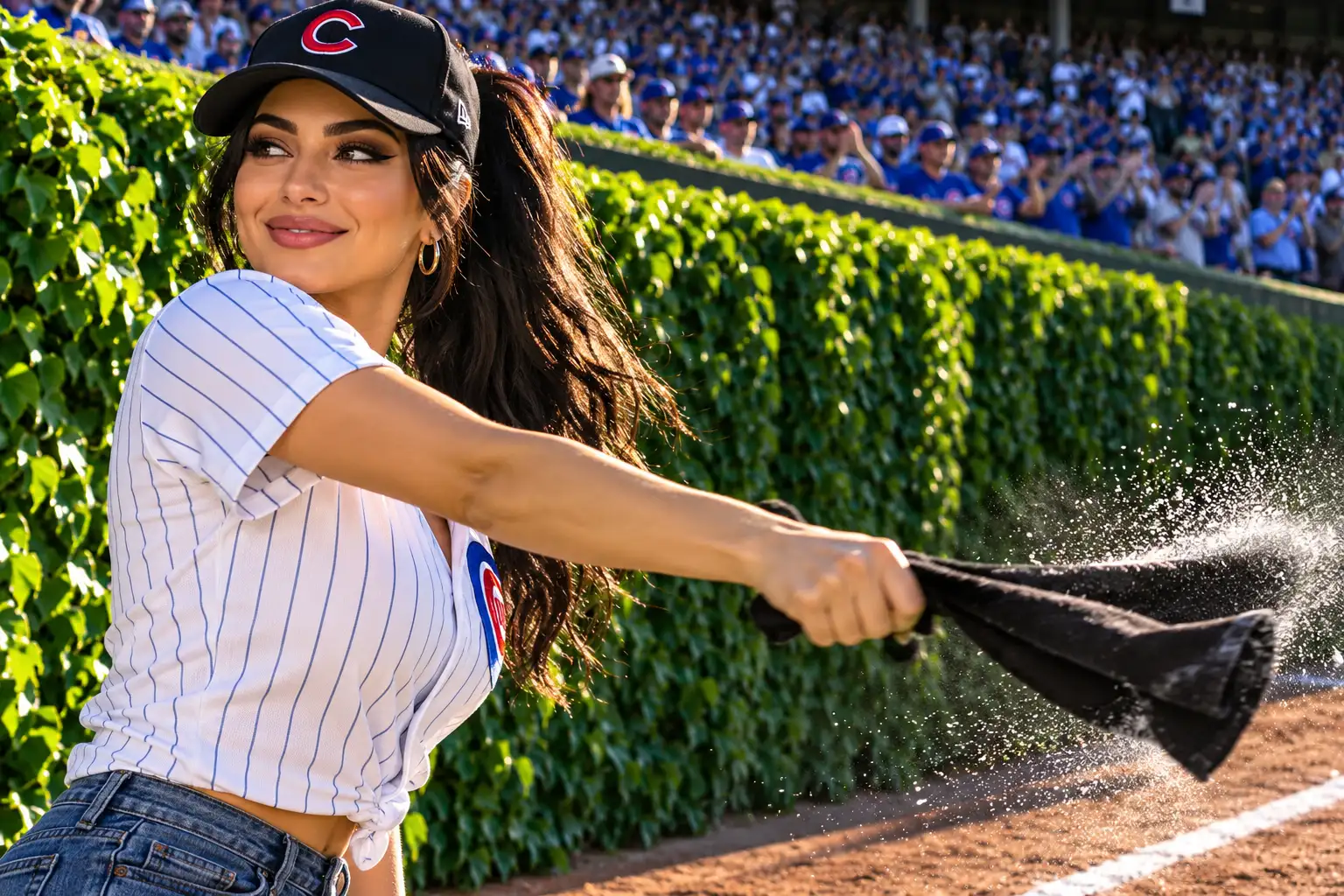
North Siders and South Siders are the names Chicago uses for the fans, and the same labels stick to the clubs. The North Shore and the northern suburbs go with the Cubs on that map. The South Side, the Chicago Southland, and the south suburbs go with the White Sox. The CTA Red Line has a stop within a block of each park, Addison for Wrigley Field and Sox-35th for Rate Field.
How Did the White Sox Land on the South Side?
Charles Comiskey was a Chicagoan running a minor-league club in St. Paul. In October 1899, James Hart, president of the National League club then called the Orphans, gave him permission to move onto the South Side. Hart agreed readily because he thought fans would not sit through the smell of the stockyards just to see a ballgame.
Comiskey also held an option on the West Side park the Orphans were using, and he threatened to put his club there instead. The South Side site avoided that collision. He revived the name White Stockings, which the National League club had dropped, and the papers soon shortened it to White Sox.
The new club opened on April 21, 1900, in a wooden park at 39th Street and Wentworth Avenue. The Cubs, under their earlier names, were still on the West Side. They did not take over Weeghman Park, later Wrigley Field, until 1916. The north-south map people argue with now came after the feud had already started.
The placement did what a protected home crowd is supposed to do. Each club grew its own followers instead of splitting one set of ticket buyers. Cheering both sides still reads, inside a lot of Chicago rooms, as not having chosen.
What Did the 1906 World Series Change?
The clubs met with a title on the line in the 1906 World Series, and they have not met in a World Series since. The Cubs had won 116 games in the regular season and were heavy favorites. The White Sox were the Hitless Wonders, a name they carried for winning with pitching more than with a feared lineup. The White Sox took the series in six games.
The first game was on October 9, 1906, at West Side Park, and the White Sox won it 2-1. Neither of today’s parks hosted that series. The Cubs’ home games were on the West Side, and the White Sox’ home games were at South Side Park, years before Comiskey Park opened in 1910.
The City Series the White Sox Won
From 1903 through 1942, in years when neither club won the pennant, Chicago staged its own postseason series. The National Baseball Commission approved it, and later so did the commissioner’s office. The games were for city bragging rights, played while the World Series went on somewhere else.
THE CITY SERIES AT A GLANCE
- The count: The clubs played 25 City Series, the White Sox won 18, the Cubs won six, and 1903 ended tied.
- The 1903 length: That first series was a best of 15, the Cubs led six games to three, the White Sox came back to a 7-7 tie, and a rainout plus contracts that expired on October 15 wiped out a deciding game.
- The later length: From 1905 through 1942 the series was a best of seven.
- The 1912 comeback: The White Sox trailed three games to none and won the last four, the first time a club had done that in a major league postseason series.
An older Sox fan who says the South Side has always had the Cubs’ number is usually holding this book. It is a real record. A standings page on a phone is holding a different one, which is the mix-up the next section is for.
After 1942 the clubs went decades without a postseason meeting. From 1985 through 1995 they played an annual charity exhibition, sometimes billed as the Windy City Classic. On April 7, 1994, Michael Jordan, then with the Birmingham Barons during his first retirement from basketball, started in right field for the White Sox at Wrigley Field. Those exhibitions are part of the folklore, and they are not part of the official series record below.
Which Record Counts in Chicago’s Baseball Rivalry?
People wave three totals around, and the totals count different games. Through the last meeting, on August 19, 2026, the books look like this.
| Record | What it counts | Result |
|---|---|---|
| Regular season | Games since the clubs started meeting in the regular season in 1997 | Cubs lead 80-78 |
| Regular season at Wrigley Field | Games the Cubs hosted in that span | Cubs 40-39 |
| Regular season at the White Sox park | Games the White Sox hosted in that span | Cubs 40-39 |
| Postseason | The 1906 World Series only | White Sox lead 4-2 |
| All-time official games | The regular season plus those six World Series games | Tied 82-82 |
If the argument is about games that counted in the standings, the line to quote is Cubs 80-78. If the argument folds in 1906, the line is an 82-82 tie across 164 games. The City Series sits outside both lines, which is why both people at the table can be looking at a true number.
SWEEPS AND STREAKS SINCE 1997
- Full-season sweeps: The Cubs have swept a season series three times, in 1998, 2013, and 2024.
- Three-game sweeps: The Cubs have five, in 1998, 2004, 2007, 2008, and 2025, and the White Sox have four, in 1999, 2008, 2012, and 2021.
- The 2008 split: Each club swept one three-game weekend that year, and the season finished 3-3.
- Longest Cubs streak: Eight wins, from August 15, 2023, through May 18, 2025.
- Longest White Sox streak: Five wins, from June 27, 2009, through June 12, 2010.
From 2023 through 2026 the Cubs took 15 of the 20 regular-season meetings. A weekend can still flip, as 2026 showed, but the recent run is not a dead heat.
Part of that swing lines up with 2024, when the White Sox lost 121 games, the most in modern major league history. Quote the 15-5 stretch with that season attached, or it sounds like a law of nature instead of a run through a collapse.
How Does the Crosstown Cup Work?
The first regular-season meeting was on June 16, 1997, at the new Comiskey Park, and the Cubs won 8-3. The next year the Cubs swept three games, the first time either club had taken every game of a season series. The clubs have met every year since that 1997 opening.
The Crosstown Cup trophy started in 2010. Win the season series and the cup changes hands. Tie the season series and the club that already has it keeps it. The White Sox won the trophy the first three seasons. The Cubs won it for the first time in 2013, taking all four games.
WHO HAS HELD THE CROSSTOWN CUP
- 2010 through 2012: The White Sox won the season series each year and held the cup.
- 2013: The Cubs took it.
- 2014: The White Sox won it back, then kept it on ties in 2015 and 2016.
- 2017 and 2018: The Cubs won the season series, then kept the cup on ties in 2019 and 2020.
- 2021 and 2022: The White Sox won the season series and took the cup back.
- 2023 through 2025: The Cubs won the season series, including a four-game sweep in 2024.
- 2026: The season tied 3-3, so the Cubs kept the cup.
A tied year does not crown a new winner. The 2026 split left both clubs on three wins and still left the trophy with the Cubs, because they had won the three seasons before it. BP put its name on the cup from 2010 through 2012, the trophy carried no company name from 2013 through 2018, and Wintrust sponsored it in 2019.
The Punch on May 20, 2006
On May 20, 2006, at U.S. Cellular Field, Brian Anderson hit a sacrifice fly and A.J. Pierzynski came home hard into Cubs catcher Michael Barrett. The ball got away, Pierzynski was safe, and he slapped the plate. Barrett punched him, and both benches emptied.
The White Sox won the game 7-0. Once play resumed, Tadahito Iguchi hit a grand slam. The delay while the umpires sorted ejections ran about 15 minutes. Barrett, Pierzynski, Anderson, and Cubs first baseman John Mabry were thrown out.
- Michael Barrett: He drew a 10-game suspension and a fine, and an arbitrator upheld the suspension on June 19, 2006.
- Brian Anderson: He drew a five-game suspension and a fine.
- Joey Cora: The White Sox third-base coach drew a two-game suspension and a fine.
- A.J. Pierzynski: He was fined and was not suspended.
The White Sox then pushed Pierzynski in the All-Star final fan vote under the slogan “Punch A.J.” He received 3.6 million votes, the most in the American League, and made the team. The collision is still the clip people send when they want the rivalry to look physical.
A 30-Run Night on the South Side
On August 27, 2021, at the park then called Guaranteed Rate Field, the White Sox beat the Cubs 17-13. Thirty runs is the most the two clubs have combined for in one game. Catcher Yasmani Grandal hit two home runs and drove in eight, tying a White Sox franchise mark for runs batted in during a game.
Two days later the White Sox won 13-1, their largest margin against the Cubs. The Cubs’ widest margins are a 10-0 win on September 25, 2020, and a 13-3 win on May 16, 2025. A blowout can own a group chat for a year while the lifetime tie stays where it was.
How Do White Sox Fans and Cubs Fans Differ?
Matt Ragas, a Sox fan who moved to the South Loop from Florida, puts the social split in one pair of lines. “The Sox are for the people that make Chicago run,” he says, “and the Cubs are for the people who run Chicago.” He and his wife, Traci, went to a Sox game their first summer in town and decided they did not need a comparison trip to Wrigley Field.
Juan Gutierrez, a Sox fan raised between downstate Illinois and Wisconsin, uses the same divide in work clothes. He calls Sox fans more blue-collar and pictures a North Side Cubs fan as a white-collar office worker. Daniel Alvarez, who grew up in Little Village and has lived in Bridgeport, Pilsen, and Hyde Park, treats the choice as family geography. He bikes to the park with his young sons in a buggy because he wants them to feel the South Side the way his father taught him to feel it.
I’m a South Sider and there are people who say, ‘Oh, aren’t you happy that the Cubs won?’ but not me, because I hate the Cubs!
Jeanne Kennelly, White Sox fan, Chicago Tribune, 2021
The blocks around the parks keep the picture going. Wrigleyville is middle-class and upper-middle-class housing, with bars and music rooms pressed against the ballpark. Bridgeport, just west of Rate Field, carries the older blue-collar name, and the bars sit a few blocks off the gate rather than on the sidewalk outside it. Cubs fans get called tourists and day-drinkers. Sox fans get called the Second City’s second team, the club in the other club’s shadow.
When the White Sox are losing a lot, that jab changes shape. Seats go empty, and plenty of the people staying home still talk like lifers who would not switch. Rivals sometimes find the trolling goes flat, because those fans are already harder on their own club than an outsider can be. A full park is one test of a crowd, and it is not the only one.
Rick Hahn, speaking in 2013 as White Sox general manager, said the meetings would stay a special few days because of the buzz they create in the city, whatever the records are. The season length has bounced between four and six games since then. The noise has not waited on both clubs being good at once.
The Droughts Each Side Carried
Each fan base spent most of a century explaining a title that would not come. The stories are not the same story, and people still tell both of them when the present-day series is dull.
| Club | Title that ended the wait | How long | Story fans attached |
|---|---|---|---|
| Cubs | 2016 | 108 years | The Billy Goat, tied to the 1945 World Series |
| White Sox | 2005 | 88 years, back to 1917 | The Black Sox scandal of 1919 |
Cubs fans told the Billy Goat story for decades. Tavern owner Billy Sianis was turned away from a 1945 World Series game for bringing a goat, and the next Cubs World Series did not come until 2016.
On the South Side the long story was 1919, when eight White Sox players were accused of conspiring to lose a World Series. The next White Sox title came in 2005. Both clubs also reached the playoffs in the same year in 2008, and both did it again in 2020, the first shared postseason years since 1906. Each time, both were out in the wild-card round before they could meet.
What to Know on Crosstown Series Night
Each season the clubs play two short series, one in each park. The Cubs’ guide to the Wrigley series describes that split, and the South Side half works the same way at Rate Field. These dates are among the harder tickets on both calendars. If you are visiting, the Red Line is the simple route.
BEFORE YOU WEAR THE OTHER JERSEY
- The guest rule: Wear your own club if you want, and expect the room to notice.
- The one-club rule: Cheering both teams is the habit Chicago trusts least, and plain disinterest gets an easier pass than a hat that switches sides.
- The neighborhood: Around Wrigley, eat in Wrigleyville and arrive early, because the blocks fill. Around Rate Field, leave time for a few extra blocks into Bridgeport.
- The weekend crown: A series can name a winner for the group chat without moving the lifetime tie.
The 2026 season series ended tied, and the last game was a 3-0 White Sox win at Wrigley Field on August 19, 2026. The cup stayed with the Cubs. The next meeting on the schedule is July 16, 2027, at Wrigley Field, and game times move even when the rivalry does not.
Frequently Asked Questions
Can You Root for Both the Cubs and the White Sox?
Chicago will let you say you cheer for both, and then it will treat you as a fan of neither. Mixed households get by, but the table still wants one club, and a politician in both caps gets the least credit of anyone. The 1900 placement of the White Sox was built to grow a separate crowd, and a friendly weekend at the other park does not undo that.
Have the Cubs and White Sox Met Since 1906?
They have not met in a World Series since the White Sox won the only one, in 1906. Both clubs reached the playoffs in 2008, and both reached them again in 2020, and each time they were out before they could face each other. A series between them now would be new, not a rematch the people in the seats have seen.
Does a Tie Change the Crosstown Cup?
The holder keeps it. A tied season names no new winner, so the club that arrived with the Crosstown Cup leaves with it. Years a club merely kept the trophy are a different list from years it won the games.
Which Train Serves Both Chicago Ballparks?
Ride the CTA Red Line. Addison is the stop beside Wrigley Field, and Sox-35th is the stop beside Rate Field, each within a block of the park. It is the one train that makes the rivalry a single ride, which beats sitting on the Dan Ryan after a night game.
The next argument you hear will name a lead. Ask which games are inside that lead before you take a side of the number. The stands still sort themselves the way the 1899 move sorted the map, North Side in one color and South Side in the other, whether the cup changes hands or stays put.

A CubeSat Will Age Whisky That Never Comes Home

A Charity Quote Cost Shia LaBeouf the FKA twigs NDA

Looker Turned a Model’s Body Into Ad Inventory

Infinity Ward Bets a Paid DMZ Will Stick This Time

Disney Sidesteps a Kimmel Renewal as Failla Cites Losses

Southwest Preboarding: Who Qualifies and What to Do

False AI Intel Nearly Put US Crews on a Chinese Ship

How Often Do You Have to Change a Monkey’s Diaper?

Dunes Air Sues Nora Fatehi Over Its Luxury Jet

Tim Cook’s $4.6 Trillion Apple Still Runs on One Phone
-
 TRAVEL3 years ago
Southwest Preboarding: Who Qualifies and What to Do
-
 NEWS2 months ago
False AI Intel Nearly Put US Crews on a Chinese Ship
-
 LIFESTYLE3 years ago
How Often Do You Have to Change a Monkey’s Diaper?
-
 ENTERTAINMENT2 months ago
Dunes Air Sues Nora Fatehi Over Its Luxury Jet
-
 BUSINESS3 months ago
Tim Cook’s $4.6 Trillion Apple Still Runs on One Phone
-

 LIFESTYLE3 years ago
How Long Does It Take for Armpit Hair to Grow?
-

 NEWS2 months ago
OpenAI Posts a Navier-Stokes Proof Clay Has Not Touched
-

 TRAVEL2 years ago
Smallest Airlines in the US: Niche Carriers and Unique Flights