
LIFESTYLE
Why Are Lululemon Tags So Long?
Why are Lululemon tags so long? One tear-away ribbon stacks US care warnings with Canadian fiber names in English and French, and the size dot stays.

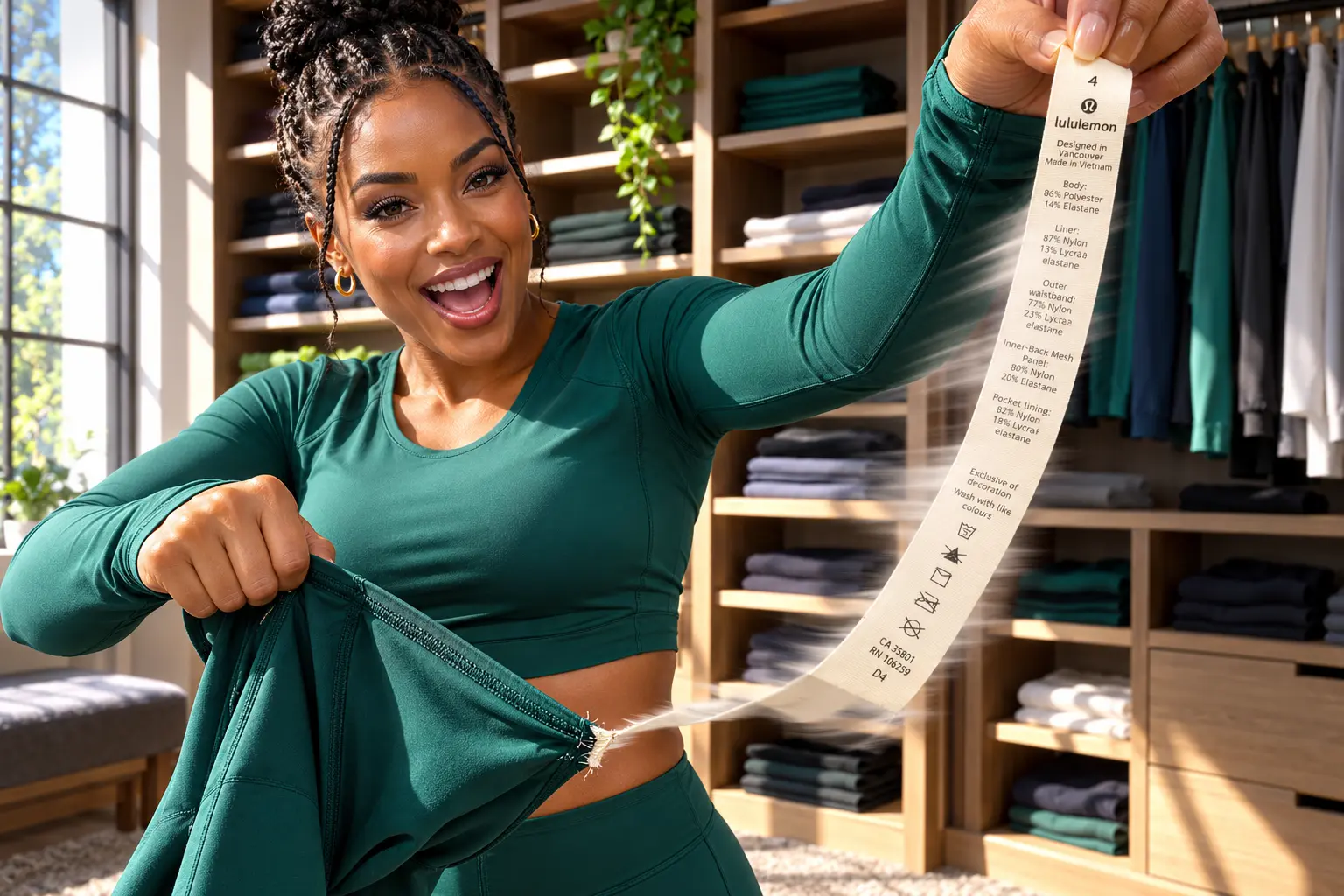
Why are Lululemon tags so long if the brand also tells you to tear them out after you pay? That pale ribbon is a clothing label, and it has to carry a stack of required lines before the leggings ever leave the store.
Lululemon built the strip so it comes away in your hand. What stays is a small size dot with your size and a season code. This page covers the three tags on a typical piece, the US and Canadian lines that stretch the ribbon, how to read it, when to tear it out, and how to wash the gear once it is gone.
Three Tags on Lululemon Clothing
Shoppers use the phrase Lululemon tag for three different things, and only one of them is the long ribbon. Mixing them up is how a care label gets treated like a proof of style, or a size sticker gets cut off by mistake.
| Tag | Where you find it | What it carries | After you buy |
|---|---|---|---|
| Rip tag | Sewn inside, where your hand can reach it | Fiber, country, company number, care | Made to be torn out |
| Size dot | A pocket, the waistband area, or a bra cup insert | Size and a season code | Stays on the gear |
| Hang tag | Tied on at the register | Why the style was made, and how to use it | Paper, so it comes off with the packaging |
The rip tag is the long woven label. The size dot is a sticker the company can still read when you ask about a replacement. The hang tag is the card that explains the style, and the same notes live on the product page if you already threw the card away.
What US and Canadian Rules Add to the Tag
A US clothing label has to show fiber content, country of origin, and dealer identity. Care instructions come from a separate rule. Those facts can share one label, or they can sit on separate labels, which is why one ribbon can hold the whole set.
Canada adds the lines that make a shared tag physically long. Fiber names have to appear as fiber names in English and French for most sales in Canada. A fiber at 5% or more of the cloth gets its generic name and its share. The dealer line is a company name and address, or a CA number. Dealer identity, and country of origin when it is required, do not have to be translated. Quebec has further French rules on top of that federal label.
| Line | United States | Canada |
|---|---|---|
| Fiber | Generic names, largest share first; under 5% may be called other fiber | Same kind of percentage line, printed in English and French |
| Who is responsible | Company name or an RN number | Canadian dealer name and address, or a CA number |
| Country | On the front of the label, in English | When it appears, it does not have to be bilingual |
| Care | A wash or dry-clean method you can still read later | Not part of the federal fiber label; US care text still rides on a shared tag |
| How long it must last | Attached so it stays readable for the useful life of the piece | A permanent clothing label is one that survives 10 cleanings |
The legal minimum in the United States is short. The FTC care labeling guide says a minimum washing instruction can be two sentences, “Machine wash. Tumble dry.” Those words mean any water temperature, any dryer heat, any bleach, and no extra warning. A label only has to grow when a step you might assume is safe would harm the cloth.
FIVE PARTS OF A US WASH LABEL
- The wash: The label says hand or machine, and it names a water temperature when hot water would hurt the piece.
- The bleach: Bleach is named only when regular bleach would do harm, or when only non-chlorine bleach is safe.
- The dry: The label says machine or another method, and it names a dryer heat when high heat would hurt the piece.
- The iron: Ironing instructions show up when the piece needs ironing again and again.
- The warning: A “do not,” “no,” or “only” line is required when a normal extra step, such as ironing a washed pair or washing a color that runs, would cause harm.
Lululemon’s ribbon runs past those two sentences because the fabrics are not in the “any normal wash is safe” group. Fabric softener coats technical cloth and blocks wicking. Cotton fluff from a towel sticks to Luon. Those are the kinds of warnings that turn a short legal label into a long one, and printing the fiber block twice, in English and in French, adds another stretch on gear sold in both countries.
Placement is set, too. On a shirt, the country name goes on the front of a label at the inside center of the neck, between the shoulder seams or beside another label there. On pants, the inside of the waistband is the spot the guide calls easy to see, and the inside of a pocket is not. Fiber content and the company ID may sit on the back of that same label if it is sewn at one end only, so you can flip it. A one-end stitch is also what lets a ribbon tear free.
How to Read a Lululemon Rip Tag
Read the ribbon from the stitched end downward before you pull it. You only need this once if you keep a photo.
- Find the sewn end. The ribbon is attached along an inside seam you can reach, not buried where the required label is not allowed to hide.
- Read the fiber block. Percentages run from the largest share down, and a Canadian label repeats each fiber name in French. A brand fabric name such as Nulu can sit beside the generic fiber, not instead of it.
- Read the country on the front. The country of origin has to be on the front of the label. Names like Vietnam or Cambodia are the country where the piece was made, in the sense US customs rules use for that label.
- Find the company number. US labels from this brand print RN 106259. The FTC database lists that number for Lululemon USA Inc., an importer in Sumner, Washington. A Canadian label may show a CA number in place of a full street address.
- Read the care lines, then photograph them. Note cold or machine wash, how to dry, and any “do not” line. Flip the ribbon if the back carries more text. The rules allow care words on the reverse when the label is open at one end.
A batch code or a short style mark sometimes sits near the bottom of older ribbons. The company does not ask you to use that string when it dates a piece for you. It asks for the size dot, or for the receipt.
Where to Find the Lululemon Size Dot
The size dot is the sticker that remains after the ribbon is gone. Lululemon says it is usually in a pocket or a bra cup insert slot, and on some pieces it sits along the inside waistband. It carries the size plus a four-digit code for the season and year the item was made.
The company’s own example is 0224, which it reads as the Spring 2024 season. You do not need to decode every digit yourself. If a replacement comes up and the receipt is missing, guest support can read that code and tell how old the piece is.
That age check matters because the Quality Promise is a one-year window, not an open-ended guarantee. Lululemon says it will work to replace an item that does not perform as intended within one year of purchase. Returns under that promise are handled case by case. You need a receipt or identification. Ordinary wear, a change of mind, misuse, and accidents are outside it. The hang tag’s “why we made this” note, or the same note on the website, is what the company points you to for intended use.
LEAVE THE DOT ALONE
- The ribbon: Tear or snip only the long woven label, at the few stitches that hold it.
- The dot: Leave the sticker in the pocket, cup slot, or waistband even if the ink looks small.
- The photo: Keep a picture of the fiber line and the wash line with the order email.
A faded dot does not ruin the piece. It only removes the backup way to date it, which is why the receipt still matters more than either label.
Should You Tear Out a Lululemon Tag?
Yes, if the ribbon bugs you. Lululemon said so in its own reply on May 18, 2021: the tags were designed to be torn out gently after purchase so they do not distract you, and the size dot in a pocket still identifies the style.
We designed these tags to be gently torn right out after purchase, leaving you completely distraction-free. As for knowing what style you have, your gear has a small size dot located in a pocket with this information so that you're set.
— lululemon (@lululemon) May 18, 2021
Owners treat that as optional. The ribbon releases with a small tear or a clean snip, and plenty of people wear it either way. There is no single correct choice for comfort. The duty to attach a lasting care label sits on the maker, not on you after you have paid. Once you remove it, the wash steps live on the product page and in the photo you took.
Keeping the ribbon does not buy a longer promise. The one-year window is tied to the purchase date and to how the item performs, and wear and tear is excluded either way. Lululemon’s Like New resale program accepts almost all clean, gently worn women’s and men’s clothing and bags, with no damage, pilling, rips, or discoloration, even when the care tag, the size tag, and the price tag are all gone.
How to Wash Lululemon Gear After the Tag Is Gone
If the ribbon is already in the bin, use the brand’s care notes and the product page for that style. The standing advice is a cold wash and no fabric softener. Cold water helps the Lycra and the shape. Softener leaves a coat on technical fabric and gets in the way of wicking.
- Luon, Luxtreme, Everlux, Nulu, Nulux, Rulu, Seamless, Swift, and Warpstreme: Machine wash cold with similar synthetics, keep them off rough cloth and softener, and hang to dry or tumble dry on low.
- Merino and the natural blends grouped with Boolux and Cashlux: Machine wash cold with similar fabrics, skip softener and abrasive cloth, and lay the piece flat.
- Outerwear: Cold wash, tumble dry low.
Turn the gear inside out. Wash bright colors alone the first time, then with similar colors, and keep them off other fabrics while they are wet. Do not wash Luon with cotton towels or hoodies. The lint grabs the surface. Those steps match what Like New tells buyers as well: cold water, lay flat, inside out, and no softener.
Mistakes With Lululemon Tags and Size Dots
The ribbon is the part that looks like clutter. The mistakes that actually cost you something happen when the other two tags get the same treatment, or when the fine print on the promise gets read as a lifetime replacement.
- Cutting the size dot: A snip aimed at the ribbon can catch the sticker in a pocket or a bra slot. That sticker is the code support uses when the receipt is gone.
- Calling it a lifetime warranty: The published promise is one year, case by case, and it excludes ordinary wear, misuse, and accidents.
- Trusting the hang tag as the legal label: The paper card can talk about feel and intended use. Fiber, country, and the RN still have to be on the clothing label, and a hang tag that names a fiber without the full content has to point you to that label.
- Washing from memory of a different style: Nulu and a merino blend do not dry the same way. Check the product page for the name on your size dot or your order, not the tag from an older pair.
A public RN is also a weak authenticity test on its own. RN 106259 is a real registration, and the number is printed on genuine labels, but the database is public. Pair a matching number with a purchase from a Lululemon store, an official Lululemon website, or a retailer the brand lists as approved.
Frequently Asked Questions
Does the RN on a Lululemon Tag Prove It Is Real?
A matching RN shows that the number is a real registration, not that the pair in your hand left a Lululemon factory. RN 106259 is the number listed for Lululemon USA Inc. Genuine gear is sold through the brand’s stores, its own websites, and approved retailers, so the number is one check beside where you bought it.
What if the Lululemon Size Dot Has Faded?
You can still ask about a replacement with the receipt, and the company says it may ask for identification when you do not have one. The four-digit season code is the backup for a missing receipt, so a blank sticker leaves the receipt or your ID as the way to show the purchase date. Ordinary wear stays outside the promise either way.
Do Lululemon Bags and Hats Use the Same Long Tag?
Hats, shoes, and the textiles used in handbags sit outside the US clothing rules that fill a leggings ribbon, so those items do not carry the same long rip tag. A bag can still have a small brand mark or a size sticker. Like New still takes bags that meet its condition rules when every tag is already gone.
Why Is One Lululemon Tag Shorter Than Another?
A shorter ribbon has fewer lines to print. A piece without French fiber names, or a fabric that does not need an extra warning line, takes less cloth. The paper hang tag is a different object, the card about why the style exists, and it was never the sewn-in label.
If the ribbon is still on, photograph the fiber line and the wash line, tear it at the stitched end, and leave the size dot where it is. That sticker is the code the company can still read when you ask about a replacement, and the product page still has the cold-wash steps the ribbon used to carry.
Disclaimer: This article is an educational guide to clothing labels and Lululemon’s published care and quality notes. It is not legal advice, a reading of your own tag, or a promise that any return will be accepted. Check the label, the product page, and Lululemon guest support before you rely on a wash step or a replacement, and ask a qualified adviser if you need a legal reading of the labeling rules. Figures and rules here reflect the FTC guides, the Competition Bureau textile label page, and Lululemon’s help pages as reviewed, and those sources can change.

A CubeSat Will Age Whisky That Never Comes Home

A Charity Quote Cost Shia LaBeouf the FKA twigs NDA

Looker Turned a Model’s Body Into Ad Inventory

Infinity Ward Bets a Paid DMZ Will Stick This Time

Disney Sidesteps a Kimmel Renewal as Failla Cites Losses

Southwest Preboarding: Who Qualifies and What to Do

False AI Intel Nearly Put US Crews on a Chinese Ship

How Often Do You Have to Change a Monkey’s Diaper?

Dunes Air Sues Nora Fatehi Over Its Luxury Jet

Tim Cook’s $4.6 Trillion Apple Still Runs on One Phone
-
 TRAVEL3 years ago
Southwest Preboarding: Who Qualifies and What to Do
-
 NEWS2 months ago
False AI Intel Nearly Put US Crews on a Chinese Ship
-
 LIFESTYLE3 years ago
How Often Do You Have to Change a Monkey’s Diaper?
-
 ENTERTAINMENT2 months ago
Dunes Air Sues Nora Fatehi Over Its Luxury Jet
-
 BUSINESS3 months ago
Tim Cook’s $4.6 Trillion Apple Still Runs on One Phone
-
 LIFESTYLE3 years ago
How Long Does It Take for Armpit Hair to Grow?
-

 NEWS2 months ago
OpenAI Posts a Navier-Stokes Proof Clay Has Not Touched
-

 TRAVEL2 years ago
Smallest Airlines in the US: Niche Carriers and Unique Flights