
NEWS
Fellow Commissioners Logged 14 Objections Against Gyanesh Kumar
Two election commissioners logged 14 SIR objections they say went out without them, as a split court holds the 2023 appointment law.

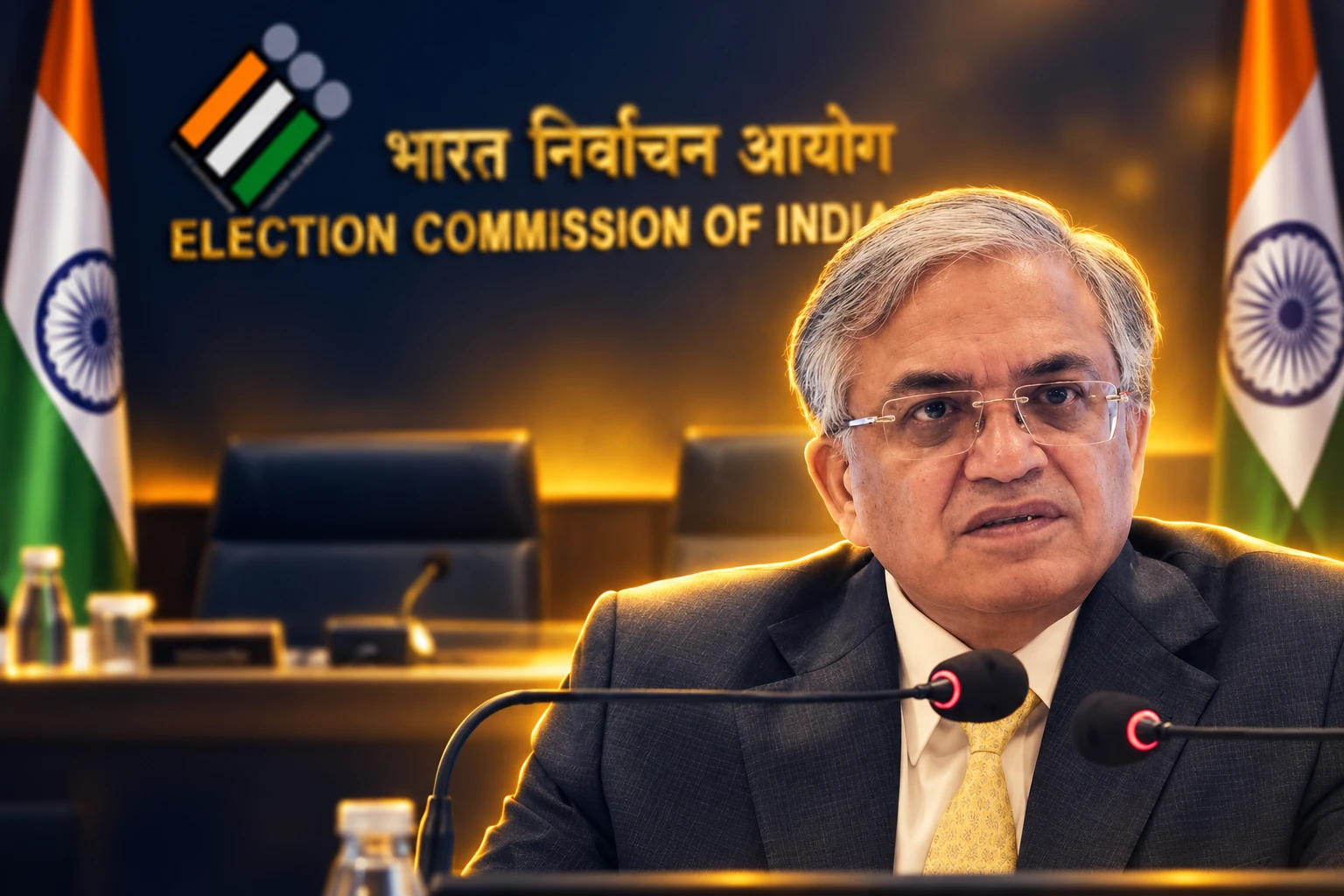
Two of India’s three election commissioners recorded at least 14 written objections in 10 months to Special Intensive Revision orders they said went out without them. The notes, copied to Chief Election Commissioner Gyanesh Kumar, cover new voter registration, deletions, restorations, appeals, and who can touch the digital voter rolls.
The Election Commission says differing views are normal and that final SIR decisions were unanimous. Neither Dr Sukhbir Singh Sandhu nor Dr Vivek Joshi has spoken in public. On September 23, a two-judge Supreme Court bench split on the 2023 law that put Kumar in the chair.
Two Commissioners Put 14 Objections on the File
Sandhu and Joshi sit on the three-member Election Commission with Kumar. File notes described in an investigation published on September 23 show they objected on record at least 14 times between November 2025 and August 2026, four times on a single day, to orders issued in the Commission’s name.
On April 16, 2026, Sandhu told senior officers that many communications go out in the name of the Commission without its approval, and that from then on every communication must have it, as per the 2023 Act. Eight days later Joshi wrote that several communications were being sent without the approval the Constitution and the Act require.
14 notes on file is not a hallway grumble. In a body of three, two members saying they did not know is the record the public now has, because those two men have not given their own account.
THE 10 MONTHS ON FILE
- June 2025: SIR begins in Bihar, the first phase of a nationwide clean-up of voter rolls.
- April 16, 2026: Sandhu writes that communications go out in the Commission’s name without its approval.
- May 2026: Joshi warns on file that Form 6 cannot be rewritten without a change in the rules, and flags a gradual centralisation of the roll database.
- July 2026: The online Form 6 is changed to add a SIR-linked declaration for new applicants.
- August 13, 2026: Sandhu records the Form 6 change as unauthorised and illegal and says it must be removed at once.
- August 2026: Sandhu asks who authorised 16.1 lakh West Bengal appeals against voters whom judicial officers had kept on the rolls.
- September 9, 2026: The three commissioners meet, their first full meeting in four months.
- September 23, 2026: The file notes become public, and the Supreme Court splits on the 2023 appointment law.
After the work-allocation fight, Sandhu and Joshi separately wrote to Cabinet Secretary T.V. Somanathan. They said changes that cut their watch over the digital systems used for the rolls had been made without their knowledge. They opposed those changes on the file.
Form 6 Was Changed After They Called It Illegal
Form 6 is the statutory application for a new voter. The July change asked applicants to say whether they, or a parent or grandparent, appeared on the roll from the last special intensive revision. The extra declaration was not marked mandatory, yet the online form would not submit without an answer.
Joshi’s May note said a statutory form could not be altered that way without first amending the Registration of Electors Rules, 1960. Section 28 of the Representation of the People Act, 1950, leaves those rules to the Union government, not to a circular from Nirvachan Sadan. Sandhu agreed, then put on record that the portal change was “unauthorised and illegal” and “must be removed immediately.”
The Commission still presents SIR decisions as the product of the full bench. The Form 6 trail is the cleanest test of that claim, because two commissioners wrote the legal objection before the portal moved, and one of them wrote again after it did.
WHAT THE TWO COMMISSIONERS FLAGGED
- Form 6: They said a statutory enrolment form cannot pick up SIR ancestry questions unless the Union first amends the 1960 rules.
- Database access: Joshi called it a gradual centralisation of the electoral roll database and asked for an audit so that only statutory officers can change a name.
- Bengal appeals: Sandhu asked who was authorised to file 16.1 lakh of 38.2 lakh tribunal appeals against inclusion, and who actually filed them.
- Work split: Both wrote to the Cabinet Secretary against a new allocation that reduced their watch over the IT systems that hold the rolls.
- Goa additions: The investigation also recorded a software block on 97 people whom a court had already cleared for the rolls.
Each item is a statutory officer’s job on paper. The notes say those jobs were being done, or undone, from a place the other two commissioners could not see.
Local Officers Lost Control of the Roll Database
Each constituency roll is supposed to sit with its electoral registration officer, a statutory post. In May, Joshi proposed an audit to certify that “no one, except the concerned statutory authorities, has credentials to make any change in the database.” In August, Sandhu wrote that state election officials were reporting they “don’t have proper and complete access” to the digital system.
He named Seema Khanna, the Commission’s Director General of IT, and recorded that she “doesn’t have any legal authority to restrict proper and complete access and freedom to operate, as given by law, to the statutory authorities.” That is a serving commissioner telling the headquarters IT wing it is overriding the officers the statute names.
The louder political fight is about how many names left the rolls. The quieter fight inside the building is about who holds the password. If local officers cannot add a court-cleared voter, the hearing in the district is theatre and the list is made in Delhi.
More Than 13 Crore Names Came off the Draft Rolls
SIR started in Bihar in June 2025 and moved through the country in three phases. The third phase, covering 19 states and Union Territories, is still under way. Across the three phases, more than 13 crore names have been removed from voter lists and draft rolls.
Those are not all final cuts. Draft rolls can take names back during claims and objections. They are still the scale on which Sandhu and Joshi were writing, and the scale on which opposition parties now want Kumar removed.
WHAT THE SIR ROLLS SHOW
| Place or phase | Change recorded | How it is counted |
|---|---|---|
| Phase 2, 12 states and UTs | 50.99 crore electors down to 45.81 crore | 10.2% net, after new names were added |
| Delhi draft roll | Highest share of names dropped | 32.8% |
| West Bengal appeals | 16.1 lakh of 38.2 lakh appeals | Challenged inclusion, in a Commission filing in the Supreme Court |
| Three phases combined | More than 13 crore names | Removed from lists and draft rolls |
Phase 2’s 10.2% is a net figure after additions. Delhi’s 32.8% is a draft deletion rate, not a final statewide cut. The Bengal count is about appeals against inclusion, not about how many names were first struck. They are three different measurements, and they still point the same way: the revision is large enough that a fight over who signs the order is a fight over the franchise.
Tamil Nadu Chief Minister M.K. Stalin, who also leads the DMK, said on September 23 that Kumar should go and that SIR should be halted. He said the opposition had already moved an impeachment notice in March 2026. Delhi AAP president Saurabh Bharadwaj called for Kumar to be jailed and for fresh polls in several states. The Commission’s public line did not change: the notes are deliberation, the decisions were unanimous.
The 2023 Act Puts Two Government Votes on the Panel
Kumar took charge as the 26th Chief Election Commissioner on February 19, 2025. A 1988-batch Kerala-cadre IAS officer, he retired as secretary in the Ministry of Cooperation on January 31, 2024, and joined the Commission as an election commissioner on March 15, 2024. His published profile lists civil engineering at IIT Kanpur, business finance at ICFAI, and environmental economics at Harvard, plus Home Ministry work on the Article 370 follow-through and on setting up the Ram Janmabhoomi trust after the court verdict.
He was the first CEC chosen under the Chief Election Commissioner and Other Election Commissioners (Appointment, Conditions of Service and Term of Office) Act, 2023. Section 7 of that Act puts the Prime Minister in the chair of the selection committee, with the Leader of Opposition and a Cabinet Minister nominated by the Prime Minister. That is a 2-1 government majority on a three-member panel. Rahul Gandhi, the opposition member, had asked that the choice wait until the Supreme Court heard the challenge to the law.
The Act was Parliament’s answer to the March 2023 Constitution Bench ruling in Anoop Baranwal v. Union of India. That bench, until a law was made, had the President appoint on the advice of the Prime Minister, the Leader of Opposition, and the Chief Justice of India. The 2023 law kept two of those seats and replaced the Chief Justice with a Union minister.
Sandhu’s April note pointed at another clause. Section 18 says the Commission may, by unanimous decision, set its own procedure and divide work among the CEC and the other commissioners. It also says business should, as far as possible, be transacted unanimously, and that if they differ, the majority view decides. Majority is a vote. Unanimity is required to split the work in the first place. Orders that two members say they never saw are not a majority they lost. They are a vote that never happened.
On August 17, 2025, at his first press conference as CEC, with Sandhu and Joshi beside him, Kumar answered Rahul Gandhi’s “vote chori” charge by demanding a sworn declaration.
Give an oath, or apologise to the nation. There is no third option.
Gyanesh Kumar, Chief Election Commissioner, National Media Centre, August 17, 2025
He called language such as “vote chori” an insult to the Constitution. Gandhi did not file the affidavit within seven days. Former commissioners later criticised the ultimatum. The September file notes now sit next to that public hard line: the same week the CEC told the Leader of Opposition to swear an oath, his own colleagues were already writing that orders were leaving the building without them.
A Split Bench Leaves the Appointment Law Hanging
On September 23, Justices Dipankar Datta and Satish Chandra Sharma delivered split opinions on whether challenges to the 2023 Act should go to a Constitution Bench. They had reserved the reference question on July 30. Justice Datta refused the Union’s plea for a five-judge reference and still offered a first-look view of the statute. Justice Sharma said a substantial question of law had not been decided and needed a larger bench. Both directed that the papers go to Chief Justice of India Surya Kant for a bench of the right strength, so a three-judge detour would not add delay.
Justice Datta said the Chief Justice’s seat in Anoop Baranwal was a stopgap until Parliament legislated. He then asked whether a Cabinet minister nominated by the Prime Minister could be the independent counterweight that ruling contemplated. He called it far-fetched to expect that minister to disagree with the Prime Minister who named him, and said the third member was largely ornamental. The attorney general had conceded that the Prime Minister’s nominee would probably not take a different position if the Prime Minister and the Leader of Opposition split. Datta said that possibility was enough to colour how the public sees the Commission.
It is far-fetched to expect that a minister who is part of Cabinet of Ministers would adopt a stand disagreeing with leader or government. Inclusion of cabinet ministers fails to provide an independent counterweight that a neutral selector would.
Justice Dipankar Datta, Supreme Court of India, September 23, 2026
He added that the Election Commission must not only be independent, but appear to be independent. Justice Sharma would not accept those observations as the last word. He held that the challenge belongs with a Constitution Bench under Article 145(3). Until the Chief Justice constitutes that bench, Kumar’s appointment law remains in force, and the SIR file notes remain unanswered in public by the two men who wrote them.
Kumar’s Term Runs Until 2029
Sandhu, a 1988-batch Uttarakhand-cadre officer and a medical doctor, joined the Commission with Kumar on March 15, 2024. He had been Uttarakhand’s chief secretary, chairman of the National Highways Authority of India, and secretary to the Lokpal. He is due to leave in July 2028. Joshi, a 1989-batch Haryana-cadre officer, joined on February 19, 2025, the day Kumar became CEC. He has been Haryana’s chief secretary, served in the Department of Financial Services and in the Department of Personnel and Training, and worked as Registrar General and Census Commissioner of India, the office that runs the country’s population count.
That census background is why his May audit request reads as more than office politics. The man who has run the national count is the one writing that the voter database is being pulled into the centre.
WHO HOLDS WHICH CHAIR
| Commissioner | Cadre and batch | Joined the Commission | When the chair opens |
|---|---|---|---|
| Gyanesh Kumar, CEC | Kerala, 1988 | March 15, 2024; CEC from February 19, 2025 | Term ends January 26, 2029 |
| Dr Sukhbir Singh Sandhu | Uttarakhand, 1988 | March 15, 2024 | Due to leave in July 2028 |
| Dr Vivek Joshi | Haryana, 1989 | February 19, 2025 | Would be the senior election commissioner if both remain after Kumar’s term |
Joshi’s later rise to CEC would still have to go through the same selection committee the court has not yet judged. Sandhu leaves first. For the next year and a half, the two men who wrote the 14 notes remain inside the building with Kumar, and they have not told the public whether they stand by those notes or by the Commission’s claim of unanimity.
The SIR third phase continues. Form 6, the database logins, and the Bengal appeals are still the live machinery of the rolls. The 2023 Act is with the Chief Justice. The only people who can say whether those 14 objections were dissent or housekeeping have, so far, said nothing at all.
Disclaimer: This article is news reporting and analysis of public file notes, statutory text, court proceedings and official biographies. It is informational only and is not legal advice, nor an opinion on the validity of any election, voter list, or pending petition. Readers who need advice on electoral rolls, election petitions or constitutional challenges should consult a qualified advocate before acting. Names, dates, roll figures and case status reflect the official pages and file notes cited here as of September 2026 and may change as the Commission, the states and the Supreme Court act.

A CubeSat Will Age Whisky That Never Comes Home

A Charity Quote Cost Shia LaBeouf the FKA twigs NDA

Looker Turned a Model’s Body Into Ad Inventory

Infinity Ward Bets a Paid DMZ Will Stick This Time

Disney Sidesteps a Kimmel Renewal as Failla Cites Losses

How to Get Pre Boarding on Southwest – Skip the Line with These Tricks

False AI Intel Nearly Put US Crews on a Chinese Ship

Tim Cook’s $4.6 Trillion Apple Still Runs on One Phone

OpenAI Posts a Navier-Stokes Proof Clay Has Not Touched

Dunes Air Sues Nora Fatehi Over Its Luxury Jet
-
 TRAVEL3 years ago
How to Get Pre Boarding on Southwest – Skip the Line with These Tricks
-
 NEWS1 month ago
False AI Intel Nearly Put US Crews on a Chinese Ship
-
 BUSINESS2 months ago
Tim Cook’s $4.6 Trillion Apple Still Runs on One Phone
-
 NEWS2 months ago
OpenAI Posts a Navier-Stokes Proof Clay Has Not Touched
-
 ENTERTAINMENT2 months ago
Dunes Air Sues Nora Fatehi Over Its Luxury Jet
-

 LIFESTYLE3 years ago
How Often Do You Have to Change a Monkey’s Diaper? The Truth About Pet Monkeys
-

 NEWS2 months ago
Australia Treats Cloud Software Payments as Taxable Royalties
-

 LIFESTYLE3 years ago
How Long Does It Take for Armpit Hair to Grow? The Stages of Hair Growth and How to Shave It