
BUSINESS
India Rejects a Pakistan-China Border Panel From 1963
India rejected a Pakistan-China boundary panel that traces to 1963 and a 2013 treaty, four days after Modi met Xi in New Delhi.

India on September 16 rejected a Pakistan-China Boundary Joint Commission that met for the first time in Islamabad. New Delhi said the panel has no legal basis, because there is no boundary between Pakistan and China that India accepts.
The meeting sat on a line drawn on March 2, 1963, then given a standing manager in 2013. Four days earlier, Prime Minister Narendra Modi had met President Xi Jinping in New Delhi.
Islamabad Switched On a Clause From 2013
Pakistan’s Foreign Office said the two sides “operationalized” the commission at the Ministry of Foreign Affairs in Islamabad. It called the step a “significant milestone for Pakistan-China relations” and said it would open work on border management, joint surveys, trade flows and people-to-people links.
In a significant milestone for Pakistan- China relations, the two sides today operationalized the Pakistan-China Boundary Joint Commission, setting the stage for enhanced cooperation in border management, joint border surveys, trade flows and people to people connectivity.
The… pic.twitter.com/q5uNn8qpN0
— Ministry of Foreign Affairs – Pakistan (@ForeignOfficePk) September 16, 2026
Li Ya, deputy director general in China’s Department of Boundary and Ocean Affairs, co-led the session with Bilal Mahmood Chaudhary, Pakistan’s director general for China. The names are working-level, not ministers. The job is to run a border both governments already treat as settled.
That job was written into the 2013 boundary management treaty, signed in Islamabad on May 22, 2013, during then Premier Li Keqiang’s visit. Article 45 of the Chinese text sets up a China-Pakistan Boundary Joint Commission and points it to a charter in Annex 15. Article 47 gives the pact a 10-year term that renews for another 10 years unless one side gives six months’ written notice.
The 2013 instrument is not a fresh drawing of the line. Article 2 ties the working boundary to the agreement of March 2, 1963, on the frontier between China’s Xinjiang and the areas whose defence, in that older text, was under Pakistan’s actual control. Thirteen years after the management pact was signed, the commission held its first meeting.
Four Days After the Modi-Xi Talks
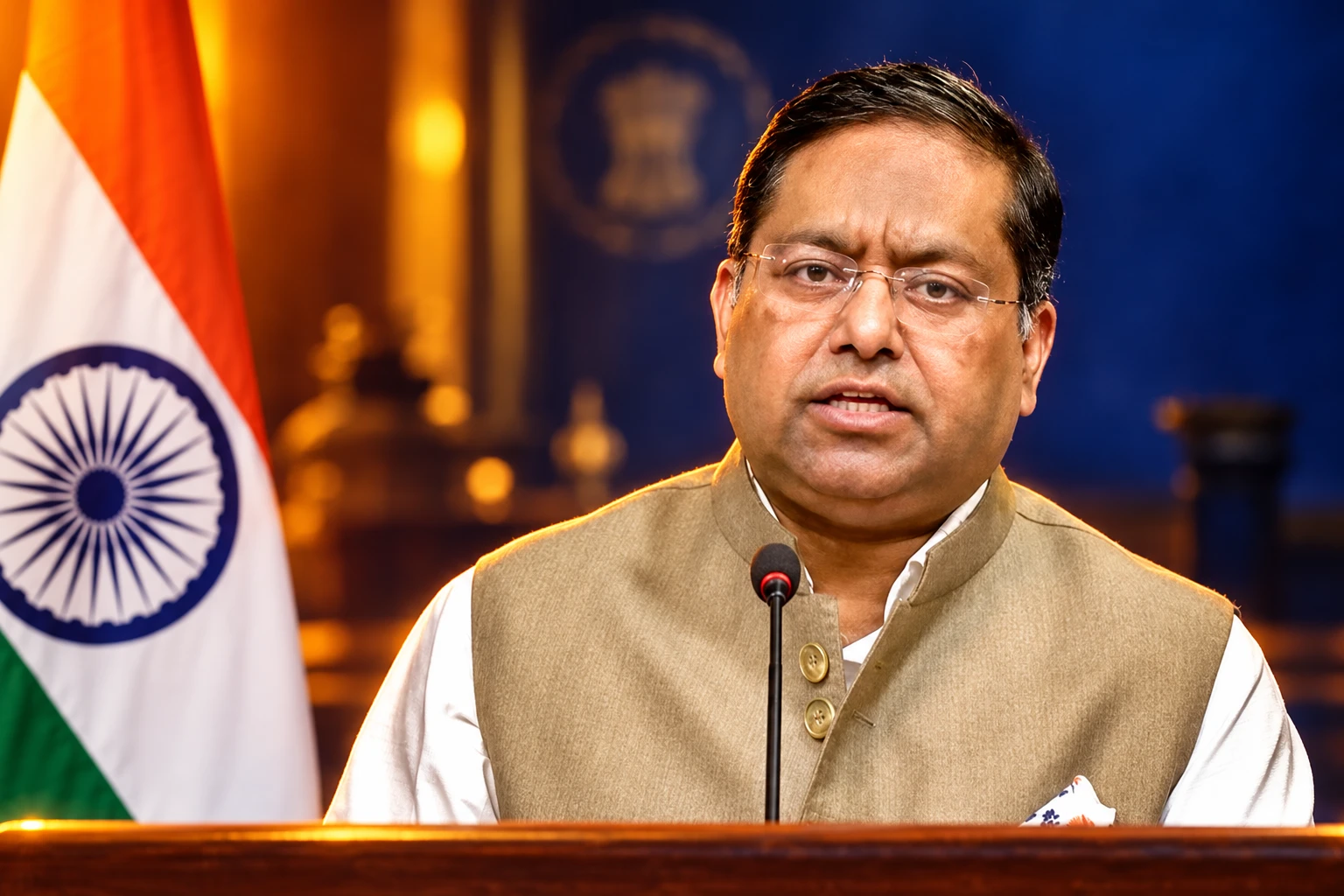
Xi was in New Delhi on September 12 and 13 for the 18th BRICS Summit. Modi held a bilateral meeting on September 12. The Prime Minister’s Office said both men welcomed “steady progress” since they last met in Tianjin in August 2025, and that “differences should not become disputes.”
On September 16, a Chinese boundary official was in Islamabad to start a joint body on a frontier India says does not exist. The calendar gap is four days. A standing India-China border talk is still open on the Line of Actual Control. This other table treats the western Karakoram as already closed.
The sequence does not need a new legal theory. China can sit with India on one disputed line and sit with Pakistan on another line it already wrote into a treaty. India answers that the second line runs across land Pakistan could not give away.
The 1963 Pact Still Calls Itself Provisional
Zulfikar Ali Bhutto, then Pakistan’s foreign minister, and Chen Yi, China’s foreign minister, signed the boundary agreement in Peking on March 2, 1963. The title of the 1963 agreement circulated at the United Nations speaks of “contiguous areas, the defence of which is under the actual control of Pakistan.” Even the heading stops short of calling those areas Pakistani sovereign soil.
Article 6 of that pact is still the clause that undercuts a claim of finality. After a settlement of the Kashmir dispute between Pakistan and India, “the sovereign authority concerned will reopen negotiations” with China “so as to sign a formal Boundary Treaty to replace the present agreement.” If that later authority is Pakistan, the 1963 line is to be kept. If it is not, the door is open.
Bhutto told the UN Security Council on March 26, 1963, that Article 6 “makes it clear that the Agreement is of a provisional nature.” Jawaharlal Nehru, speaking in Parliament on March 5, 1963, said that if one went by Pakistan’s own maps, “Pakistan has obviously surrendered over 13,000 square miles of territory.” That figure was about claims drawn on maps of Sinkiang, a different quantity from the 5,180 square kilometres India counts in the Shaksgam transfer.
THE LINE FROM PACT TO PANEL
- March 2, 1963: Bhutto and Chen Yi sign the boundary agreement in Peking, with Article 6 leaving a later formal treaty open.
- March 26, 1965: The two sides sign a protocol that places markers and maps on that alignment.
- September 13, 1987: They sign the protocol of the first joint inspection of the same line.
- May 22, 2013: The boundary management treaty creates a standing joint commission under Article 45.
- September 12, 2026: Modi and Xi meet in New Delhi on the BRICS sidelines.
- September 16, 2026: The commission meets for the first time in Islamabad; India rejects it the same day.
The 1963 body was a Joint Boundary Demarcation Commission with a one-time brief to survey, plant markers and draw maps. That work ended when the protocol and maps were signed. The 2013 commission is built to keep managing a line already treated as drawn, including markers that cannot be put back in the original spot, so long as the line itself is not moved.
How Much Ground Is at Stake
India’s case is that the former princely state of Jammu and Kashmir acceded on October 26, 1947, and that Pakistan had no title to hand any of it to China. A Manohar Parrikar Institute for Defence Studies and Analyses brief puts the old state’s area at 222,236 square kilometres and counts 5,180 square kilometres in the Shaksgam Valley as the tract Pakistan tried to cede in 1963.
LAND INDIA SAYS WAS NEVER PAKISTAN’S TO GIVE
| Tract | Area | Who holds it | India’s line |
|---|---|---|---|
| Former princely state of Jammu and Kashmir | 222,236 sq km | Split | Acceded to India on October 26, 1947 |
| Pakistan-held Jammu and Kashmir | 78,114 sq km | Pakistan | Illegal occupation |
| Aksai Chin, in Ladakh | about 38,000 sq km | China | Illegal occupation (MEA figure) |
| Shaksgam Valley, trans-Karakoram | 5,180 sq km | China, via the 1963 pact | Cession illegal and invalid |
Shaksgam sits north of the Siachen Glacier. China administers it as part of Xinjiang. India files it with the Union Territory of Ladakh. In January 2026, Randhir Jaiswal, official spokesperson of the Ministry of External Affairs, again called Shaksgam Indian territory and said New Delhi does not accept the 1963 deal. In May 2024 the same spokesman said India had protested Chinese road work in the valley and reserved the right to “take necessary measures.”
Khunjerab Is the Border They Want to Run
Pakistan’s readout of the new panel put trade and people-to-people traffic beside surveys and markers. The land link that makes that language concrete is the Khunjerab Pass, the sealed road between Xinjiang and Gilgit-Baltistan. A May 2026 Pakistan-China joint statement already called for heavier use of that pass under an upgraded China-Pakistan Economic Corridor.
India has never accepted CPEC. Jaiswal said in January 2026 that New Delhi “do[es] not recognize the so-called China-Pakistan Economic Corridor either, which passes through Indian territory that is under forcible and illegal occupation of Pakistan.” A joint commission that can bless cross-border roads, cables and pipelines is a tool for that corridor, not only for cairns on a ridgeline.
A commission is also a file. Minutes, surveys and marker logs pile up. Twenty years of that paper can be shown to anyone who later asks who held the ground. The 1963 pact already tried to turn occupation into a line. The 2013 treaty tried to turn that line into a system. The Islamabad meeting tries to turn the system on.
What the New Commission Is Built to Do
Foreign Office language and the 2013 text describe a standing desk, not a one-off survey party. The work sits in a few lanes.
JOBS WRITTEN INTO THE 2013 SYSTEM
- Markers: Inspect, repair and, if a pillar cannot go back on the old spot, pick another point without changing the line.
- Surveys: Run joint checks and keep maps and coordinates current.
- Cross-border works: Agree on roads, pipelines, cables, bridges and other facilities that cross the line.
- Incidents: Handle breaches, stray livestock, fires and other events along the frontier.
- Traffic: Ease trade and people movement through agreed ports, including Khunjerab.
None of those tasks requires India to be in the room. All of them assume a Pakistan-China boundary that India says is a legal fiction. The more the two sides meet, the more the fiction looks like administration.
Paperwork Does Not Vacate Occupied Ground
Jaiswal answered the same day with a five-point reply on September 16. He said Pakistan has “no locus standi to enter into arrangements concerning Indian territory under its illegal and forcible occupation.” He said any “so-called boundary cooperation” about those lands would be “completely unacceptable” and would have “no bearing whatsoever” on India’s sovereignty.
Our response to media queries on the so-called Pakistan-China Boundary Joint Commission ⬇️
🔗 https://t.co/i3x1x8eluC pic.twitter.com/Nt6QfhHqjA
— Randhir Jaiswal (@MEAIndia) September 16, 2026
Instead of engaging in such theatrics, we call on Pakistan to immediately vacate from areas under its illegal and forcible occupation.
Randhir Jaiswal, Official Spokesperson, Ministry of External Affairs, New Delhi, September 16, 2026
He added that the Union Territories of Jammu and Kashmir and Ladakh “have been, are and will always remain integral and inalienable parts of India,” and that India has “never recognised” the 1963 agreement, which it calls “illegal and invalid.” Beijing had not issued a matching public reply to that rejection by September 17.
The 1963 text still says a later sovereign may have to sit down with China again. The new commission is built to act as if that conversation is over. India’s September 16 line was that Pakistan should leave the ground, not manage it with China.

A CubeSat Will Age Whisky That Never Comes Home

A Charity Quote Cost Shia LaBeouf the FKA twigs NDA

Looker Turned a Model’s Body Into Ad Inventory

Infinity Ward Bets a Paid DMZ Will Stick This Time

Disney Sidesteps a Kimmel Renewal as Failla Cites Losses

How to Get Pre Boarding on Southwest – Skip the Line with These Tricks

False AI Intel Nearly Put US Crews on a Chinese Ship

Tim Cook’s $4.6 Trillion Apple Still Runs on One Phone

OpenAI Posts a Navier-Stokes Proof Clay Has Not Touched

Dunes Air Sues Nora Fatehi Over Its Luxury Jet
-
 TRAVEL3 years ago
How to Get Pre Boarding on Southwest – Skip the Line with These Tricks
-
 NEWS1 month ago
False AI Intel Nearly Put US Crews on a Chinese Ship
-
 BUSINESS2 months ago
Tim Cook’s $4.6 Trillion Apple Still Runs on One Phone
-
 NEWS2 months ago
OpenAI Posts a Navier-Stokes Proof Clay Has Not Touched
-
 ENTERTAINMENT2 months ago
Dunes Air Sues Nora Fatehi Over Its Luxury Jet
-

 LIFESTYLE3 years ago
How Often Do You Have to Change a Monkey’s Diaper? The Truth About Pet Monkeys
-

 NEWS2 months ago
Australia Treats Cloud Software Payments as Taxable Royalties
-

 LIFESTYLE3 years ago
How Long Does It Take for Armpit Hair to Grow? The Stages of Hair Growth and How to Shave It