
NEWS
Pneumocystis jirovecii Evolved Resistance to a Human Transplant Drug
NIH-led work shows mycophenolic acid selected Pneumocystis IMPDH mutants in transplant patients, a host drug quietly training a pneumonia fungus.

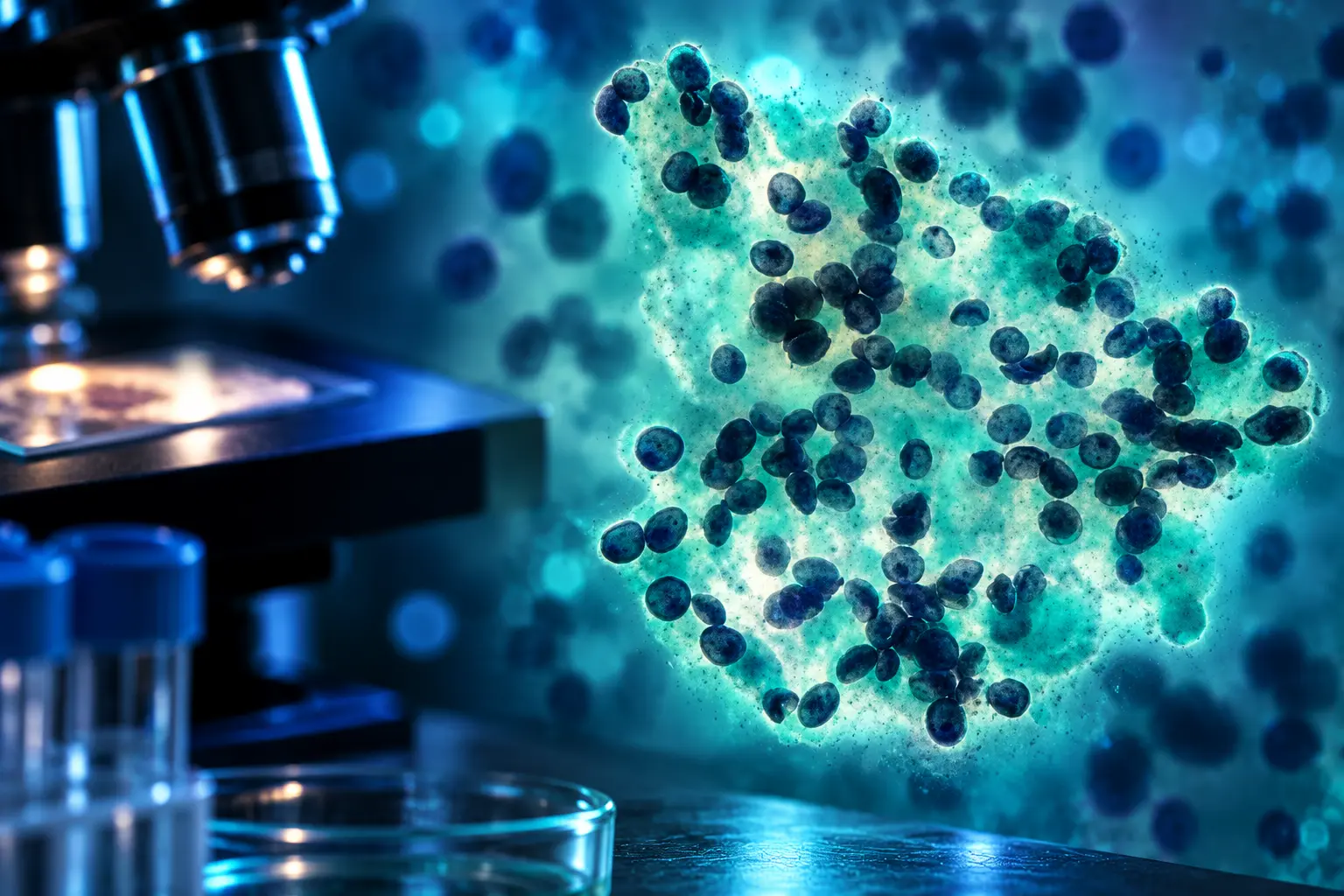
A pneumonia fungus that preys on transplant patients has evolved resistance to mycophenolic acid, a pill meant to stop organ rejection, not to kill microbes. Researchers at the National Institutes of Health Clinical Center, with partners in six countries, reported the finding on 16 September 2026. They tracked Pneumocystis jirovecii through outbreaks and control cases, then showed that mutated copies of a shared enzyme shrug off the drug in the lab.
The work does not say the usual pneumonia medicines have failed. It says a human-targeted therapy has been applying quiet pressure on a pathogen, and that mutant strains then moved through transplant clinics.
The Pill and the Fungus Share One Enzyme
Mycophenolic acid, sold as the prodrug mycophenolate mofetil under the brand CellCept, is an antimetabolite immunosuppressant. The U.S. Food and Drug Administration first approved it in 1995 for prophylaxis of organ rejection after kidney, heart, or liver transplants, used with other immune-suppressing drugs. Adult kidney dosing is 1 g twice daily. Heart and liver dosing is 1.5 g twice daily by mouth.
The active drug blocks inosine monophosphate dehydrogenase, or IMPDH, the enzyme that turns inosine monophosphate into xanthosine monophosphate on the path to guanosine nucleotides. Human T and B cells lean on that de novo path when they divide. Other human cells can use salvage routes, which is why the pill hits lymphocytes harder than most tissues. P. jirovecii carries a similar IMPDH. That overlap is the whole problem.
Liang Ma, a molecular parasitologist at the NIH Clinical Center, and Joseph A. Kovacs, a critical care physician there, led the international team. Lizbeth Hedstrom, a biochemist at Brandeis University who has long studied IMPDH and mycophenolic acid, worked on the structural models. The published paper is the first to add enzyme-inhibition assays to the genetic map.
Six Mutations Turned Up on 11 Strains
The group analysed 163 P. jirovecii samples from China, Denmark, Germany, Japan, Switzerland, and the United States, collected between 1986 and 2020. Ninety-six came from solid-organ transplant recipients. Sixty-seven came from non-transplant patients with the same pneumonia, none of them on mycophenolic acid. Eighty-four of the 96 transplant patients were on the drug at diagnosis. Ninety-four of those 96 samples came from outbreak investigations. None of the patients had been on anti-Pneumocystis prophylaxis before they fell ill.
Sequencing found six relatively common mutations in the fungal impdh gene: H108Y, A261T, A261S, L285I, L285V, and Q289L. Four had not been reported before. A261T was the known one, already tied to mycophenolic acid in earlier French work. Each of the six showed up in 4% to 21% of transplant samples and in 0% to 1% of controls. Taken together, a mutation was present in 83 of 96 transplant samples (86%) and in 9 of 67 control samples (13%).
THE TRANSPLANT SAMPLES
| Group | Samples | On mycophenolic acid | IMPDH mutation present |
|---|---|---|---|
| Solid-organ transplant recipients | 96 | 84 | 83 (86%) |
| Non-transplant controls | 67 | 0 | 9 (13%) |
| Total | 163 | 84 | 92 |
Five of the six mutations were strongly associated with transplant status and with prior mycophenolic acid exposure. H108Y, found only in Switzerland, did not reach that statistical bar. The mutations sat in conserved catalytic stretches of the enzyme. Structural models predicted that four of them destabilise the protein and weaken mycophenolic acid binding. In the published study, the team made normal and mutated fungal IMPDH in the lab and exposed both to the drug. All six mutations conferred resistance in those inhibition assays, and the mutated enzymes needed considerably more mycophenolic acid than the normal enzyme, depending on the change.
That is still enzyme-level evidence, not a treatment trial in infected people. The authors say so. Cohort sizes and clinical files were limited. The pattern across countries is still hard to wave away: the same class of change arose again and again wherever the drug was used.
Why Transplant Clinics Kept Seeing Outbreaks
The mutations did not spread from one lucky clone. They appeared independently in 11 distinct strains between 2005 and 2019, with switching inside and between strains. Four mutations each sat on two to four different genotype profiles. A261T showed up in 20 isolates; 19 of those belonged to one strain labelled EU8, and one belonged to another. A U.S. isolate with L285I matched EU8. Two Chinese isolates with different mutations looked like the same strain on other markers. That is local adaptation under the same pressure, not a single export.
Geography was patchy. None of the six mutations was found in all six countries. A261T, A261S, and L285I turned up on three continents. L285V and Q289L were shared between Europe and Asia. Switzerland carried five of the six. Japan carried four. Everyone else had three or fewer.
Time left a trail in the outbreak files. In Switzerland, three outbreaks from 2005 to 2012 shifted from H108Y to A261S and then to A261T. The A261T strain in a 2007 Zurich outbreak was the same one seen in a 2006 Munich outbreak. In Copenhagen, from 2007 to 2010, strains moved from wild type to mutant during a single outbreak among transplant recipients.
THE MPA SELECTION TIMELINE
- 1995: The FDA approves mycophenolate mofetil (CellCept) to prevent organ rejection.
- 1995 to early 2000s: Early rejection trials report less Pneumocystis pneumonia in patients on the drug than in untreated controls, a hint of incidental antifungal activity.
- 2005 to 2012: Swiss outbreaks shift from H108Y to A261S to A261T; Zurich 2007 shares an A261T strain with Munich 2006.
- 2007 to 2010: A Copenhagen outbreak moves from wild-type to mutant strains.
- 2005 to 2019: Six IMPDH mutations arise independently in 11 strains across six countries.
- 16 September 2026: The NIH-led team publishes genetics plus enzyme assays showing the mutants resist mycophenolic acid.
A separate 2025 cross-sectional study in France and Switzerland had already put a sharp number on one of those changes. The G1020A (Ala261Thr) mutation sat in 40 of 58 transplant recipients with the pneumonia and in none of 59 non-transplant controls. After adjustment, mycophenolic acid exposure at diagnosis carried an odds ratio of 73.61. The allele also tracked with involvement in a case cluster. The new global set widens that picture from one mutation in two countries to six mutations on 11 strains.
The Accidental Antifungal Effect Wore Off
Mycophenolic acid is not, and has never been, a treatment for Pneumocystis pneumonia. It still has antifungal activity in the test tube, because the fungus needs IMPDH too. Short-term cultures of the related rat organism P. carinii, and recombinant P. carinii IMPDH, were inhibited by the drug. In a rat model, mycophenolic acid protected animals against infection. That incidental effect likely helped suppress wild-type strains in patients taking the pill after 1995, which is one reason early trials saw less pneumonia.
Once mutants could tolerate the drug, that bonus faded. Wild-type fungus stayed suppressed in people on mycophenolic acid. Mutant fungus did not. In a transplant clinic, where patients share waiting rooms and the same anti-rejection stack, a strain with that edge can move. Identical mutant strains in patients with known contact point to new infection, not to old latent bugs waking up.
Nearly all known cases of antimicrobial resistance have been linked to agents that directly target microbes. This paradigm overlooks other drivers of microbial evolution and resistance.
Liang Ma, Joseph A. Kovacs, and colleagues, Science Translational Medicine
The journal’s own account of the paper put the same point in public view the day after issue date.
The standard immunosuppressant mycophenolic acid has unknowingly been driving the emergence of resistance mutations in the high-priority fungal pathogen #Pjirovecii for almost 2 decades across outbreaks worldwide, shows a new study. @NIH https://t.co/dVZSrJawl2 pic.twitter.com/xcTkcRjcjp
— Science Translational Medicine (@ScienceTM) September 18, 2026
The authors of the NIH-led study wrote that the results challenge the status quo of unknown resistance in P. jirovecii, and they called for a fresh look at immunosuppressive strategies and infection-control measures. They also flagged a wider risk: other pathogens can evolve under pressure from human-targeted therapies. That is the second blow. The first is a fungus in transplant wards. The next is any microbe that happens to run the same human pathway a common drug already blocks.
TMP-SMX Still Treats the Pneumonia
Pneumocystis pneumonia is a serious lung infection in people with weak immune systems. The CDC lists HIV, cancer, inflammatory disease, and solid-organ or stem-cell transplant among the main risk groups, and estimates that 30% to 40% of people who get the pneumonia have HIV. There were 10,590 estimated U.S. hospitalizations in 2017. The fungus spreads through the air. Some healthy adults carry it without symptoms and can pass it on. There is no vaccine.
Standard treatment is still an antibiotic, not an antifungal. The CDC’s usual course is trimethoprim/sulfamethoxazole for three weeks, by mouth or vein. That drug hits folate metabolism. Mycophenolic acid hits IMPDH. Resistance to the transplant pill does not, on this evidence, mean the pneumonia drug has stopped working. Prophylaxis with the same combination remains the main shield after transplant, typically for 6 to 12 months, and longer in lung recipients and other high-risk groups.
What the new genetics change is the risk map around mycophenolic acid itself. The authors argue that exposure should be treated as a risk factor for pneumonia caused by these mutant strains, in transplant patients and in anyone else on the drug. They point to longer chemoprophylaxis, isolation precautions in transplant clinics, and a stop to cohorting recipients in the same room. Those are infection-control moves, not a call to abandon a rejection drug that still keeps grafts in place.
WHAT STILL WORKS AGAINST PCP
- First-line treatment: Trimethoprim/sulfamethoxazole for three weeks remains the CDC’s usual course, and it targets folate, not IMPDH.
- Routine prophylaxis: The same drug, at lower doses, is still the main preventive after solid-organ transplant, often for 6 to 12 months.
- Clinic hygiene: The NIH-led team advises prolonged prophylaxis for people on mycophenolic acid, isolation at transplant clinics, and no room-sharing among recipients during outbreaks.
- What this paper does not show: Failure of trimethoprim/sulfamethoxazole, or a need to drop mycophenolic acid as anti-rejection therapy on this evidence alone.
Among people who follow this literature, the paper is being read as a mechanism warning. The impulse is not to yank CellCept off transplant lists tomorrow. It is to stop treating mycophenolic acid as if it were invisible to the fungus that already lives in those clinics.
A Pressure Hospitals Were Not Watching
The World Health Organization put P. jirovecii on its 19-fungus priority pathogens list in 2022, in the medium group, citing disease burden and the limits of current tools. WHO listed unknown resistance as part of that picture. The new study is a direct hit on that unknown. The mutants are not a lab curiosity. They are already in outbreak strains on three continents.
The deeper cut is the class of pressure. Antimicrobial resistance is usually told as a story about antibiotics, antifungals, and the bugs they were built to kill. Mycophenolic acid was built for human lymphocytes. It still selected six IMPDH mutations in Pneumocystis jirovecii because the fungus happens to use the same enzyme. Any host-directed drug that leaks onto a microbial target can run the same experiment, and hospitals will not see it if they only watch the drugs labelled as antimicrobials.
WHAT WE KNOW
- The genetics: Six IMPDH mutations, four of them new, are strongly tied to mycophenolic acid and to transplant outbreaks in six countries.
- The lab test: All six mutations made fungal IMPDH harder for mycophenolic acid to inhibit.
- The clinical limit: Resistance has not been proven in infected patients, and the study did not test trimethoprim/sulfamethoxazole.
WHAT IS UNCONFIRMED
- Patient-level failure: Whether mutant strains make pneumonia worse, longer, or more likely to recur on mycophenolic acid is still open.
- How far to change regimens: Whether centres should switch anti-rejection drugs, extend prophylaxis for every mycophenolic acid patient, or both, is not settled by this paper.
Ma, Kovacs, and colleagues asked transplant programmes to re-evaluate immunosuppressive strategies and infection control. Until those programmes have strain data of their own, the practical move is the dull one: keep trimethoprim/sulfamethoxazole in place, stop clustering recipients during clusters, and treat mycophenolic acid as a selective pressure, not just a rejection pill.
Frequently Asked Questions
What is mycophenolic acid used for in transplant patients?
Mycophenolic acid is the active form of mycophenolate mofetil (CellCept), approved in the United States since 1995 to help prevent rejection of kidney, heart, and liver grafts when used with other immunosuppressants. The FDA label also warns that CellCept oral products are not interchangeable with mycophenolic acid delayed-release tablets, because the absorption rates are not the same, and that the drug raises the risk of opportunistic infection.
Does this resistance mean standard PCP treatment has failed?
No. The mutations affect IMPDH, the target of mycophenolic acid. Standard treatment and prevention of Pneumocystis pneumonia still rely on trimethoprim/sulfamethoxazole, which blocks folate metabolism, and the CDC notes that typical antifungal drugs do not work against this infection. This paper did not test whether the mutants change how that antibiotic performs.
Why did researchers test enzymes instead of treating patients with mycophenolic acid?
P. jirovecii has never been grown in a standard laboratory culture, because it lives only in mammalian lungs, so the team could not run classic drug-bug plates. They sequenced residual clinical DNA, modelled the protein, and then made normal and mutated fungal IMPDH in the lab to measure how much mycophenolic acid it took to stop the enzyme.
How does Pneumocystis pneumonia spread between people?
The fungus moves through the air from person to person. The CDC says some healthy adults carry it in their lungs without getting sick and can still pass it to people with weaker immune systems, which is why transplant clinics that seat recipients together during an outbreak are a transmission risk even when no one looks ill.
Is Pneumocystis jirovecii on the WHO fungal priority list?
Yes. The 2022 WHO fungal priority pathogens list names 19 fungi or fungal groups. P. jirovecii sits in the medium-priority group, alongside Scedosporium, Coccidioides, Cryptococcus gattii, and others, while the critical group is limited to Cryptococcus neoformans, Candida auris, Aspergillus fumigatus, and Candida albicans.
Disclaimer: This article is news reporting and analysis of a published research study. It is for information only and is not medical advice, a treatment recommendation, or a guide to changing transplant medicines, pneumonia prophylaxis, or infection-control practice. Readers who have had a transplant, take mycophenolate, or have questions about Pneumocystis pneumonia should talk with their transplant physician or an infectious-disease specialist before making any change. Sample counts, mutation rates, and clinical statuses come from the cited papers and agency pages as of 16 September 2026 and may be updated as more isolates are sequenced.

A CubeSat Will Age Whisky That Never Comes Home

A Charity Quote Cost Shia LaBeouf the FKA twigs NDA

Looker Turned a Model’s Body Into Ad Inventory

Infinity Ward Bets a Paid DMZ Will Stick This Time

Disney Sidesteps a Kimmel Renewal as Failla Cites Losses

How to Get Pre Boarding on Southwest – Skip the Line with These Tricks

False AI Intel Nearly Put US Crews on a Chinese Ship

Tim Cook’s $4.6 Trillion Apple Still Runs on One Phone

OpenAI Posts a Navier-Stokes Proof Clay Has Not Touched

Dunes Air Sues Nora Fatehi Over Its Luxury Jet
-
 TRAVEL3 years ago
How to Get Pre Boarding on Southwest – Skip the Line with These Tricks
-
 NEWS1 month ago
False AI Intel Nearly Put US Crews on a Chinese Ship
-
 BUSINESS2 months ago
Tim Cook’s $4.6 Trillion Apple Still Runs on One Phone
-
 NEWS2 months ago
OpenAI Posts a Navier-Stokes Proof Clay Has Not Touched
-
 ENTERTAINMENT2 months ago
Dunes Air Sues Nora Fatehi Over Its Luxury Jet
-

 LIFESTYLE3 years ago
How Often Do You Have to Change a Monkey’s Diaper? The Truth About Pet Monkeys
-

 NEWS2 months ago
Australia Treats Cloud Software Payments as Taxable Royalties
-

 LIFESTYLE3 years ago
How Long Does It Take for Armpit Hair to Grow? The Stages of Hair Growth and How to Shave It