
BUSINESS
EIL Seeks Hormuz Bypass Work After Saudi Line Is Hit
EIL is in early talks on $1 billion of Gulf oil lines and storage, a new Hormuz bypass layer after drones hit the 1981 Saudi pipeline.

State-run Engineers India Ltd is in early talks with Saudi Arabia and the UAE on about $1 billion of pipelines, tanks and oil terminals designed to move crude around the Strait of Hormuz. Chairman and managing director Atul Gupta told reporters after the company’s annual meeting on September 18 that both countries are still at the planning stage and that EIL is already in those rooms.
The work would sit on top of export lines the Gulf built after earlier wars. The largest of those lines, Saudi Arabia’s East-West pipeline from 1981, was shut in early September after drones launched from Iraq hit pump stations on the route to Yanbu.
Saudi Arabia Built This Line in 1981
The East-West pipeline, also called Petroline, runs about 1,200 kilometres from Abqaiq in the Eastern Province to the Red Sea port of Yanbu. Saudi Arabia laid it during the Iran-Iraq war so tankers would not have to run the Strait of Hormuz, a 29-nautical-mile gap between Oman and Iran that still handles most Gulf oil.
The International Energy Agency describes two crude lines with a combined design of 5 million barrels a day. Aramco said in March 2025 that it had lifted that to 7 million, a rate the agency said had not been tested in sustained use. About 2 million barrels a day were already moving on the system in early 2026, which left several million barrels of spare room if Hormuz jammed.
That spare room is why the line became the kingdom’s wartime outlet once fighting with Iran closed most tanker traffic in late February. It is also why a strike on the same steel now cuts the workaround the 1980s were supposed to buy.
THREE WAVES OF HORMUZ BYPASS STEEL
- 1981: Saudi Arabia commissions the East-West crude line from Abqaiq to Yanbu so exports can reach the Red Sea without entering Hormuz.
- 2012: The UAE starts the Abu Dhabi Crude Oil Pipeline from Habshan to Fujairah on the Gulf of Oman, with a nameplate of 1.5 million barrels a day.
- 2025 to 2027: Abu Dhabi builds a second Fujairah line, already half finished in May 2026, while Saudi and UAE planners discuss more pipe, tanks and terminals, the slice EIL is now pitching.
Kuwait, Qatar, Bahrain and Iraq still send almost all of their oil through the strait. Oman loads on the Arabian Sea, outside the chokepoint. The pattern is blunt: the producers who paid for a land route in an earlier war still have one. The rest do not.
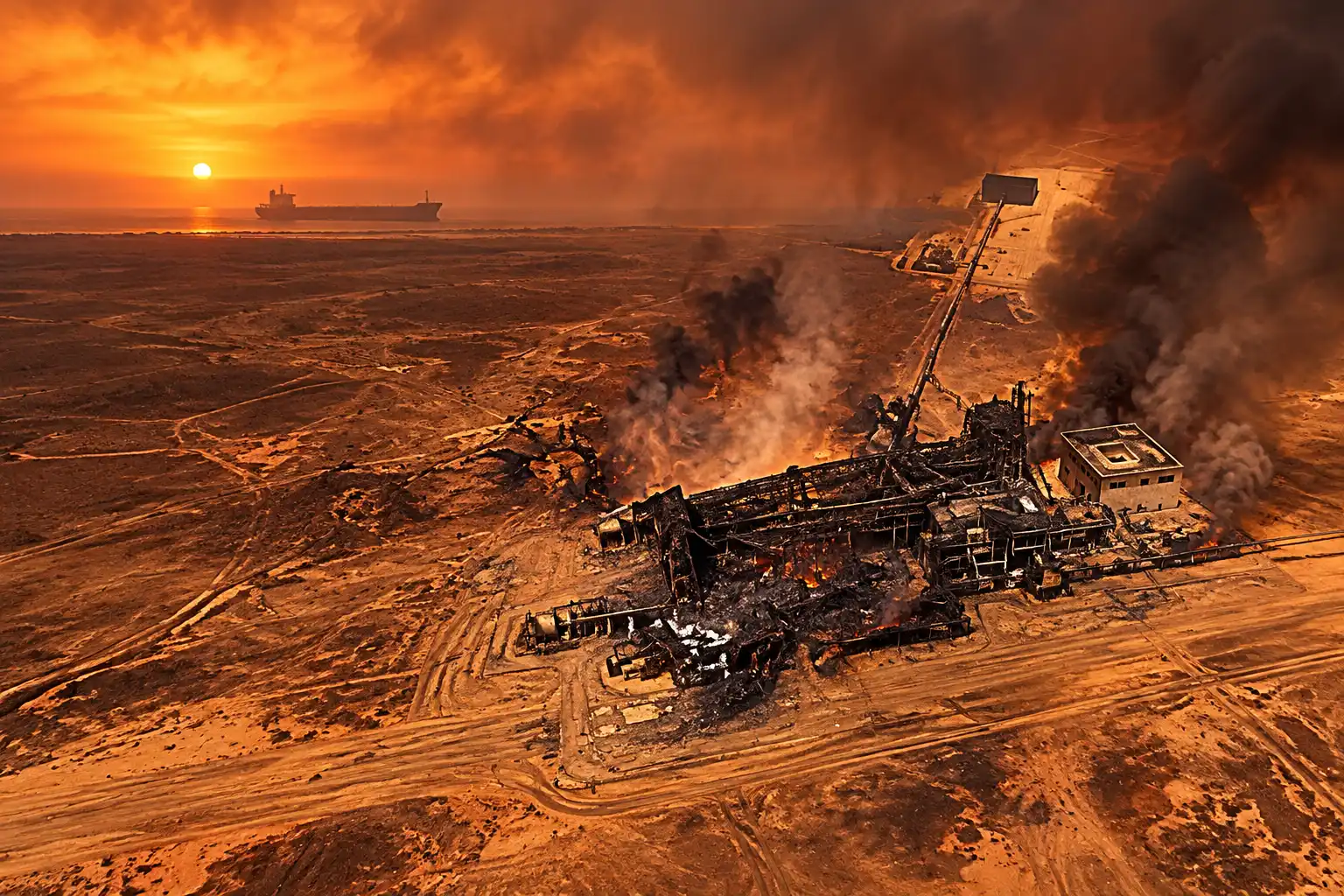
Fujairah Already Moves Oil Past Hormuz
The UAE’s answer is shorter and exits to open water. The Abu Dhabi Crude Oil Pipeline runs about 400 kilometres from onshore fields at Habshan to Fujairah, east of the strait. Tankers that load there never enter the Persian Gulf.
The IEA puts the original nameplate at 1.5 million barrels a day and current capacity close to 1.8 million. In a normal year the UAE already pushed about 1.1 million barrels a day down that pipe, so the spare cushion on the eve of the war was only a few hundred thousand barrels. Once Hormuz seized up, Fujairah stopped being a hedge and became the main door.
That is why Gupta, at the September 18 meeting, singled out extra underground oil storage at Fujairah as part of the UAE’s next build. Caverns next to an open-water terminal let Abu Dhabi hold crude on the safe side of the strait and load when a berth or a tanker is free, instead of waiting on a convoy through mined water.
The Bypass Took a Drone Hit in September
Drones from Iraqi territory struck the East-West route in the Riyadh and Medina regions on September 10 and 11. The Saudi energy ministry halted the line as a precaution. The foreign ministry said the attack caused injuries and damage that crews were still addressing. The IEA, in an 18 September note, treated that shutdown as a fresh cut to the bypass flows that had been carrying the market.
Those flows had already peaked and slipped before the drones. Yanbu and Fujairah bypass exports rose from 4.1 million barrels a day in February to 7.8 million in June, then fell to 5.5 million in August after Houthi attacks in the Red Sea. Hormuz itself averaged only 7.6 million barrels a day in August, 13.1 million below the agency’s pre-war mark, with cumulative lost waterway loadings near 2.8 billion barrels.
WHERE THE OIL WENT IN 2026
| Reading | Yanbu plus Fujairah | Hormuz tanker flows |
|---|---|---|
| February 2026 | 4.1 million barrels a day | War begins, traffic collapses |
| June 2026 | 7.8 million barrels a day | Partial recoveries under escort |
| August 2026 | 5.5 million barrels a day | 7.6 million barrels a day |
The bypass offset more than 500 million barrels, about 2.8 million a day, from the start of the fighting through August. Then the 1981 line, the piece of kit that made the Saudi half of that offset possible, went offline. Repair talk has ranged from days to several weeks. Aramco has not published a restart date.
A Second Abu Dhabi Line Is Half Built
The UAE did not wait for EIL’s phone call to start the next layer. Dr Sultan Al Jaber, ADNOC’s managing director and group chief executive, said on May 20 that a second oil pipeline to Fujairah was 50% complete, that work had started in 2025, and that the company was speeding delivery toward 2027. He said the line will double export capacity from Fujairah.
Right now, too much of the world’s energy still moves through too few chokepoints. That is exactly why the UAE made the decision more than a decade ago to invest in infrastructure that bypasses the Strait. And it is why we moved ahead with our second pipeline in 2025. Today it is already 50% complete, and we are accelerating delivery toward 2027.
Sultan Al Jaber, ADNOC Group CEO, Abu Dhabi, May 20, 2026
The U.S. Energy Information Administration, in its chokepoints review, already counted another 1.5 million barrels a day by 2027 on a Jebel Dhanna to Fujairah route. Kpler, the cargo tracker, has said Gulf work is clustering on extra steel in corridors that already exist, and that some of those new pipelines in one to two years will run beside ADCOP rather than across new borders. Saudi talks on a parallel products line and on Yanbu loading berths sit on a longer clock, because the port, not the desert pipe, is the pinch point.
WHAT THE NEXT LAYER LOOKS LIKE
- Second Fujairah crude line: Abu Dhabi’s West-East project, half built in May 2026, aimed at 2027, meant to double loadings on the Gulf of Oman.
- Fujairah caverns: Extra underground crude storage that Gupta said the UAE is planning beside the open-water terminal.
- Yanbu and Red Sea kit: Debottlenecking of berths and tanks that have to keep up if Petroline ever runs near the 7 million barrels Aramco has claimed.
- Planning studies: The feasibility, design and project-management slice Saudi Arabia and the UAE have put at about $1 billion, which is the work EIL wants.
Al Jaber also restated ADNOC’s $150 billion five-year capital plan. That is a different pile of money from the $1 billion planning package Gupta described. One is a national oil company’s full spend. The other is a wartime add-on of pipes, tanks and terminals.
What EIL Is Bidding For in the Gulf
Gupta was clear about the grade of work. EIL wants consultancy and feasibility mandates, then the design, project-management and construction-management jobs that usually follow. It is not claiming the construction of a new trans-peninsula trunk line. “They are at the planning stage and we are involved in discussions at the planning stage,” he said.
The company already has a Saudi office and a long-term in-Kingdom services agreement with Saudi Aramco. It works in the UAE, Bahrain and Kuwait. Overseas jobs are 43% of the order book, a share that made the Gulf freeze sting. International consultancy brought in ₹4,929 crore in the year ended March 2026, nearly 62% of fresh business, a different cut from the 43% overseas share of the whole book.
On the May 22 earnings call, Vivek Midha, EIL’s chief general manager for marketing and business development, told analysts that about 30% of business secured had come from the Middle East and that big-ticket awards due in April and May had slipped. “The focus is more on the revamp of the facilities because of the damages what happened and the new projects are a little bit on the slower side,” he said. Gupta’s September account matched that: Gulf clients were busy securing and restoring plants, and EIL had booked only ₹510 crore from the region since the Iran war started.
EIL’S BOOKS AFTER THE AGM
- Order book: An order book of Rs.15,109 crores in March, up from ₹11,717 crore a year earlier, and about ₹17,000 crore by the September meeting.
- Fresh business: ₹7,978 crore in FY26, slightly below ₹8,214 crore the year before.
- Profit: Turnover of ₹3,849 crore, about 27% above ₹3,028 crore, and profit of ₹638 crore, about 37% above ₹465 crore, with operating margin at 16.22% against 14.76%.
- Gulf since the war: ₹510 crore of new orders, against a region that had been a growth engine.
Gupta took charge as chairman on June 29. The September meeting was his first annual general meeting in the job. He also pointed to work outside the Gulf, including an EPCM mandate of about $360 million on the Dangote refinery expansion in Nigeria, as the firm tries to spread beyond hydrocarbons into infrastructure, renewables, hydrogen, biofuels, nuclear and defence.
Design work is the leading edge of a Gulf spend cycle, not the weld line. In-Kingdom and in-country value rules in Saudi Arabia and the UAE often keep foreign firms in study rooms and owner’s-engineer seats while local joint ventures pour the concrete. That is the slot EIL is built for. It is also why a $1 billion planning package can matter to a consultancy even when it is small next to ADNOC’s capital budget or a new trunk line.
Twenty Million Barrels Still Need a Route
The IEA’s pre-war factsheet put oil moving through Hormuz at 20 million barrels a day in 2025, about 25% of seaborne oil trade, with 80% of it headed to Asia. China and India together took 44% of the crude. Available pipe capacity to skip the strait was only 3.5 to 5.5 million barrels a day.
Even a second Fujairah line at 1.5 million barrels, plus a repaired Petroline, does not close that gap. Qatar’s LNG has no land exit at all. Product exports of about 5 million barrels a day also used the strait in 2025. A bypass built for crude does not automatically clear naphtha, diesel or gas.
The September drone hits made the arithmetic harsher. A land line that was sold as an escape from Hormuz became another target, and Yanbu’s tanks sit on a Red Sea that Houthis have already shot at. Fujairah still looks like the better door because a ship that loads there is already in the Indian Ocean. That is the logic behind more caverns and a second pipe on the same corridor, and it is why Gupta’s $1 billion conversation keeps coming back to storage and terminals, not only to kilometres of desert steel.
Indian refiners sit on the receiving end of the same map. A state engineer that helps design Gulf exits is, in a narrow way, working on the physical backup for barrels that Indian plants have been struggling to replace while the strait stays dangerous. That does not make EIL a substitute for a reopened waterway. It does explain why New Delhi’s own hydrocarbon consultant is in the planning meetings.
Gupta Wants Orders Back in the Second Half
Gupta would not pretend the war has been good for bookings. “There has been a slowdown in order inflows from the region but we hope to see the order inflow pick up in Q3 and Q4,” he said. He also said the fighting had opened more work.
Definitely, the conflict has opened more opportunities for us.
Atul Gupta, Chairman and Managing Director, Engineers India Ltd, 61st AGM press meeting, September 18, 2026
Those two sentences are the whole trade. Gulf producers are restoring plants first and writing new project cheques second. EIL’s international book, which carried the last two years of growth, is waiting on that sequence. The $1 billion planning package is real only if Saudi Arabia and the UAE move from studies to sanctioned jobs, and only if the 1981 line and the 2012 line are no longer absorbing every available engineer on repairs.
Gupta’s own test is the second half of the Indian fiscal year. If Q3 and Q4 inflows from the Gulf return, the planning talks will have started to look like the next layer of Hormuz bypass steel, in the same family as Petroline and the Habshan-Fujairah line. If they do not, EIL will have spent a war year on a record book at home and a thin one in the region that was supposed to be its next market.
Disclaimer: This article is news reporting and analysis of Engineers India Ltd’s public comments and of energy-agency data. It is informational only and is not investment advice, a solicitation to buy or sell any security, or a forecast of EIL’s future order inflows or earnings. Readers who may act on company or commodity figures should consult a SEBI-registered investment adviser or another qualified financial professional who can assess their own position. Order-book, capacity and flow figures reflect company remarks and agency publications dated through mid-September 2026 and may change as projects are awarded or as shipping through the strait shifts.

A CubeSat Will Age Whisky That Never Comes Home

A Charity Quote Cost Shia LaBeouf the FKA twigs NDA

Looker Turned a Model’s Body Into Ad Inventory

Infinity Ward Bets a Paid DMZ Will Stick This Time

Disney Sidesteps a Kimmel Renewal as Failla Cites Losses

How to Get Pre Boarding on Southwest – Skip the Line with These Tricks

False AI Intel Nearly Put US Crews on a Chinese Ship

Tim Cook’s $4.6 Trillion Apple Still Runs on One Phone

OpenAI Posts a Navier-Stokes Proof Clay Has Not Touched

Dunes Air Sues Nora Fatehi Over Its Luxury Jet
-
 TRAVEL3 years ago
How to Get Pre Boarding on Southwest – Skip the Line with These Tricks
-
 NEWS1 month ago
False AI Intel Nearly Put US Crews on a Chinese Ship
-
 BUSINESS2 months ago
Tim Cook’s $4.6 Trillion Apple Still Runs on One Phone
-
 NEWS2 months ago
OpenAI Posts a Navier-Stokes Proof Clay Has Not Touched
-
 ENTERTAINMENT2 months ago
Dunes Air Sues Nora Fatehi Over Its Luxury Jet
-

 LIFESTYLE3 years ago
How Often Do You Have to Change a Monkey’s Diaper? The Truth About Pet Monkeys
-

 NEWS2 months ago
Australia Treats Cloud Software Payments as Taxable Royalties
-

 LIFESTYLE3 years ago
How Long Does It Take for Armpit Hair to Grow? The Stages of Hair Growth and How to Shave It