
BUSINESS
Jamie Dimon Backs Chandrasekaran as Tata Capital Takes Sides
Jamie Dimon backed Natarajan Chandrasekaran in Mumbai after meeting him, warning Tata Trusts’ clash with the Tata Sons board could scare off foreign capital.

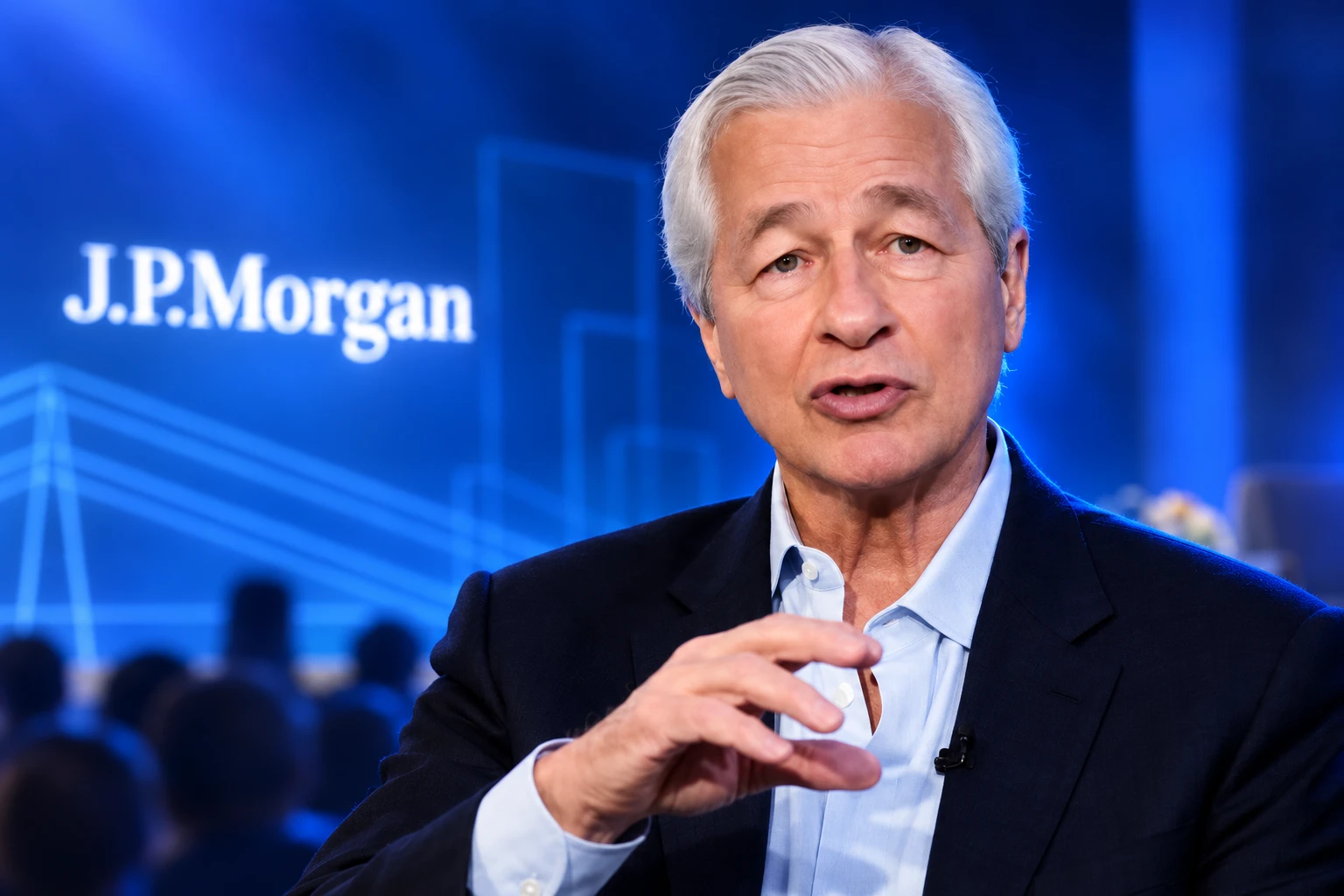
Jamie Dimon said he would never want to lose Natarajan Chandrasekaran, and that Tata Trusts or the Tata Sons board should feel the same. He said it in Mumbai on September 21, hours after he sat with the Tata Sons chairman, and a day after Finance Minister Nirmala Sitharaman met him at JPMorgan’s India conference.
The line landed inside a live fight over who runs Tata Sons and whether the holding company must list. Dimon also told the government, in so many words, that this kind of clash can scare off foreign money.
Dimon Spoke After Meeting Chandrasekaran
Dimon, who has run JPMorgan Chase for more than two decades, was asked how he viewed the conflict at the Tata group. He answered with a character reference, then a policy warning, then a hedge.
I think the world of Chandra. He has done an exceptional job. I knew Ratan Tata before him. He ran the company, built it and created huge value, including for its people and foundations. My view is that public transparency is a good thing. If I were the government, I would be concerned that this kind of conflict could deter foreign investment. You want consistency, transparency, regulations, rules and proper governance at the board level. It’s complex, and I don’t know all the details, but I think Chandra is exceptional. I would never want to lose him. If I were either the trust or the board, I wouldn’t want to lose him.
Jamie Dimon, chairman and CEO of JPMorgan Chase, interview on September 22, 2026
That last clause does the work. He will not umpire Articles of Association. He will say which man he wants in the chair, and he will say a public listing culture is a good thing, while the controlling trusts are trying to keep Tata Sons private.
The intervention is easy to read as courtesy from a visiting banker. It is harder to read that way once the calendar is in view. Dimon was in the city to host global investors. He had just seen Chandrasekaran. He used the government’s ear as the frame for the warning.
Tata Trusts Call the 4-1 Vote Void
On September 17 the Tata Sons board voted 4-1 to give Chandrasekaran another five years as executive chairman when his current term ends on February 20, 2027. Noel Tata, chairman of Tata Trusts and a non-executive director on the same board, cast the only no. Chandrasekaran did not vote.
Tata Sons said Chandrasekaran acceded to the board’s request to reconsider a decision he had already taken. On August 12 he had told directors he would finish the term and not seek another. The Trusts had accepted that and started a successor search. Then the board asked him back.
Tata Trusts called the resolution a legal nullity, then void ab initio, meaning invalid from the start. Their case is that Tata Sons’ Articles require the affirmative vote of a majority of Trust nominee directors, and that a 1-1 split between Noel Tata and Venu Srinivasan, the other Trust nominee, is not a majority. “A majority of two is two and not one,” the Trusts said.
THE PATH TO THE SEPTEMBER 17 VOTE
- July 28, 2025: Tata Trusts pass a unanimous resolution proposing a fresh five-year term for Chandrasekaran.
- August 12, 2026: Chandrasekaran writes that he will not offer himself for a third term when the current one ends.
- September 3, 2026: The nomination and remuneration committee asks him to reconsider and recommends reappointment.
- September 11, 2026: The Reserve Bank of India rejects Tata Sons’ bid to leave the core investment company framework.
- September 17, 2026: The board votes 4-1 to reappoint him and to initiate steps toward listing compliance.
The Trusts have brought in senior advocate Abhishek Manu Singhvi. Former Solicitor General Harish Salve is advising Chandrasekaran. Singhvi has said a court fight now looks likely. The forum is not yet public.
How the Listing Fight Reached the Board
The leadership vote and the listing vote arrived in the same room because the regulator closed the private-company exit six days earlier.
The RBI classified Tata Sons as an upper-layer non-banking financial company in September 2022, a bucket that carried a three-year listing clock. That clock ran to September 30, 2025. Tata Sons stayed unlisted. In 2024 it repaid ₹21,813 crore of debt, turned net cash, and on March 28, 2024 applied to surrender its core investment company registration, the route that would have let it remain a private holding company.
In a letter dated September 11, 2026, the central bank said the request could not be acceded to and told the company to comply with upper-layer rules. Tata Sons’ standalone assets stood at more than ₹2 lakh crore as of March 2026, above the revised test. In June 2026 the RBI restated that the Upper Layer covers NBFCs with a ₹1 lakh crore Upper Layer threshold on the latest audited balance sheet.
THE LISTING MANDATE IN FIGURES
- The clock: Upper-layer classification in September 2022, with a listing window that ended on September 30, 2025.
- The exit try: Debt repaid in 2024, deregistration filed on March 28, 2024, rejected on September 11, 2026.
- The size test: Assets of more than ₹2 lakh crore against a ₹1 lakh crore Upper Layer line.
- The board answer: On September 17, directors resolved to initiate steps to comply, with Noel Tata opposed.
Noel Tata has told the board a listing will destroy the group’s character. He has argued the RBI letter does not name listing as the only step, and that Tata Sons should seek more time and exhaust other options. Tata Trusts said after the meeting that the board had agreed to examine all available options, not listing alone. Tata Sons described a move toward compliance.
Salve has said the company has to become a public company. Singhvi has called the listing question a red herring for the chairman vote, arguing the Articles still govern the appointment even if the RBI fight goes to court.
The Share Register and the Six Directors
Tata Trusts collectively own about 66 percent of Tata Sons. The two largest pieces are the Sir Dorabji Tata Trust, at about 27.98 percent, and the Sir Ratan Tata Trust, at about 23.56 percent. The Shapoorji Pallonji Group holds about 18.4 percent and has wanted a listing so it can unlock value and raise liquidity.
That 66 percent is why the Trusts say the board cannot roll over them. It is also why a split between their own two nominees is now the entire legal case.
HOW THE SEPTEMBER 17 BOARD BROKE
| Director | Seat | Reappointment vote |
|---|---|---|
| Natarajan Chandrasekaran | Executive chairman | Did not vote |
| Noel N Tata | Tata Trusts chairman, non-executive | Against |
| Venu Srinivasan | Trusts nominee, TVS Group chairman emeritus | For |
| Saurabh Agrawal | Executive director and CFO | For |
| Harish Manwani | Independent director | For |
| Anita Marangoly George | Independent director | For |
Srinivasan’s yes is the fracture inside the Trusts. He sat as a Trust nominee and still backed both the five-year term and the listing steps. Noel Tata tried to treat his own no as a veto. The rest of the board went on.
Amit Tandon, founder of Institutional Investor Advisory Services in Mumbai, said it was the first time he had seen the executive go against the larger shareholders. Shapoorji Pallonji, the minority that spent years in court after Cyrus Mistry’s removal, now finds professional managers and independents closer to its listing demand than the charitable trusts that control the company.
Article 121 Was Built for Cyrus Mistry
The Trusts are not inventing a new privilege. They are quoting the same articles Tata Sons defended all the way to the Supreme Court after Mistry was removed as executive chairman on October 24, 2016.
Shapoorji Pallonji companies sued for oppression and mismanagement and attacked, among other clauses, the special powers of Trust nominee directors. The National Company Law Appellate Tribunal sided with Mistry on several points. Tata Sons appealed. On March 26, 2021 the Supreme Court set the tribunal order aside and refused to delete or confine the affirmative-vote machinery.
THE CLAUSES NOW IN DISPUTE
- Article 104B: While the Trusts hold at least 40 percent, they may jointly nominate one-third of the Tata Sons board.
- Article 118: The Trusts say a fresh chairman term must go through the selection committee, not a midstream board revival of a withdrawn candidacy.
- Article 121: Board decisions that need a majority also need the affirmative vote of a majority of Trust nominee directors present; the Trusts say 1-1 is not that majority.
A research paper on the Tata-Mistry judgment records how Article 121 was written so that board decisions need the affirmative consent of a majority of Trust nominated directors. Tata Sons spent five years telling courts those rights were legitimate protections for a 66 percent shareholder. The Trusts now say the company cannot keep the clause for 2016 and ignore it for 2026.
The Mistry fight does not answer this year’s question. In 2016 the Trust nominees were not split on the removal. In 2026 they are. Article 121 also speaks of a casting vote when votes are equal. Salve’s camp says that line exists for a 1-1 nominee tie. The Trusts say a casting vote cannot manufacture an affirmative majority that is not there. That is the issue a court would have to decide.
JPMorgan Brought a Thousand Investors to Mumbai
Dimon did not telephone this in from New York. He said it at the 11th annual J.P. Morgan India Conference, which the bank set for September 21 to 22 in Mumbai, with more than 1,000 global investors, company bosses and policymakers in the room. The finance ministry said Sitharaman interacted with him during the event. The interviewers put the Tata question to him after he had met Chandrasekaran the same day.
JPMorgan is not a spectator in Indian issuance. Dimon has said the firm has over 55,000 people in India. In 2025 the bank sat at the top of India’s equity offerings; in the first half of 2026 it slipped down the table as Kotak Mahindra Capital took the lead back. Abhinav Bharti, the bank’s India equity capital markets head, has put 2025 volumes at about $68 billion, about 20 percent of Asia-Pacific. Paul Uren, its Asia Pacific investment banking head, has called this a record year for the industry, with large Indian IPOs already in the market.
A Tata Sons listing, if the RBI line holds and the Trusts lose or settle, would be among the largest shares India has ever sold. The bank hosting that Mumbai conference lives on those books. J.P. Morgan Global Research has also argued that closing foreign funds’ underweight in Indian equities could mean potential net inflows of around $115 billion. Dimon’s own India pitch in the same interview was growth at 7.8 percent, the “fastest-growing economy on the planet,” slowed by messy taxes and rules that block foreign firms.
So the Tata comments sit inside a sales trip. A US bank chief picking a chairman in a Bombay House fight, then warning New Delhi about foreign capital, is itself a governance event. The hedge that he does not know all the details does not cancel the preference. It makes the preference cheaper to offer and harder for the Trusts to ignore, because the audience is the same pool of money the conference was built to attract.
Singhvi and Salve Split on a Casting Vote
The legal fight is no longer a private reading of the Articles. It is two named silks, on television and in letters, drawing opposite maps of the same clauses, while a visiting banker tells the government that the spectacle has a price.
WHERE THE LAWYERS DISAGREE
- Singhvi for the Trusts: One no out of two nominees means there is no affirmative majority. About 66 percent ownership is not a detail. The board cannot walk past an active disagreement from the controlling shareholder, and listing does not rewrite Article 121.
- Salve for Chandrasekaran: The Articles once required unanimity among Trust nominees and were changed to a majority, so the equality-of-votes line must operate when the two nominees divide. The chairman fight and the listing fight are the same breakdown.
- What 2016 does not settle: The Supreme Court kept the affirmative-vote rights. It did not decide what happens when the Trusts’ own nominees cancel each other out.
Chandrasekaran remains chairman until February 20, 2027 in any case. The extra five years are what the Trusts want struck down. Noel Tata has said a decision on the chairmanship taken now would be open to serious legal challenge by any shareholder who chose to bring it. Tata Trusts, in their Sunday statement, also said Tata Sons is not at liberty to drop a position it already took, and won, in the Supreme Court.
Dimon will fly off. The 1,000 investors will too. Bombay House is left with a 4-1 vote the majority shareholder calls void, a regulator that has already said no to staying private, and a foreign-capital warning delivered from the bank’s own Mumbai stage. That is the bill the Trusts now have to price.
Disclaimer: This article is news reporting and analysis of public statements, board actions and regulatory developments at Tata Sons and Tata Trusts. It is informational only and is not investment advice, legal advice or a recommendation to buy, sell or hold any Tata group security or to take any position in a possible Tata Sons listing. Readers who are considering an investment, a vote, or a legal step should consult a SEBI-registered investment adviser or a qualified company-law counsel who can review their own facts. Figures, board votes, shareholding percentages and the status of the reappointment and listing process reflect the statements and documents described here as of September 22, 2026 and may change if the Trusts sue, the RBI grants more time, or the board revisits either resolution.

A CubeSat Will Age Whisky That Never Comes Home

A Charity Quote Cost Shia LaBeouf the FKA twigs NDA

Looker Turned a Model’s Body Into Ad Inventory

Infinity Ward Bets a Paid DMZ Will Stick This Time

Disney Sidesteps a Kimmel Renewal as Failla Cites Losses

How to Get Pre Boarding on Southwest – Skip the Line with These Tricks

False AI Intel Nearly Put US Crews on a Chinese Ship

Tim Cook’s $4.6 Trillion Apple Still Runs on One Phone

Dunes Air Sues Nora Fatehi Over Its Luxury Jet

OpenAI Posts a Navier-Stokes Proof Clay Has Not Touched
-
 TRAVEL3 years ago
How to Get Pre Boarding on Southwest – Skip the Line with These Tricks
-
 NEWS1 month ago
False AI Intel Nearly Put US Crews on a Chinese Ship
-
 BUSINESS2 months ago
Tim Cook’s $4.6 Trillion Apple Still Runs on One Phone
-
 ENTERTAINMENT2 months ago
Dunes Air Sues Nora Fatehi Over Its Luxury Jet
-
 NEWS2 months ago
OpenAI Posts a Navier-Stokes Proof Clay Has Not Touched
-

 LIFESTYLE3 years ago
How Often Do You Have to Change a Monkey’s Diaper? The Truth About Pet Monkeys
-

 NEWS2 months ago
Australia Treats Cloud Software Payments as Taxable Royalties
-

 LIFESTYLE3 years ago
How Long Does It Take for Armpit Hair to Grow? The Stages of Hair Growth and How to Shave It