
BUSINESS
The Fed Hike That Makes Oil Cost More Abroad
The Fed raised rates to 4% and pushed the dollar above 100, so the same $100 oil now costs more for importers.

The Federal Reserve raised its benchmark rate a quarter point to a range of 3.75% to 4% on September 16, the first increase since July 2023. Chair Kevin Warsh said inflation is too high and has been for too long. The dollar index closed at 100.31, the yen slid to 156.31 per dollar, and Brent still settled at $105.83, so the same energy shock now costs more in local money outside the United States.
Warsh cannot set the price of crude. He can, and did, make the currency that prices it more expensive for everyone else.
Warsh Lifts the Funds Rate to 4 Percent
The Federal Open Market Committee voted 12 to 0 to raise the funds rate a quarter point and said the move would support a timelier return to its 2% inflation goal. The statement described spending as resilient, job gains as keeping pace with the workforce, and inflation as still elevated. Geopolitical uncertainty stayed in the text, as it has all year.
THE ROAD BACK TO A HIKE
- July 2023: The last increase before a long pause that ran through an easing cycle and a change of chair.
- June 16-17, 2026: Warsh’s first meeting as chair holds the range at 3.5% to 3.75%.
- July 28-29, 2026: The committee holds again, with several members already ready to move if the next data fail the test.
- September 16, 2026: The range moves to 3.75% to 4% on a unanimous vote.
- September 18, 2026: The Bank of Japan is expected to lift its policy rate from 1% to 1.25%.
Warsh told reporters the American economy looks stronger, with hiring, private earnings and business investment all improved since summer. He also said he would be hard-pressed to call broad financial conditions restrictive, a view he said the committee shared. That is why he described the vote as taking away a dose of easy policy, not as a one-off tweak.
The plain fact is that inflation is too high and has been for too long.
Kevin Warsh, Chair, Federal Reserve press conference, September 16
He put August consumer prices, based on the latest CPI and PPI, at about 3.6% on the PCE measure the Fed targets, with core PCE near 3.2% and CPI near 2.4%. Too many categories, he said, are still rising more than 3% on both a six-month and a 12-month basis. Commodity prices had risen again between meetings. The labor side of the mandate, with the jobless rate around 4.1%, left room to put price stability first.
President Donald Trump has pushed for lower rates, not higher ones. Warsh declined to turn the press conference into a message for the White House. The European Central Bank had already raised its own rate a quarter point the prior week. Developed-market policy is tight for the same reason: energy and goods prices have not come back to target.
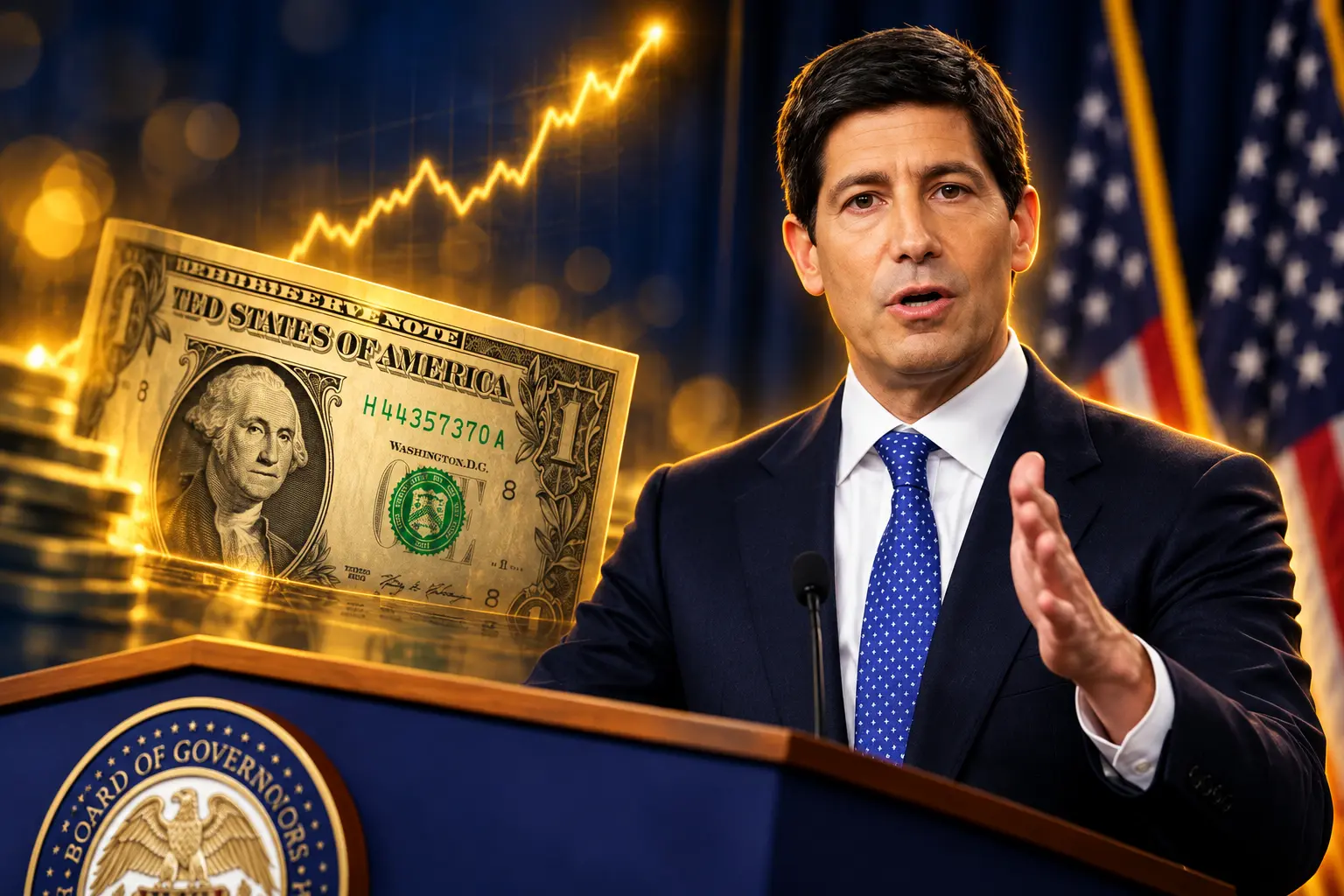
The Same Barrel Now Costs More Abroad
Oil, gas and a long list of farm goods clear in dollars. When US rates rise, capital tends to follow, and other currencies give way. Mark Zandi, chief economist at Moody’s Analytics, said that mix creates stress for countries whose money or policy is tied to US rates. It also raises the local-currency bill for every imported barrel, even if the dollar price of crude is not making a new high that day.
That is the hitch in the Fed’s inflation fight. Warsh is trying to keep an oil shock from spreading through American prices. The tool he used made the dollar jump 0.63% to 100.31 on Wednesday, then to a seven-week high of 100.36 on Thursday. Brent fell 2.69% to $105.83 after reports that Saudi cargoes were moving via Oman, which is a dollar-price decline. For a buyer in Manila or Mumbai, the exchange rate can eat that dip and then some.
Liz Ann Sonders, chief investment strategist at Charles Schwab, has argued that the level of yields matters less than whether they rise in an orderly way. The 10-year note closed at 5% on Wednesday after a Tuesday peak of 5.041%, the highest since 2007. Two-year yields, which track the Fed more tightly, rose 7.5 basis points to 4.738%. The curve flattened as long rates lagged the front end. In dollar terms, that is a vote that the hike is an inflation containment move. In every other currency, it is a higher hurdle for paying the same invoice.
Peter Navarro, a White House trade counselor, put the objection in one line after the decision: you never raise rates in the teeth of an energy price shock, because the shock is already tightening and a hike is a second hit.
You never raise rates in the teeth of an energy price shock. An energy shock is already contractionary — hiking into it is a double tap. pic.twitter.com/plec9TpHuN
— Peter Navarro (@RealPNavarro) September 16, 2026
The tape on Wednesday did both things at once. Crude’s dollar price eased on supply headlines, and the dollar still rallied. Framing the move as removing accommodation, rather than as a single adjustment, is how a hiking cycle is announced. For importers, that cycle arrives through the exchange rate before it arrives through their own central banks.
Who Gets Hit First When Crude Is Priced in Dollars
Net oil importers get the bill twice. A higher dollar cost of fuel widens the trade gap, which can weaken the currency, which then makes the next cargo even more expensive. Utilities and refiners have to buy dollars immediately, so the foreign-exchange move shows up before official trade data. The Philippine peso had already touched a record 62.831 per dollar on September 14 as oil jumped and traders priced the Fed meeting.
Navin Saigal, BlackRock’s head of global fixed income for Asia Pacific, said a hawkish reading of the Fed may pressure Asian currencies and bonds in the near term. Tai Hui, APAC chief market strategist at J.P. Morgan Asset Management, noted that inflation across Asia is split: China and Thailand still lean toward falling prices, while Australia and Japan sit above their targets and India’s reading is near the middle of the Reserve Bank’s band. A stronger dollar shrinks the room to ease even where domestic prices are soft.
THE IMPORTERS THAT PAY TWICE
- India: It buys about 85% of its crude abroad, and Man Group estimates a lasting move above $100 oil would worsen India’s current account by about 1 percent of GDP.
- Thailand: Imports average more than 900,000 barrels a day, and the extra energy bill is put at about 1.6% of GDP, enough in that analysis to flip a current-account surplus into a deficit.
- Turkey: It imports more than 70% of its energy; a $25-a-barrel rise from pre-conflict levels is estimated to add $15 billion to $18 billion to the current-account gap, or 1.3% to 1.5% of GDP.
- Egypt: Thin reserves and several hits at once (fuel, food, Suez receipts, tourism, remittances) could push the current-account deficit into an 8% to 9% range.
Allianz Trade has put the broader emerging-market inflation impulse from the energy shock at 0.8 to 1.0 percentage points of extra inflation, with the damage largest where fuel and food take a bigger share of household spending. That is the channel Warsh said he wants to stop inside the United States. Abroad, it is the channel the dollar just widened.
Thin Reserves and Heavy Import Bills
Man Group’s emerging-markets desk, in a note by portfolio manager Ehsan Bashi, treats about 10 million barrels a day of Gulf supply as still at risk and $100 oil as a possible floor rather than a spike. The Strait of Hormuz remains the choke point. A ceasefire, in that view, would not quickly restore the old transit rules. For a central bank sitting on a thin reserve stock, the choice is to spend dollars defending the currency or to let the exchange rate take the strain and accept more inflation.
Indonesia still imports about a million barrels a day. South Africa’s rand is pulled around by both the oil bill and swings in metals, which are the offset. None of those countries can refinance dollar debt more cheaply because the Fed just made dollar cash more attractive at home.
Exporters on the Other Side of the Shock
The same oil price is income for a short list of names outside the Gulf. Brazil’s energy and food balances are estimated to improve the current account by close to a percentage point of GDP. Mexico sits next to US demand and already pays high real rates. Malaysia ships LNG from Bintulu on the Pacific coast, which does not need Hormuz, and could see the current account move from the mid-3% range toward 4.5% to 5.5% of GDP if the shock lasts.
Those are the offsets, not the typical case. Most of emerging Asia still buys crude and diesel in dollars. Saigal’s other point still stands: a strong US economy supports Asian exports and company profits even as rates sting in the near term. That is a growth cushion, not a cheaper fuel bill.
Japan’s Friday Test After the Yen’s Slide
Japan is the developed-market version of the same squeeze. A weaker yen raises the yen cost of imported energy and food, which is why Zandi said the Fed’s move puts pressure on the Bank of Japan to keep raising. The yen had rallied toward a seven-month high earlier in September on talk of faster tightening in Tokyo, an unwind of cheap-yen funding trades, and speculation that pension money might come home. After Warsh, it gave that back.
The dollar bought 156.31 yen on Wednesday, a 0.77% slide for the Japanese currency, and traded as weak as 156.42 overnight. That drop lands two days before a Bank of Japan meeting that is widely expected to lift the policy rate from 1% to 1.25%, which would be a 31-year high and the shortest gap between hikes in the current cycle that began in 2024. Governor Kazuo Ueda holds the briefing after the vote. Strategists have already warned that unless he convinces markets more tightening is coming, the yen can keep falling even after a hike, because the US-Japan rate gap just widened again.
US Treasury Secretary Scott Bessent has been public about wanting Japan to act against yen weakness. A 25-basis-point move in Tokyo does not close a gap that the Fed just reopened by taking its own range to 3.75% to 4% and by printing a median funds rate of 4.1 percent for both the end of 2026 and the end of 2027. The yen is the first large currency that has to live with that gap in public, on a set calendar, with a press conference attached.
A Flatter Curve at 5 Percent
US stocks tried to rally when the statement hit, then sold off as Warsh spoke. Energy and financials led the drop on the S&P 500. The Dow took the heavier hit, which is what a higher discount rate and a stronger dollar do to industrials and transporters. The Nasdaq barely moved, which is not the same as tech being immune if 4.1% is still the median funds rate a year from now.
WEDNESDAY’S TAPE AFTER THE HIKE
| Market | Wednesday level | Move |
|---|---|---|
| Dollar index | 100.31 | +0.63% |
| Dollar-yen | 156.31 | yen -0.77% |
| Euro | $1.1464 | -0.68% |
| 10-year Treasury | 5% | +2.45 bp |
| 2-year Treasury | 4.738% | +7.5 bp |
| S&P 500 | 7,551.81 | -0.45% |
| Dow Jones | 51,461.90 | -1.21% |
| Nasdaq Composite | 25,978.42 | -0.01% |
| Brent crude | $105.83 | -2.69% |
Padhraic Garvey, ING’s regional head of research for the Americas, said the 10-year’s break toward 5% with a modest fade in inflation compensation reads as market approval of the hike as an inflation move. Hui’s warning sits next to that: if the Fed stays hawkish into 2027, equity valuations, especially in rate-sensitive technology, need another look. Sonders said cyclical parts of the market were already feeling higher rates, while strong earnings can keep the inflation problem alive by supporting hiring. The 30-year yield, off a 19-year high of 5.401%, was near 5.3522% on Thursday, still high enough to matter for mortgages and long corporate debt.
Gold and oil both lost some bid as the dollar rose, which is the textbook commodity response to a stronger greenback. It is also why the US can experience a milder oil impulse than the countries writing the same barrels into weaker currencies. The Fed’s medicine is cheaper energy at home, in dollars, and dearer energy abroad, in everything else.
Sixteen Officials Pencil in One More Hike
Warsh did not submit his own projection, as in June. He read out his colleagues’ medians: real GDP at 2.3% this year and 2.4% next, total PCE inflation at 3.7% this year falling to 2.3% next, unemployment steady near 4.1%. The median appropriate funds rate is 4.1% at the end of 2026 and still 4.1% at the end of 2027. In June those year-end dots were 3.8% and 3.6%.
HOW THE SEPTEMBER DOTS MOVED
| Projection (median) | June | September |
|---|---|---|
| Year-end funds rate, 2026 | 3.8% | 4.1% |
| Year-end funds rate, 2027 | 3.6% | 4.1% |
| PCE inflation, 2026 | 3.6% | 3.7% |
| Core PCE inflation, 2026 | 3.3% | 3.4% |
| Real GDP, 2026 | 2.2% | 2.3% |
| Unemployment, 2026 | 4.3% | 4.1% |
The dot plot behind those medians is blunt. Twelve participants put the 2026 midpoint at 4.125%. Four put it at 4.375%. Two put it at 3.875%, which is where the midpoint sits after this hike. That is 16 of 18 officials with at least one more quarter-point increase this year, and four with two. The longer-run rate ticked up to 3.2%. Inflation risks were described as tilted to the upside, labor risks as roughly balanced.
A December hike is already in the market. The Bank of Japan votes on Friday with the yen already weaker. Oil is still above $100 a barrel because a Gulf supply premium has not gone away, even on a day when Brent fell. For the United States, a stronger dollar and a higher policy rate pull in the same direction against that premium. For the importers that pay the invoice in someone else’s money, they pull in opposite directions, and the exchange rate is the one that landed first.
Ueda speaks after Friday’s vote. The yen is already near 156 to the dollar.
Disclaimer: This article is news reporting and market analysis for information only. It is not investment advice, a recommendation to buy or sell any security, currency, commodity or bond, or a forecast you should trade on. Readers should consult a licensed financial adviser or investment professional who understands their own holdings, time horizon and risk limits before making any decision. Policy rates, yields, exchange rates, oil prices and official projections reflect the sources cited as of the dates given and will change with the next data print, central-bank meeting and headline from the Middle East.

A CubeSat Will Age Whisky That Never Comes Home

A Charity Quote Cost Shia LaBeouf the FKA twigs NDA

Looker Turned a Model’s Body Into Ad Inventory

Infinity Ward Bets a Paid DMZ Will Stick This Time

Disney Sidesteps a Kimmel Renewal as Failla Cites Losses

How to Get Pre Boarding on Southwest – Skip the Line with These Tricks

False AI Intel Nearly Put US Crews on a Chinese Ship

Tim Cook’s $4.6 Trillion Apple Still Runs on One Phone

OpenAI Posts a Navier-Stokes Proof Clay Has Not Touched

Dunes Air Sues Nora Fatehi Over Its Luxury Jet
-
 TRAVEL3 years ago
How to Get Pre Boarding on Southwest – Skip the Line with These Tricks
-
 NEWS1 month ago
False AI Intel Nearly Put US Crews on a Chinese Ship
-
 BUSINESS2 months ago
Tim Cook’s $4.6 Trillion Apple Still Runs on One Phone
-
 NEWS2 months ago
OpenAI Posts a Navier-Stokes Proof Clay Has Not Touched
-
 ENTERTAINMENT2 months ago
Dunes Air Sues Nora Fatehi Over Its Luxury Jet
-

 LIFESTYLE3 years ago
How Often Do You Have to Change a Monkey’s Diaper? The Truth About Pet Monkeys
-

 NEWS2 months ago
Australia Treats Cloud Software Payments as Taxable Royalties
-

 LIFESTYLE3 years ago
How Long Does It Take for Armpit Hair to Grow? The Stages of Hair Growth and How to Shave It