
NEWS
IIT Bombay Signs 18 Demands After a Third Campus Death
IIT Bombay’s director signed an 18-point charter after a third 2026 campus death, repeating the protest-and-inquiry cycle the institute has run before.

IIT Bombay director Shireesh Kedare signed an 18-point student charter on September 20 after a second-year BTech student died on campus. Sahil Ravindra Wakode, from Yavatmal, was found dead in Hostel 4 on September 18, hours after a mid-semester exam in Energy Science and Engineering. Students sat at the Powai main gate, police moved in, and the institute later said it was wrong to have described the exam before a probe had finished.
The death was the third recorded on the IIT Bombay campus in 2026. The paper Kedare signed is the latest in a line of inquiries, wellness drives and public pledges that have followed earlier funerals here.
Sahil Wakode Died in Hostel 4 After the Exam
Wakode sat a mid-semester paper on Friday, September 18, in a slot that ran from about 11 am to 1 pm. Accounts based on campus cameras put an incident in the hall between 12.30 pm and 12.45 pm, after he was allegedly found with a mobile phone. Footage described by investigators showed him walking to Hostel 4 and entering his room around 1.25 pm. He was found dead there that evening. Police said no note was recovered in the room.
IIT Bombay’s first public account said he had uploaded the question paper to ChatGPT, that the instructor, his faculty adviser and the head of department had spoken to him, and that no disciplinary case had been opened. Students and the family said he had been threatened with suspension. Those two versions are now part of the police file, not settled facts. The institute later apologised for that first account and said the circumstances were still under investigation.
His father, Ravindra Wakode, reached campus on September 19. The family described caste abuse over about three months and asked for a CID-level probe. At Rajawadi Hospital in Ghatkopar they refused for seven hours to take the body until the case moved beyond a local accidental-death report. Powai police then registered an FIR under Section 108 of the Bharatiya Nyaya Sanhita, for abetment of suicide, and under the Scheduled Castes and Scheduled Tribes (Prevention of Atrocities) Act. The complaint named Professor Suryanarayana Doolla, the course instructor and invigilator that afternoon. The allegations have not been proved. IIT Bombay said Wakode had not filed a caste complaint with the administration or the SC/ST cell.
Deputy Commissioner of Police Dattatray Nalawade told reporters that a student had died at IIT Powai, that some students had gathered, and that the administration was talking to them. “The students have internal administrative issues which the IIT administration has addressed in the past as well, and the administration is actively speaking with the students right now too,” he said.
Among the protesters, Pranay said they wanted accountability and a written assurance from the dean, the director and the administration. “This is not the first incident, four have happened this year alone, and two within the last two months,” he said. Ansh, another student, asked the campus not to turn the death into a fight. “I don’t think we should be blaming anyone at a moment like this,” he said. “Right now, it is turning into an Administration vs. Students conflict.”
THE WEEK AFTER THE DEATH
- September 18, 2026: Wakode is found dead in Hostel 4 after the exam-hall incident; students gather at the main gate that night.
- September 19, 2026: The family files the FIR; Saturday mid-semester papers are postponed; Kedare meets students in the convocation hall in the early hours.
- September 20, 2026: After a three-hour late-night meeting at the gate, recorded live by students, Kedare signs the 18-point charter.
- September 21, 2026: Doolla is removed as Dean of Administrative Affairs; the institute apologises; a town hall with Board representatives runs about four hours.
- September 23, 2026: The Board names a 10-member panel on the death; Doolla is sent on leave; Mumbai Police list the file as DCB CID C.R. No. 124/2026.
Kedare told the gate meeting he was willing to resign if the rules allowed it. The institute later said he had not resigned. An official said talks would continue and “due process will be followed.”
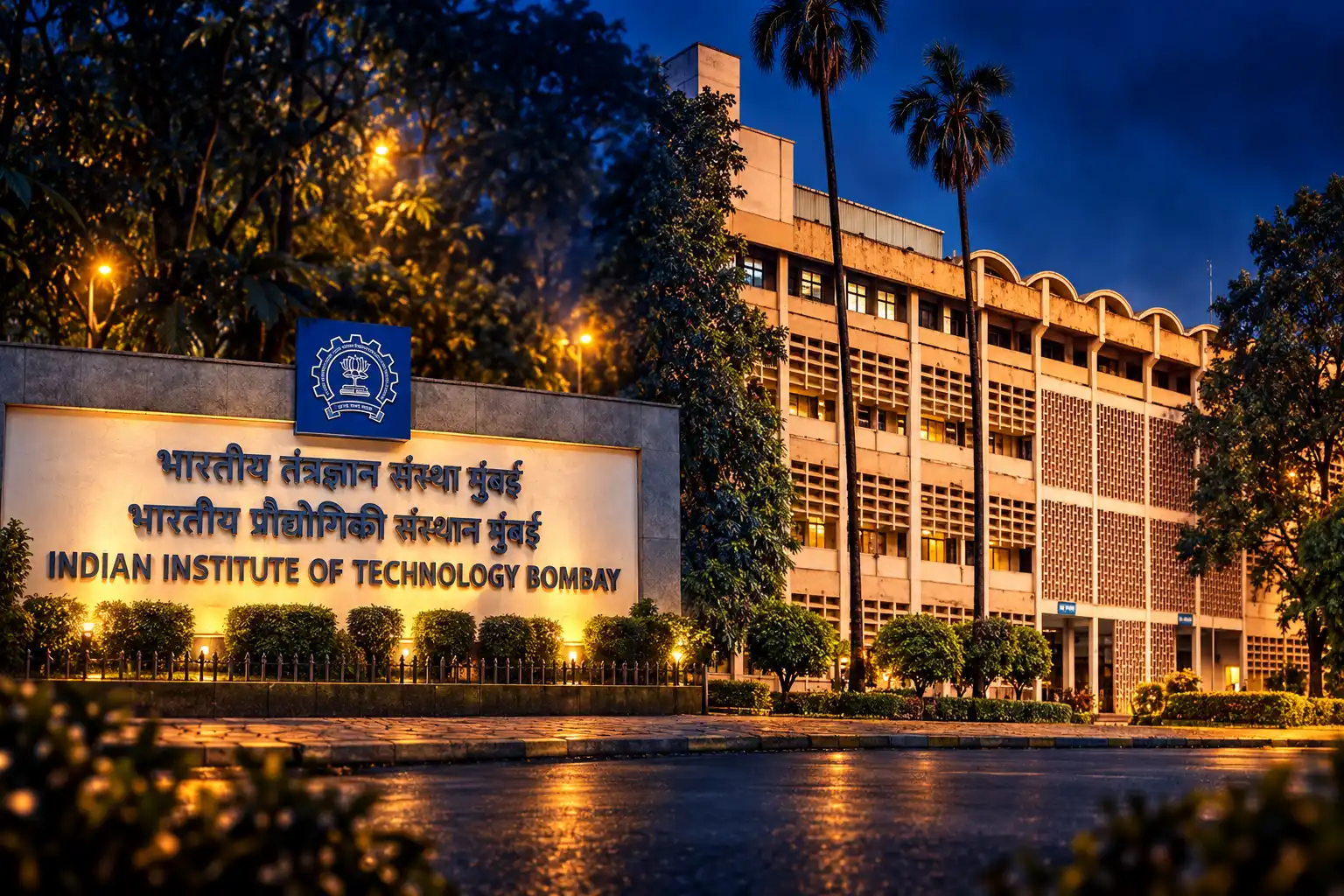
An 18-Point Charter Signed at the Main Gate
The letter, signed “Students, IIT Bombay,” asked for a written reply within 24 hours and an implementation plan before September 26. Students treated the director’s signature as acceptance. The administration treated it as a document to be run through a committee. At the September 21 town hall, Kedare said that committee would include people who took the issues seriously, and he announced a student-support portal that could take anonymous complaints.
The charter is a welfare list written after a death. It asks for votes for student representatives on committees that affect them, a code of conduct for professors with timelines, a buddy in the room when a malpractice case is opened, hostel wings kept together, and a standing well-being task force that publishes a semester report. It also ties the jobs of the director, the Dean of Academic Programmes and the Dean of Student Affairs to a one-month clock on a block of those reforms, which would run to about October 20, with weekly progress notes in the meantime.
WHAT STUDENTS PUT IN THE CHARTER
- Doolla’s post: Immediate suspension of Professor Doolla, and removal of anyone else found at fault after a probe.
- The first statement: A public apology for what students called defamation of Sahil in the institute’s LinkedIn post.
- The inquiry: An independent panel with student nominees and outside members, an interim report by September 30, and public conclusions by October 15, including the hospital response.
- The four families: Prompt money and continued support, set with the families, for four households that had lost someone at IIT Bombay in recent months.
- Counselling ratio: At least one counsellor for every 250 students, a counsellor in every hostel, and an independent audit of the Student Wellness Centre.
- The hospital: A psychiatrist on call around the clock, stronger night emergency cover, and mental-health training for hospital staff.
- Faculty training: Mandatory sensitisation every two months for staff who deal with students, built into joining as well.
- The protesters: Written protection against hostel, money, legal or other penalties for students in the sit-in.
Demand six’s four families and the alumni count of three IIT Bombay deaths in 2026 are not the same list. The charter is asking for help for households named by students. The death tally below is a separate compilation of campus cases.
What the Crime Branch Has Collected
Mumbai Crime Branch took the file after the hospital standoff. An officer of Assistant Commissioner rank is running it, with the Deputy Commissioner of Police (Detection-I) supervising. Investigators are working through hall, campus and Hostel 4 cameras. The branch said that footage had not been released or shown to outsiders. That did not stop clips from circulating, and those clips became the public argument about the case.
By September 30 the branch had recorded 40 statements, including the parents, other students and hostel staff. Two mobile phones, a laptop and a tablet belonging to Wakode had gone to the Forensic Science Laboratory at Kalina for unlocking. Police said Doolla’s statement had not yet been taken. The parents had by then moved a hunger strike to Azad Maidan in south Mumbai and were asking for arrests that had not been made. Ravindra Wakode alleged that his son had named Doolla for caste abuse “at the instance of” the director, a claim the Crime Branch had not tested in a recorded statement from the professor.
WHAT WE KNOW
- The legal file: An FIR naming Doolla under Section 108 of the Bharatiya Nyaya Sanhita and the Atrocities Act, later numbered DCB CID C.R. No. 124/2026.
- The institute steps: Doolla is out of the dean’s chair and on leave, and he remains on the faculty pending due process.
- The digital hold: Four of Wakode’s devices were at the Kalina lab as of September 30, with no public forensic result.
WHAT IS UNCONFIRMED
- The exam: Whether he used ChatGPT, whether anyone threatened suspension, and what was said between the hall and Hostel 4.
- The caste complaint: Whether the three months of alleged abuse occurred; IIT Bombay says no complaint reached its SC/ST cell.
- Abetment: Whether any faculty or officer’s conduct meets the criminal test; no arrest had been reported through September 30.
A leaked hall video is not a finding. One camp treated the phone as the entire story. Another asked who released the clip, whether it had a chain of custody, and whether the person marked in the frame had even been confirmed. Crime Branch’s own line, that it had not shown the cameras to outsiders, sits in the middle of that fight.
Three Campus Deaths in 2026
IIT Bombay’s 2026 list, as compiled from campus cases, is short and grim. In February, Naman Agarwal, 21, a civil engineering student, died. In July, Sohil Rajkumar Sangwan, a second-year materials science student, died. Wakode died on September 18. Those three cases are half of the six suicides and unnatural deaths logged at IIT Bombay since September 2021 by Dheeraj Singh, an IIT Kanpur alumnus who runs the Global IIT Alumni Support Group and builds his tables from RTI replies and published reports.
Singh’s 20-year file records 171 student suicides and unnatural deaths across the IIT system from January 2006 to September 2026. Fifty-one fall in 2006-2015. One hundred and twenty fall in 2016 through September 2026, about 70 per cent of the total. He puts about 82 per cent of the suicides on campus. Over 20 years IIT Bombay and IIT Guwahati sit on 14 each; IIT Kharagpur leads on 29.
The recent slice is denser. From September 2021 to September 18, 2026, Singh records 74 deaths.
IIT STUDENT DEATHS, SEPTEMBER 2021 TO SEPTEMBER 18, 2026
| Period | Deaths in Singh compilation |
|---|---|
| 2021 (September to December) | 3 |
| 2022 | 14 |
| 2023 | 14 |
| 2024 | 14 |
| 2025 | 16 |
| 2026 (to September 18) | 13 |
| Total | 74 |
In that same window IIT Bombay accounts for six of the 74, level with IIT Guwahati, behind IIT Kharagpur on 13 and IIT Kanpur and IIT Delhi on nine each. Thirteen deaths by September 18, 2026, already sat near the full-year marks of 14 in 2022, 2023 and 2024, and below 2025’s 16.
Official campus suicide counts, gathered from the 23 IITs for a Lok Sabha question dated December 8, 2025, are lower because they use a tighter definition and a different period. They show 45 student suicides from 2020-21 to 2024-25. Twenty-eight of those 45 students, more than 62 per cent, were from SC, ST or OBC groups: 12 OBC, nine SC, seven ST, against 16 from the general category and one from EWS. The official series jumped to 16 suicides in 2023-24 and 13 in 2024-25. Those figures do not replace Singh’s 74. They are the government’s own suicide count for a five-year academic window.
India’s wider student numbers sit in the NCRB accidental deaths and suicides reports. The 2024 edition recorded 14,488 student suicides, 8.5 per cent of 1,70,746 suicide deaths that year, up 4.3 per cent from 13,892 in 2023.
IIT Bombay Already Ran This Inquiry Once
Darshan Solanki, 18, a first-year chemical engineering student from Ahmedabad, died on the Powai campus on February 12, 2023. His family alleged caste discrimination. IIT Bombay named a 12-member committee chaired by chemistry professor Nand Kishore. The eight-page interim report, sent to the Centre, pointed to falling marks in the second half of the autumn semester and said it found no specific evidence of direct caste discrimination, beyond a statement from Solanki’s sister. It noted that he had not gone to the SC/ST cell or the Student Wellness Centre with a caste complaint.
Student groups said the panel had set aside campus surveys in which SC and ST students described hostility from faculty and peers. The National Commission for Scheduled Castes later closed its file after a police chargesheet named a batchmate. Solanki’s father said no authority had examined the institute as an institute. IIT Bombay then formed another committee on first-year academic stress. That is the template Wakode’s classmates walked into: an internal panel, a finding that leans on marks or on the absence of a formal complaint, and a promise to look at pressure.
The Supreme Court built a National Task Force on student mental health in March 2025 while hearing Amit Kumar v. Union of India, a case that began with two deaths at IIT Delhi and a police refusal to register an FIR. Justice S. Ravindra Bhat, a former Supreme Court judge, chairs it. The Supreme Court task force interim report, 211 pages, is due to be followed by a final report in November 2026. The interim text, as described in briefings from the panel, treats student deaths as a structural problem of caste, competition, isolation, delayed scholarships and thin faculty time, not only as a counselling gap.
The task force cited parliamentary figures of more than 13,600 students from disadvantaged groups dropping out of premier institutes between 2018 and 2023, including 2,066 OBC, 1,068 SC and 408 ST students from the IITs. It put SC faculty at Institutes of National Importance at 7.57 per cent and ST faculty at 1.91 per cent. In its student survey work it reported that 34 per cent of respondents felt like outsiders on campus to some degree, 15 per cent recalled weeks of distress in the previous six months, and 9 per cent said they had suicidal thoughts often or very often in the past year. Those survey shares are the panel’s, not a census of IIT Bombay.
Counsellors, Hostels and a Mental Strength Week
On paper, IIT Bombay has been busy. From 12 to 18 January 2026 it ran a week-long mental strength campaign proposed by Kedare, timed to Swami Vivekananda’s birth anniversary, with more than 2,000 students in campus events on focus and resilience. The Education Ministry reply in Lok Sabha lists counselling centres, a national helpline, wellbeing conclaves (including one at IIT Bombay in November 2025) and the Bhat task force as the government answer. As of December 1, 2025, the 23 IITs together employed 108 counsellors.
Students at Powai described a different wait. People who had used the Student Wellness Centre said they could sit for weeks before a session. The charter’s 1-to-250 ratio, and the demand for a counsellor in every hostel, is their measure of that gap. A friend of Wakode’s called him outgoing, active in skating and badminton, with a first-year CGPA of 8.5. The friend said the question after a death like this is whether help is actually reachable on the afternoon a student needs it, not whether a centre exists in the directory.
THE SUPPORT SYSTEM ON PAPER
- IIT-wide staff: 108 counsellors across 23 campuses as of December 1, 2025.
- Student ratio asked: One counsellor for every 250 students, plus one in each hostel and a 24-hour psychiatrist through IIT Bombay Hospital.
- Campus drive: Mental Strength Week, January 12-18, 2026, with more than 2,000 students taking part.
- National clock: The Bhat task force’s final report is due in November 2026, after the charter’s October 15 public-conclusion date.
Wakode’s first year had gone well on paper. He had scored about 90 per cent in Class 10 in Yavatmal, 76 per cent in Class 12 after moving to Nagpur for JEE coaching, and that 8.5 CGPA once he arrived. The charter still had to ask for a psychiatrist at night and for professors to sit through caste and mental-health training every two months. Those asks are what a wellness week did not settle.
Professor Doolla, the Faculty Forum and a Viral Clip
Doolla is a professor in Energy Science and Engineering. He had been Dean of Student Affairs as recently as December 2025, when Hostel 19 opened, and was Dean of Administrative Affairs when Wakode died. Students wanted him suspended from teaching, not only moved out of a dean’s office. The Faculty Forum, a body of about 750 members, took the other side on September 21.
Contrary to several reports in the media, Prof. Suryanarayana Doolla has not been suspended from his service from IIT Bombay, and continues to be a member of the faculty of the institute in good standing.
Rajkumar S. Pant, President, IIT Bombay Faculty Forum, in a 21 September 2026 press release
The faculty forum statement backing Doolla said he had been relieved of the dean’s duties so an inquiry could run without bias, that he had won teaching awards based on student feedback, and that as Dean of Student Affairs he had built welfare programmes. It said it was pained by the student’s death and distressed by what it called false reports. Faculty members marched for him on campus. Suryakant Waghmore, a professor in Humanities and Social Sciences, broke with that line and said faculty should not pick a side while the probe was open, and that an interim suspension was still available.
The leaked exam clip did the rest of the polarising. Viewers who already thought the Atrocities Act was being stretched treated the phone as proof. Viewers who already thought IIT Bombay hides caste harm treated the leak as a trial without forensics. Neither reading is a Crime Branch finding. The cameras, the Kalina lab and Doolla’s still-unrecorded statement are the actual file.
On September 30 that file still had no arrest, no unlocked phone, and no public interim report of the kind students had dated to that day. The charter they made Kedare sign at the gate set October 15 for public conclusions. Until those conclusions exist, IIT Bombay has a signature, a dean on leave, a 10-member panel and the same sequence it ran after Solanki: protest, apology, committee, wait.
Disclaimer: This article is news reporting on a death under police investigation and on claims made by a family, students, faculty and IIT Bombay. It is not a finding of abetment, caste crime, malpractice or medical negligence, and it is not legal, medical or counselling advice. Anyone considering a complaint, a defence or a health decision in a similar situation should speak to a qualified lawyer and a licensed mental-health professional. Figures, posts and case statuses here reflect the documents and statements available through September 30, 2026, and may change as the Crime Branch, the campus panel and the courts act.

A CubeSat Will Age Whisky That Never Comes Home

A Charity Quote Cost Shia LaBeouf the FKA twigs NDA

Looker Turned a Model’s Body Into Ad Inventory

Infinity Ward Bets a Paid DMZ Will Stick This Time

Disney Sidesteps a Kimmel Renewal as Failla Cites Losses

How to Get Pre Boarding on Southwest – Skip the Line with These Tricks

False AI Intel Nearly Put US Crews on a Chinese Ship

Tim Cook’s $4.6 Trillion Apple Still Runs on One Phone

Dunes Air Sues Nora Fatehi Over Its Luxury Jet

OpenAI Posts a Navier-Stokes Proof Clay Has Not Touched
-
 TRAVEL3 years ago
How to Get Pre Boarding on Southwest – Skip the Line with These Tricks
-
 NEWS1 month ago
False AI Intel Nearly Put US Crews on a Chinese Ship
-
 BUSINESS2 months ago
Tim Cook’s $4.6 Trillion Apple Still Runs on One Phone
-
 ENTERTAINMENT2 months ago
Dunes Air Sues Nora Fatehi Over Its Luxury Jet
-
 NEWS2 months ago
OpenAI Posts a Navier-Stokes Proof Clay Has Not Touched
-

 LIFESTYLE3 years ago
How Often Do You Have to Change a Monkey’s Diaper? The Truth About Pet Monkeys
-

 NEWS2 months ago
Australia Treats Cloud Software Payments as Taxable Royalties
-

 LIFESTYLE3 years ago
How Long Does It Take for Armpit Hair to Grow? The Stages of Hair Growth and How to Shave It