
NEWS
Three NDA Allies Ask the Election Commission to Explain
Chirag Paswan, the TDP and Upendra Kushwaha want a public note from the poll body after 14 internal objections, not the CEC’s removal.

Three National Democratic Alliance partners on Friday asked the Election Commission to explain itself after two of its three members recorded 14 objections in 10 months. Union minister Chirag Paswan, Rashtriya Lok Morcha chief Upendra Kushwaha and Telugu Desam Party Lok Sabha floor leader Lavu Srikrishna Devarayalu all wanted a public answer on the Special Intensive Revision of voter lists. They asked for a statement. They did not ask Chief Election Commissioner Gyanesh Kumar to quit.
Opposition parties already want Kumar removed and the revision stopped. The gap between those two asks is the whole fight now sitting on Nirvachan Sadan.
Patna Spoke First, Then Two More Allies
Paswan, who heads Lok Janshakti Party (Ram Vilas), spoke to reporters in Patna on September 25, 2026. He said he would not defend the poll body just because he sits in the Union government, and he said he was not backing the Opposition’s charges either. The questions, he said, were now in front of the public, and public faith in elections was at stake.
If people start losing trust in the electoral system, that will not augur well for democracy and, therefore, I think the Election Commission must come out with its clarification more forcefully. It need not respond to what Rahul Gandhi and his associates are saying. But it must dispel misgivings in the minds of the people.
Chirag Paswan, Union minister and LJP (Ram Vilas) chief, speaking to reporters in Patna
Kushwaha, a Rajya Sabha MP, posted the same day that the SIR row had created “significant confusion among the public” and that the Commission should “immediately issue a clarification regarding the actual situation.” He tagged the Commission’s voter-education handle. Devarayalu said the exercise in Andhra Pradesh had been “a success” and that the Opposition had not been able to prove its charges there, then added that a constitutional body still owes the public an answer when questions are raised.
Those three voices are not a resignation letter. They are a request that Kumar, or the full Commission, speak more loudly than the deputy-director note issued two days earlier. The BJP itself did not join them on the record.
Fourteen Objections Sat on the File
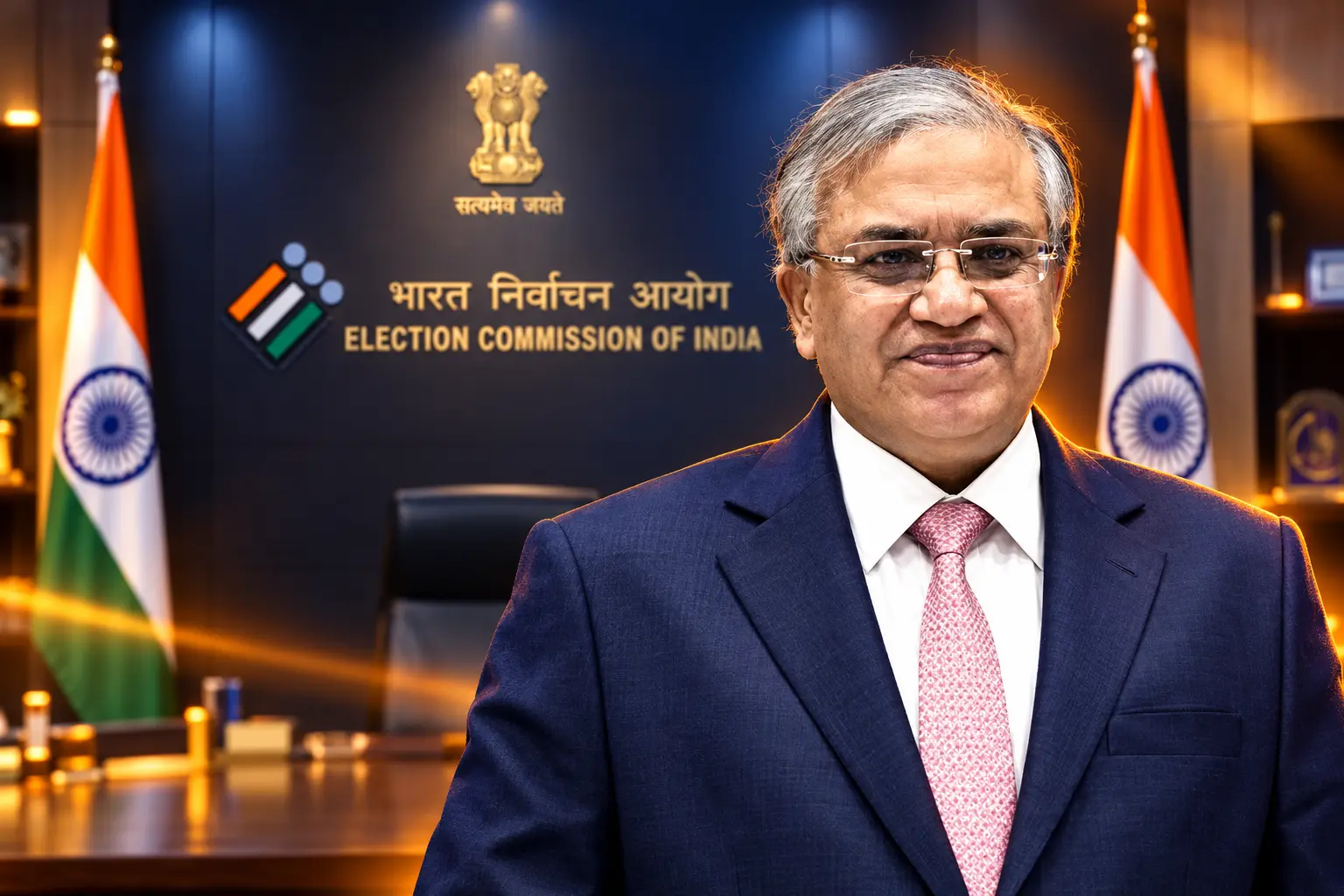
Internal notes by Election Commissioners Sukhbir Singh Sandhu and Vivek Joshi, made public on September 23, show they objected on record at least 14 times over 10 months, including four times on a single day, to decisions they said went out without their knowledge or recommendation. The notes were copied to Kumar. The Commission has not disputed that the notes exist, or their dates, or their wording.
Sandhu, a 1988-batch IAS officer, joined the Commission in March 2024 and was earlier chief secretary of Uttarakhand. Joshi joined when Kumar moved up. Kumar himself became CEC on February 19, 2025, after he and Sandhu were named election commissioners in March 2024 under the 2023 appointment law. The three men are the entire Commission.
WHAT THE TWO COMMISSIONERS FLAGGED
- New voters: They said the online Form 6 used to add names had been altered without a change in the rules.
- Roll edits: They objected to how names were added, deleted and restored during SIR.
- Appeals: They asked who had authorised a mass of appeals against restored voters in West Bengal.
- Software: They described a gradual centralisation of the ERONet voter-list system and wanted an audit of who can change the database.
- Work order: A July 28 allocation that touched IT was issued, they wrote, without informing the Commission, which led both men to write to the Cabinet Secretary on July 29 and to jointly set the order aside on July 30.
The full Commission did not meet from May to August. The three sat together on September 9, their first meeting in four months. By then the notes had already stacked up against the way SIR was being run in the Commission’s name.
What Changed on Form 6 for New Voters?
Form 6 is the application a citizen uses to get on the roll for the first time, and it is statutory Form 6 in the 1960 Rules, notified by the Union government after consulting the Commission. The Commission’s own guidance still tells a first-time voter to enrol by filing Form 6 with the registration officer, with proof of age and residence. Changing that form is not a software tweak. Section 28 of the Representation of the People Act, 1950, leaves rule-making, including the forms, with the Centre.
On May 16, two days after he had signed the Phase III SIR order, Joshi wrote that SIR was a one-time special revision under Section 21(3) of the 1950 Act, and that Form 6 and Form 8 were “prescribed statutorily” and “cannot be altered without making amendments in the Registration of Electors Rules, 1960.” He said the clean path was to send a draft to the government. Sandhu agreed on May 19.
In July a new declaration appeared on the ECINet portal anyway. It asked an applicant to pick one of three statements: that their own name was on the last SIR roll from the early 2000s, that a parent’s or grandparent’s name was on that roll, or that neither was. The box was not marked mandatory, but the form would not submit without an answer. Sandhu said he learned of the live change from a July 12 report, then wrote on August 13 to the deputy election commissioner and the director general of IT, with Kumar and Joshi copied.
In spite of these very clear views expressed by two Election Commissioners, the unauthorised/ illegal changes in Form-6 on the portal had not been removed and the original form had not been restored. The changes must be removed immediately so that young and would-be first time voters, who are otherwise eligible, can register themselves as voters as per law, without any harassment.
Sukhbir Singh Sandhu, Election Commissioner, note of August 13, 2026
The last time Form 6 was rewritten for Aadhaar, the Law Ministry notified the change on June 17, 2022. That is the bar Sandhu and Joshi said this year’s portal edit failed. For an 18-year-old whose last state SIR was in the early 2000s, the first two options are not true on their own name, and the form did not say what the third option would do. In a revision that has already dropped over 13 crore names from draft rolls, the same form is also the path many deleted electors must use to get back on.
Commission officials later said there had been “no change” to Form 6 itself, only an extra declaration issued with it under the SIR orders, and that the Supreme Court’s May 27, 2026 order had upheld the power to add that declaration. Those are two different objects: the gazette form, and the portal screen a new voter actually has to finish. The two commissioners were writing about the screen.
The Commission Calls the Notes Routine
On September 23 the Commission put out a press note signed by Deputy Director P. Pawan. It did not say who had approved the portal declaration, who had filed the Bengal appeals, or why the full Commission had not met for months. It did not answer the questionnaire sent two days earlier. It did recast the 14 notes as ordinary process.
Differing views and observations are a normal part of deliberation in any institution. They are a part of the decision-making process before a final decision is taken. All these decisions are an outcome of the unanimous decisions of the full Commission in the past one year.
P. Pawan, Deputy Director, Election Commission of India press note, September 23, 2026
The note said the Commission had issued instructions, brought in around 40 new initiatives, and run roll revision including SIR, and that highlighting 10 months of internal notes “give only one part of the picture.” On the software, it said digital platforms run under strict security and that electoral registration officers still hold the statutory power to add and delete names. Sandhu’s August 14 note had said field officers “don’t have proper and complete access to the ERONet portal,” and that the director general of IT “doesn’t have any legal authority to restrict” them.
By Friday, Commission sources went further. They said Kumar, Sandhu and Joshi had unanimously approved the SIR order for Bihar on June 24, 2025, the special revision for Assam, the SIR order for 12 States and Union Territories on October 27, 2025, and the SIR order for 19 States and Union Territories on May 14, 2026, and that those orders already bundled Form 6 with a declaration. If that is right, the two commissioners signed the parent orders and then spent the summer objecting to how the portal and the software were being used under those orders. That is a narrower quarrel than a split vote on SIR itself, and it is still a quarrel two of three members put on paper.
Opposition Parties Want Kumar Removed and SIR Halted
Leader of Opposition Rahul Gandhi told a September 24 press conference that Kumar should resign and “turn approver,” calling that step “an act of nationalism,” and said elections were “fundamentally broken.” Congress leader K. C. Venugopal demanded Kumar’s “immediate removal” and a Supreme Court-monitored inquiry. DMK president M. K. Stalin said Kumar “has no right to continue in office,” that SIR must be halted, and that two of three members being kept unaware of work done in the Commission’s name could not be treated as an internal file fight. A notice signed by 73 Opposition MPs on April 24, 2026, seeking Kumar’s removal, is still pending with the Rajya Sabha chair. Parties in the INDIA grouping said they would file a fresh notice in both Houses.
THREE DAYS THAT SHIFTED THE FIGHT
- September 23, 2026: The 14 notes become public. The Commission answers the same day with P. Pawan’s press note on unanimous decisions.
- September 24, 2026: Gandhi demands resignation. Opposition parties separate Kumar from the rest of the Commission and add a freeze of SIR to the removal ask.
- September 25, 2026: Paswan, Kushwaha and Devarayalu ask for a public explanation. Congress protests in Delhi. Commission sources repeat that every SIR order had all three signatures.
A statement from Nirvachan Sadan would not meet that Opposition list. The live demand is still that Kumar go, that SIR stop, and that the 2023 appointment law be rewritten. Protest groups treating a press note as beside the point are arguing the same case in the street. Defenders of SIR keep saying intensive revision is an old tool, which is true as a history of roll cleaning and does not answer two sitting commissioners saying orders went out without them. Rolling the list back to January 2025, as some freeze-and-reset plans do, would also reach a date before the Bihar SIR order of June 24, 2025.
On Paper, Two Members Can Overrule the CEC
The Chief Election Commissioner and Other Election Commissioners (Appointment, Conditions of Service and Term of Office) Act, 2023, which received presidential assent on December 28, 2023, is the law that seated this trio. It puts appointments in a selection committee of the prime minister, a Union cabinet minister named by the prime minister, and the Leader of the Opposition, a 2-1 government majority after the Chief Justice of India was dropped from the earlier court-designed panel. Gandhi recorded a dissent in the February 2025 meeting that named Kumar as CEC.
The same Act, in its transaction-of-business chapter, says the Commission should act unanimously as far as possible and that a disagreement is settled by majority. Kumar has no veto. If Sandhu and Joshi vote together against him on a formal item, their view prevails. That is the power the 14 notes never quite used. Objecting after the fact, and writing to the Cabinet Secretary about a work order, is not the same as defeating an SIR resolution in a recorded vote. The Commission’s present line depends on that distinction.
Removal is a different door. The CEC can be removed only in the manner of a Supreme Court judge. The other two commissioners can be removed only on the CEC’s recommendation. Section 16 of the 2023 Act also bars civil and criminal cases against a serving or former commissioner for official acts. The men who wrote the 14 notes cannot vote Kumar out of the building. Opposition MPs can try the parliamentary route. The three NDA allies have not said they will help.
The Voter List Revision Is Still Moving
SIR has not been paused. Phase I ran in Bihar off the June 24, 2025 order. Phase II covered 12 States and Union Territories off the October 27, 2025 order. The May 14, 2026 press note ordered Phase III covering 16 states and 3 Union Territories, leaving Himachal Pradesh, Jammu and Kashmir and Ladakh for later because of census work and weather. Assam ran a special revision rather than SIR because of the Citizenship Act.
THE THREE SIR PHASES
| Phase | Order date | Where | Field scale |
|---|---|---|---|
| Phase I | June 24, 2025 | Bihar | First two phases together: 13 States/UTs, nearly 59 crore electors |
| Phase II | October 27, 2025 | 12 States/UTs | 6.3 lakh BLOs and 9.2 lakh party BLAs across those first two phases |
| Phase III | May 14, 2026 | 16 States and 3 UTs | 3.94 lakh BLOs, 3.42 lakh BLAs, 36.73 crore electors |
The May 14 note, also signed by P. Pawan, told parties to appoint booth-level agents so the house-to-house count would not be a closed shop. Law ministry material on the exercise still points to a statutory period for claims and objections after draft rolls, and to appeals, as the safeguard for anyone dropped. Those windows are still open on the Phase III timetable in several states. Devarayalu’s Andhra defence sits inside that live process, which is why a TDP leader can call SIR a success at home and still ask Delhi to speak.
Kumar remains in office. The April removal notice remains pending. The 14 notes remain on the file, unwithdrawn. The three NDA allies have asked the Commission to talk to the public more forcefully than a deputy director’s paragraph about unanimous decisions, and they have left the CEC’s chair and the revision where they found them.

A CubeSat Will Age Whisky That Never Comes Home

A Charity Quote Cost Shia LaBeouf the FKA twigs NDA

Looker Turned a Model’s Body Into Ad Inventory

Infinity Ward Bets a Paid DMZ Will Stick This Time

Disney Sidesteps a Kimmel Renewal as Failla Cites Losses

How to Get Pre Boarding on Southwest – Skip the Line with These Tricks

False AI Intel Nearly Put US Crews on a Chinese Ship

Tim Cook’s $4.6 Trillion Apple Still Runs on One Phone

Dunes Air Sues Nora Fatehi Over Its Luxury Jet

OpenAI Posts a Navier-Stokes Proof Clay Has Not Touched
-
 TRAVEL3 years ago
How to Get Pre Boarding on Southwest – Skip the Line with These Tricks
-
 NEWS1 month ago
False AI Intel Nearly Put US Crews on a Chinese Ship
-
 BUSINESS2 months ago
Tim Cook’s $4.6 Trillion Apple Still Runs on One Phone
-
 ENTERTAINMENT2 months ago
Dunes Air Sues Nora Fatehi Over Its Luxury Jet
-
 NEWS2 months ago
OpenAI Posts a Navier-Stokes Proof Clay Has Not Touched
-

 LIFESTYLE3 years ago
How Often Do You Have to Change a Monkey’s Diaper? The Truth About Pet Monkeys
-

 NEWS2 months ago
Australia Treats Cloud Software Payments as Taxable Royalties
-

 LIFESTYLE3 years ago
How Long Does It Take for Armpit Hair to Grow? The Stages of Hair Growth and How to Shave It