
BUSINESS
Riyadh Sirens Mark the Cost of the Red Sea Trap
Riyadh’s first capital air-raid alerts since the July Houthi embargo arrived after Saudi oil was forced onto the Red Sea and both chokepoints failed.

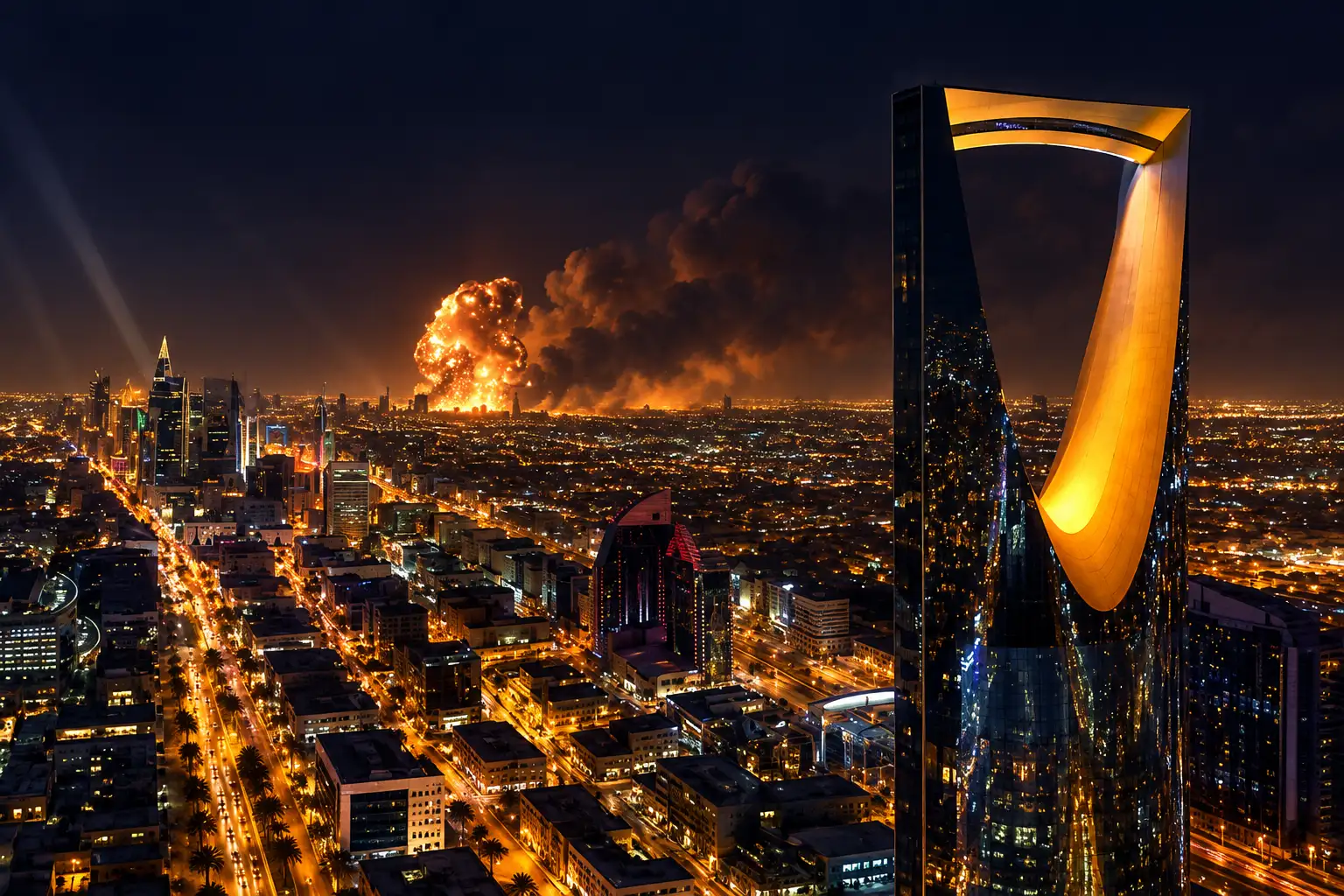
Saudi Civil Defence sent Riyadh two air-raid alerts before dawn on Saturday, September 19, then lifted both after explosions were heard in the capital. Phones showed a National Early Warning Platform message that the area was under a hostile aerial threat, the first such warning in Riyadh since the Houthis declared a maritime embargo in July.
The sirens reached a city that had treated the Yemen war as a southern problem. They arrived after Saudi crude had been pushed onto the Red Sea, and after the group that sits on that coast took the western gate.
Two Alerts Before Dawn, Then the All-Clear
The first warning for Riyadh and nearby Al-Kharj went out at about 2:58 a.m. local time. An all-clear followed within minutes. A second warning hit the same two cities at 5:19 a.m., and Civil Defence declared the danger over more than 10 minutes later. A journalist in the Olaya district heard two booms.
Residents were told to stay inside, keep away from windows and open ground, and skip filming. People still outdoors were told to get into the nearest building or behind a solid wall. Drivers were told to pull over, off bridges. The agency later asked the public not to gather at any impact site and to keep following official instructions.
The area is under a hostile aerial threat.
Saudi Civil Defence, National Early Warning Platform message, Riyadh
Friday night had already put other cities on the same system. The capital was the new part.
CITIES PUT ON ALERT
- Saturday pre-dawn: Riyadh, Al-Kharj, and the Farasan Islands.
- Friday into Saturday: Jeddah, Taif, Khamis Mushayt, AlUla, Yanbu, Abha, Farasan, and Jazan.
- The phone channel: the National Early Warning Platform, pushed to mobiles, with the all-clear on the same channel.
Two days earlier, debris from an intercepted Houthi drone killed a Yemeni resident in Taif and injured a Saudi woman and a Pakistani resident, who was in critical condition. Buildings and vehicles were damaged. Saudi air defences had also destroyed a drone south of Makkah that officials said was heading for the city’s prohibited airspace. The Houthis denied aiming at the holy sites and said they were going after oil plants and bases.
WHAT WE KNOW
- The warnings: Two separate Saturday alerts for Riyadh and Al-Kharj, each followed by an all-clear.
- The sound: At least two explosions heard in the capital, including two booms in Olaya.
- The week behind it: Intercept debris had already killed one person in Taif, and Houthi spokesman Yahya Saree had vowed a response after what he called foiled “criminal attempts” in Sanaa.
WHAT IS UNCONFIRMED
- A strike on the capital: Saudi officials have not said a munition hit Riyadh.
- Prince Sultan Air Base: Claims of a salvo aimed at the field near Al-Kharj, which also hosts U.S. forces, have not been confirmed. Al-Kharj was on the alert list.
- Airport fire clips: Video of an old shop fire in Hayy al-Rimal was passed around as damage at King Khalid International Airport. That clip is not from Saturday.
The capital heard the interceptors, or something like them, and then went back to sleep under an all-clear. The trap that put it on the alert list did not move.
After Hormuz Closed, the Oil Went West
Saudi exports were built around the Gulf and the Strait of Hormuz. When the U.S.-Israel war with Iran choked that waterway in February, the kingdom shifted crude across the peninsula to Yanbu on the Red Sea. That made a Yemeni militia on the western shore a direct problem for barrels that used to leave from the east.
Kpler, a tanker-tracking firm, puts Yanbu crude exports at 4.14 million barrels a day in June, against a 2025 baseline of 0.75 million. That is an extra 3.39 million barrels a day pushed onto the western coast. Ras Tanura, the old Gulf workhorse, averaged 5.4 million barrels a day in 2025. Yanbu was no longer a side door.
The International Energy Agency, in a September 18 note by Toril Bosoni, head of its oil industry and markets division, treats Yanbu together with the UAE’s Fujairah outlet. Those bypass shipments rose from 4.1 million barrels a day in February to 7.8 million in June, then Houthi attacks in the Red Sea cut them to 5.5 million in August. The same note says 7.6 million barrels a day in August still moved through Hormuz, 13.1 million below pre-war levels, with cumulative losses on that route near 2.8 billion barrels.
WHERE THE BARRELS WERE MEANT TO GO
| Route | What it is for | Latest reading |
|---|---|---|
| Strait of Hormuz | The old Gulf exit | 7.6 million barrels a day in August, 13.1 million below pre-war (IEA) |
| Yanbu, Red Sea | The post-February bypass | 4.18 million in April, 3.77 in May, 4.14 in June (Kpler) |
| Yanbu plus Fujairah | Combined Hormuz bypass | 4.1 million in February, 7.8 in June, 5.5 in August (IEA) |
| East-West pipeline | The land line that feeds Yanbu | Shut after drone hits on September 10 |
| SUMED and Suez | The northbound workaround | 2.5 million barrels a day of pipeline capacity (Kpler) |
The IEA says the bypass routes offset more than 500 million barrels, or 2.8 million barrels a day, of Hormuz losses for a time. Then the Red Sea got dangerous and the land line was hit. Global stocks have been drawing at 2.8 million barrels a day for six months and now sit 507 million barrels below their pre-war level. IEA members have released more than 300 million barrels from emergency stocks. Demand over those six months has run 5.8 million barrels a day below February, with China the largest drop.
SUMED, Egypt’s 2.5-million-barrel-a-day line from Ain Sukhna to Sidi Kerir, can send some western-coast crude north. Kpler notes it has never been run at that ceiling; throughput peaked at 1.77 million barrels a day in 2016. Sending Yanbu barrels to Asia the long way, via Suez and the Cape, roughly doubles the voyage. Asian refiners cannot be served at the old speed if Bab al-Mandab is closed to Saudi-linked ships.
Mokha, Perim and the Bab al-Mandab
On July 20, Houthi military spokesman Yahya Saree announced a maritime embargo on Saudi shipping, calling it an “eye for an eye” for what the group says is a long Saudi siege of Yemeni ports and airports, and for a strike on Sanaa airport. The test is service to Saudi ports, not the flag on the stern.
On September 10, Houthi forces took the Red Sea port of Mokha from Saudi-backed units. By September 11 they held Perim Island in the Bab el-Mandeb, the rock in the middle of the strait, along with islands in the Hanish chain. Windward, a maritime intelligence firm, says that put Yemen’s Red Sea coast under the group and let it threaten Saudi tankers with cheaper munitions. VLCC spot rates to load inside the Gulf and transit Hormuz were assessed at just over $1 million a day the same week.
Saree said the group posed no threat to international shipping that was not Saudi-linked. He also said Saudi jets had flown more than 450 strikes on Houthi territory in a week, and that the group had answered with missiles and drones, including claimed attacks on Aramco sites in Yanbu and on Khamis Mushayt air base. Saudi officials have not confirmed those hits.
THE PATH TO THE CAPITAL SIRENS
- July 20, 2026: Saree declares a maritime embargo on Saudi shipping, effective immediately.
- September 10, 2026: Houthi forces seize Mokha. Drones hit the East-West pipeline. The line is shut as a precaution.
- September 11, 2026: Houthi forces take Perim Island. The western tanker gate and the land bypass are both compromised on consecutive days.
- September 15, 2026: The UN Security Council holds an emergency session on the strait, displacement, and attacks on Saudi territory.
- September 19, 2026: Civil Defence sends Riyadh two pre-dawn aerial-threat alerts and then the all-clear.
A four-year informal truce, in place since 2022, had already come apart in July. The capital’s phones were a late instrument in a campaign that started at the water.
Drones From Iraq Shut the Land Line
The East-West pipeline, also called Petroline, runs about 1,200 kilometers from the eastern fields around Abqaiq to Yanbu. Windward says it carried about 92% of Saudi seaborne crude via Yanbu by June. On September 10, drones struck in the Riyadh and Medina regions. The Energy Ministry stopped the line as a precaution. The Foreign Ministry said the drones came from Iraq and that people were hurt.
Iraqi Prime Minister Ali al-Zaidi’s office traced the launch to Maysan province in the southeast, near the Iranian border. No group claimed the attack. Riyadh said it was giving Baghdad room to act and would not respond at that stage. U.S. Energy Secretary Chris Wright later called the outage brief and said it should last a matter of days. Kpler’s working view is harsher: the pipe itself is largely intact, but a badly damaged pumping station could take four to six weeks to fix, and west-coast tanks cover only about three days of loadings.
That is the second-order bind in physical form. Hormuz was already a problem. The Red Sea workaround needed the land line. The land line was hit from a third country on the same day Mokha fell. Saturday’s sirens in Riyadh were the noise a capital makes when the map of exits has shrunk to a few guarded holes.
How Riyadh Learned to Live With Sirens
The capital is not new to incoming fire. The Armed Conflict Location & Event Data Project records the first Riyadh-range missile in 2017, a Burkan-2 that finally put the city inside the war the kingdom had taken to Yemen. On November 4, 2017, Saudi forces said they intercepted a missile near King Khalid International Airport. On December 19, 2017, they said they brought down another south of the city; the Houthis said they had aimed at al-Yamamah Palace. More shots followed into 2018.
Those intercepts happened while Hormuz was open and Yanbu was a minor outlet. Saturday’s alerts are a different kind of scare. The phones went off in a week when the western tanker gate was under a new flag, the land line to Yanbu was cold, and freight to load in the Gulf cost more than a million dollars a day. The Patriot batteries may still be doing their job. The export system behind them is the thing that changed.
Yemen’s war began in 2014, when the Houthis drove the government from Sanaa. A Saudi-led coalition intervened in 2015. The UN has put the death toll above 150,000 and says more than 22 million people need some form of aid. The 2022 truce froze the front more than it settled it. The embargo in July pulled the frozen war back onto Saudi soil, then onto Saudi shipping, then onto the capital’s lock screen.
Trump Said No to Strikes, Yes to Targeting Data
Crown Prince Mohammed bin Salman called President Donald Trump twice on September 10, as Mokha was falling, and asked for U.S. strikes on the Houthis, according to people familiar with the talks. Trump refused to put American aircraft into the fight. He offered intelligence and targeting support instead. About 200 U.S. military personnel are already in the kingdom on that mission. Adm. Bradley Cooper, the head of U.S. Central Command, was in Saudi Arabia for coordination the same week.
A senior administration official said Washington was in continuous dialogue with Saudi Arabia and Yemen’s government about regional stability. The White House said the United States is focused on freedom of navigation in the Red Sea and on letting regional partners take the lead. In remarks to reporters in Ireland, Trump struck a lighter note.
The Houthis called us and they don’t want to fight with us.
Donald Trump, remarks to reporters in Ireland
Riyadh wanted a U.S. raid. It got coordinates. The kingdom has been willing, officials in the talks have said, to run a larger operation on its own, and it has not announced that choice. Saturday’s alerts will not decide it. They do show what the current bargain looks like from a Riyadh bedroom at 3 a.m.: American help on the screen, Saudi jets over Yemen, and no U.S. shooter on the incoming track.
The Council Backed Navigation and Self-Defense
The Security Council met in emergency session on September 15 as the western coast slipped. The International Organization for Migration told the council that 93,864 people newly displaced had been counted in the latest wave. The World Health Organization reported 2,883 casualties since August 6. Members also repeated a demand for the release of 73 United Nations staff and other aid workers held by the Houthis.
Saudi representative Abdulaziz Alwasil told the council the Houthis were trying to choke the straits and hold the global economy hostage. Yemen’s government asked for a tighter grip on the arms embargo under resolution 2216. The United States demanded a Houthi pullback from seized ground and pointed at Iran for arms and money. A later council text condemned attacks on Saudi territory, affirmed the kingdom’s right to self-defence, and said freedom of navigation in the Red Sea and Bab al-Mandab had to be upheld.
None of that reopened Hormuz, restarted Petroline, or moved Perim. Civil Defence had already told Riyadh the danger had passed by breakfast on September 19. The oil still has to find a hole in a map with two gates jammed, and the next alert will use the same phones.

A CubeSat Will Age Whisky That Never Comes Home

A Charity Quote Cost Shia LaBeouf the FKA twigs NDA

Looker Turned a Model’s Body Into Ad Inventory

Infinity Ward Bets a Paid DMZ Will Stick This Time

Disney Sidesteps a Kimmel Renewal as Failla Cites Losses

How to Get Pre Boarding on Southwest – Skip the Line with These Tricks

False AI Intel Nearly Put US Crews on a Chinese Ship

Tim Cook’s $4.6 Trillion Apple Still Runs on One Phone

OpenAI Posts a Navier-Stokes Proof Clay Has Not Touched

Dunes Air Sues Nora Fatehi Over Its Luxury Jet
-
 TRAVEL3 years ago
How to Get Pre Boarding on Southwest – Skip the Line with These Tricks
-
 NEWS1 month ago
False AI Intel Nearly Put US Crews on a Chinese Ship
-
 BUSINESS2 months ago
Tim Cook’s $4.6 Trillion Apple Still Runs on One Phone
-
 NEWS2 months ago
OpenAI Posts a Navier-Stokes Proof Clay Has Not Touched
-
 ENTERTAINMENT2 months ago
Dunes Air Sues Nora Fatehi Over Its Luxury Jet
-

 LIFESTYLE3 years ago
How Often Do You Have to Change a Monkey’s Diaper? The Truth About Pet Monkeys
-

 NEWS2 months ago
Australia Treats Cloud Software Payments as Taxable Royalties
-

 LIFESTYLE3 years ago
How Long Does It Take for Armpit Hair to Grow? The Stages of Hair Growth and How to Shave It