
BUSINESS
Make in India Turns 12 With the Value Still Imported
Make in India at 12 has made India the second-largest phone maker, yet a 23 percent value share shows why new money is going into chips, magnets and parks.

Make in India turned 12 on 25 September 2026 with India the world’s second-largest phone maker by volume. An official review of the large-scale electronics incentive still put domestic value addition in those phones at 23 percent in 2023-24.
Prime Minister Narendra Modi marked the day by writing that more was being made, invested and exported in India, “a transformation visible across sectors.” The new money attached to the anniversary is aimed at chips, industrial parks, rare-earth magnets and the parts inside the handset.
Phone Plants Scaled Faster Than the Parts Inside Them
Union electronics and IT minister Ashwini Vaishnaw put the gap in one line on the anniversary. India already makes the phone, he wrote, and is now going deeper into what goes inside it.
India already makes the phone. Now, we’re going deeper
Ashwini Vaishnaw, Union Minister for Electronics and IT, on X, 25 September 2026
India already makes the phone.
Now, we’re going deeper – manufacturing what goes inside it📱#12YearsOfMakeInIndiaHere’s what that means.🧵👇 pic.twitter.com/Tv9JF1YroQ
— Ashwini Vaishnaw (@AshwiniVaishnaw) September 25, 2026
Commerce and electronics data back both halves of that claim. About 99.2 percent of the mobile phones used in India are made in the country, phone imports have fallen about 77 percent, and India has moved from net importer of handsets in 2014 to net exporter. An external evaluation of the large-scale electronics Production Linked Incentive scheme still found domestic value addition at 23 percent in 2023-24, the latest figure placed before the Lok Sabha in July 2026.
That is the 12-year record in a single product. The country learned to put phones in boxes at a world scale. Most of the bill of materials still arrives from elsewhere, which is why the next schemes buy cells, boards, chemicals and chips rather than more final assembly.
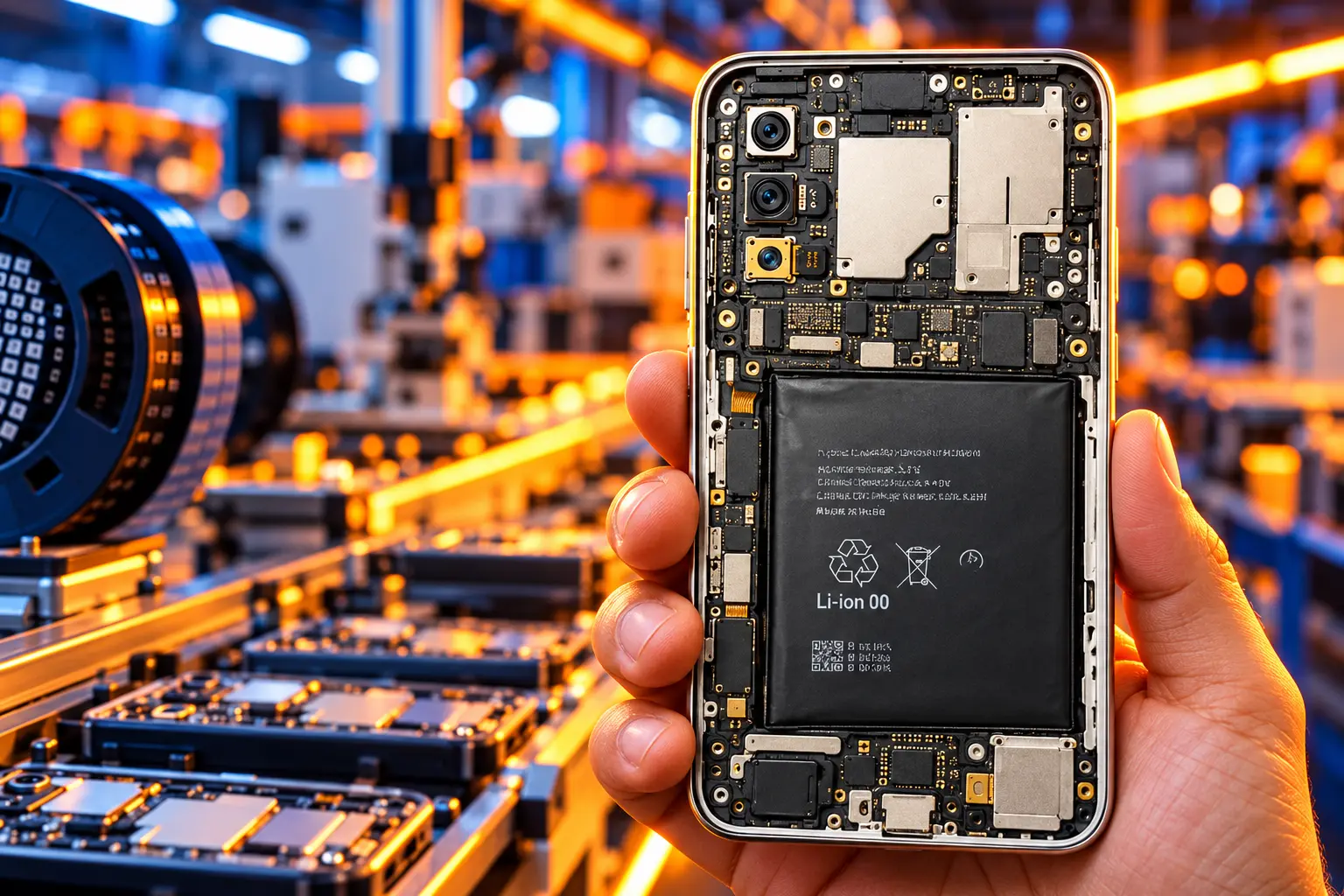
Vaishnaw’s follow-up posts walked through that bill item by item: battery cells, synthetic graphite for the anode, electrolyte additives, acetylene black, cameras, displays, speakers, coils, enclosures, printed circuit boards and connectors. The thread reads less like a birthday card than a procurement list.
Twelve Years of Output, From Steel to Solar Modules
The finished-goods scoreboard is not a fiction. A government note dated 24 September 2026, issued as the programme completed twelve years, and a 29 July Lok Sabha reply from the electronics ministry, show how far selected lines have moved since 2014-15.
OUTPUT FROM 2014-15 TO 2025-26
| Line | 2014-15 (or start year) | Latest official figure |
|---|---|---|
| Electronics production | About Rs 1.9 lakh crore | About Rs 13.11 lakh crore in 2025-26 |
| Mobile-phone production | About Rs 18,000 crore | About Rs 6.27 lakh crore in 2025-26 |
| Electronics exports | About Rs 38,000 crore | About Rs 4.24 lakh crore in 2025-26 |
| Mobile-phone exports | About Rs 1,500 crore | About Rs 2.59 lakh crore in 2025-26 |
| Crude steel | 81.7 million tonnes | 170.0 million tonnes in 2025-26 |
| Indigenous defence production | Rs 46,429 crore | Rs 1.78 lakh crore in 2025-26 |
| Solar-module capacity | 2.3 GW in 2014 | 192 GW as of June 2026 |
| Solar-cell capacity | 1.2 GW in 2014 | About 30 GW as of June 2026 |
The electronics ministry said electronics production rose sevenfold over those twelve years, with a 15.8 percent lift in 2025-26 from Rs 11.32 lakh crore the year before. Mobile output rose around 33 times on the official measure, and mobile exports 165 times. Electronics as a whole now supports about 25 lakh jobs, about 12 lakh of them in the mobile chain, with women close to 70 percent of the workforce in some high-precision phone lines.
Vehicle output reached 31.03 million units in 2024-25, about 33 percent above 2014-15. Pharmaceutical turnover was Rs 4,71,898 crore in 2024-25. Domestic medical-device making rose from Rs 28,000 crore in 2019-20 to Rs 41,500 crore. Defence production is about 283 percent above its 2014-15 level, nearly four times the starting value. Solar modules scaled far faster than solar cells, which is the same finished-goods-ahead-of-parts pattern as the phone.
Manufacturing gross value added at constant prices grew at a 10.88 percent compound rate between 2022-23 and 2025-26 under the revised national accounts. The manufacturing slice of the Index of Industrial Production rose 7.0 percent in April-July 2026 from a year earlier. The factories that exist are busy. The question the anniversary cannot dodge is how much of the economy they now are.
A Narrow List of PLI Winners
The Production Linked Incentive schemes, 14 of them with a sanctioned outlay of Rs 1.91 lakh crore, are the main cheque that followed the 2014 launch. Jitin Prasada, minister of state for commerce and industry, told the Lok Sabha on 21 July 2026 that actual investment had passed Rs 2.40 lakh crore by 31 March 2026, with more than 14.15 lakh direct and indirect jobs. The 24 September note puts production and sales above Rs 22.66 lakh crore as of June 2026. Cumulative PLI-linked exports rose from Rs 4.0 lakh crore in 2023-24 to Rs 6.5 lakh crore in 2024-25 and Rs 15.2 lakh crore in 2025-26.
The annexure behind those totals is less even than the headline.
PLI INVESTMENT BY 31 MARCH 2026
| Sector | Investment (Rs crore) |
|---|---|
| High-efficiency solar PV modules | 64,873 |
| Pharmaceutical drugs | 45,158 |
| Automobiles and auto components | 44,326 |
| Specialty steel | 23,896 |
| Large-scale electronics manufacturing | 20,580 |
| Food products | 9,207 |
| Textiles | 8,117 |
| White goods | 6,409 |
| Telecom and networking | 5,278 |
| Bulk drugs | 5,070 |
| ACC batteries | 4,570 |
| Medical devices | 1,151 |
| IT hardware 2.0 | 908 |
| Drones and drone components | 595 |
| Total | 2,40,138 |
Solar modules, drugs, automobiles, specialty steel and large-scale electronics together took Rs 1,98,833 crore, about 83 percent of the Rs 2,40,138 crore total. Food processing, with Rs 9,207 crore of investment, accounted for 3,29,200 of the 8,49,069 tabulated jobs, before 5.66 lakh indirect jobs in electronics, IT hardware and solar were added to reach 14.15 lakh. The capital went to a short list of exportable lines. The job count was fatter in food.
On the electronics line that dominates the anniversary films, the scheme beat its own five-year targets: Rs 20,587 crore of investment against Rs 7,000 crore sought, Rs 11,61,581 crore of production against Rs 8,12,550 crore, and Rs 6,43,323 crore of exports against Rs 4,87,530 crore. That is how a country becomes the second-largest phone maker by volume and still needs a second family of schemes for boards, cells and chips.
The 25% Manufacturing Target Never Arrived
Make in India was launched on 25 September 2014 at Vigyan Bhawan, with 25 sectors on the original list, later widened to 27 under Make in India 2.0 (15 in manufacturing, 12 in services). The share-of-economy test it inherited is older than the logo.
THE SHARE TARGET AND THE CHEQUES THAT FOLLOWED
- 4 November 2011: The National Manufacturing Policy is notified with the aim of lifting manufacturing to 25 percent of GDP and creating 100 million jobs over a decade or so.
- 25 September 2014: Make in India is launched to market India as a hub for manufacturing, design and innovation and to raise ease of doing business.
- April 2020: Production Linked Incentive schemes begin, with a later outlay of Rs 1.91 lakh crore across 14 sectors.
- 15 July 2026: The Cabinet clears Semicon 2.0 at Rs 1,27,500 crore and a separate Mobile Phone Manufacturing Scheme at Rs 62,500 crore.
- 25 September 2026: The programme completes 12 years. Under the revised national accounts, manufacturing’s share of gross value added is 15.6 percent.
A March 2015 commerce-ministry reply to the Rajya Sabha restated the 2011 policy in those terms: enhance manufacturing’s share of GDP to 25 percent and create 100 million jobs. Twelve years after the 2014 launch, manufacturing’s share of GVA under the revised series has moved from 14.6 percent in 2022-23 to 15.6 percent in 2025-26, a one-point gain on a different national-accounts base from the old GDP target, and still far from a quarter of the economy.
Non-petroleum goods exports rose from 253.5 billion dollars in 2014-15 to 388.3 billion dollars in 2025-26. India’s share of world merchandise exports stayed around 1.7 percent, the same level as in 2013. Cumulative FDI in 2014-15 to 2025-26 reached 843 billion dollars, 169 percent above the previous twelve years, while manufacturing FDI still lagged overall FDI in seven of the twelve years under review. Private fixed capital formation as a share of GDP has fallen in recent years. The export and investment ratios did not travel with the phone-output chart.
Plants Run Below the Line That Usually Adds Capacity
The Reserve Bank’s 73rd Order Books, Inventories and Capacity Utilisation Survey, covering 1,127 manufacturers for January-March 2026, found that plants ran at 77.4 percent of capacity in the fourth quarter of 2025-26, up from 75.6 percent in the previous quarter. Seasonally adjusted utilisation was 75.2 percent. Both the raw and adjusted readings were 30 basis points lower than a year earlier.
Seventy-seven percent is work, not idle plant. It is also below the 80 percent mark commonly treated as the point at which firms start to build new lines rather than sweat the ones they have. The anniversary note can show rising output and still face a capex cycle that has not fully turned.
That split is already visible inside single companies. Samsung cutting India TV jobs while its chip unit runs hotter is the same pattern in miniature: the older assembled box loses people, the component and foundry side keeps them. A national programme that scaled final goods first is now paying to copy that shift.
The Next Cheques Are for Chips, Magnets and Parks
The 24 September note lists the schemes that sit on top of the original Make in India machinery (the National Single Window System, PM GatiShakti, the India Industrial Land Bank and the 14 PLI lines). They are not more of the 2014 brochure. They buy the middle of the chain.
NEW MONEY AIMED AT THE MISSING MIDDLE
- Semicon 2.0: The Cabinet on 15 July 2026 approved a Rs 1,27,500 crore Semicon 2.0 plan on six pillars: design, machines and materials, more fabs, packaging, research, and talent. The first silicon fab is scheduled for 2028. The previous phase, with a Rs 76,000 crore outlay, approved 12 units and more than Rs 1.64 lakh crore of investment; Micron, Kaynes and CG Semi have started commercial production, and 105 design startups are already in the programme.
- Mobile Phone Manufacturing Scheme: Rs 62,500 crore from 2026-27 to 2030-31, meant to raise output and the share of Indian parts in the handset, not only the count of phones boxed.
- BHAVYA parks: Rs 33,660 crore for 100 investment-ready industrial parks over 2026-27 to 2031-32, with the first 50 to be picked by challenge.
- Sintered rare-earth magnets: Rs 7,280 crore to build 6,000 tonnes a year of Nd-Fe-B magnet capacity for electric vehicles, wind, defence and electronics, after a pilot plant at ARCI Hyderabad in March 2026.
Semicon 2.0 is explicit about the gap the phone boom did not close. The Cabinet note says the first phase put India into packaging and a handful of fabs; the second pays for equipment, chemicals, gases, design IP and people. About 68,000 students have already been trained on chip-design tools across 315 universities. The node range cited for the start of the journey is 28 nanometre to 110 nanometre, with later work aimed at more advanced nodes.
ISRO and the Semi-Conductor Laboratory’s VIKRAM3201 processor, qualified for launch vehicles and fabricated in India, is the boutique version of the same bet: make the part that used to be imported, even if the volumes are small. The magnet scheme is the industrial version. Neither was on the 2014 launch stage beside automobiles, textiles and tourism.
Vaishnaw ended his anniversary thread on acetylene black, a conductive additive inside the battery, and on the unglamorous rest of the phone. Small material, he wrote. The 12-year factory boom made the case for that sentence. The next budgets are what it will cost to make it true.

A CubeSat Will Age Whisky That Never Comes Home

A Charity Quote Cost Shia LaBeouf the FKA twigs NDA

Looker Turned a Model’s Body Into Ad Inventory

Infinity Ward Bets a Paid DMZ Will Stick This Time

Disney Sidesteps a Kimmel Renewal as Failla Cites Losses

How to Get Pre Boarding on Southwest – Skip the Line with These Tricks

False AI Intel Nearly Put US Crews on a Chinese Ship

Tim Cook’s $4.6 Trillion Apple Still Runs on One Phone

OpenAI Posts a Navier-Stokes Proof Clay Has Not Touched

Dunes Air Sues Nora Fatehi Over Its Luxury Jet
-
 TRAVEL3 years ago
How to Get Pre Boarding on Southwest – Skip the Line with These Tricks
-
 NEWS1 month ago
False AI Intel Nearly Put US Crews on a Chinese Ship
-
 BUSINESS2 months ago
Tim Cook’s $4.6 Trillion Apple Still Runs on One Phone
-
 NEWS2 months ago
OpenAI Posts a Navier-Stokes Proof Clay Has Not Touched
-
 ENTERTAINMENT2 months ago
Dunes Air Sues Nora Fatehi Over Its Luxury Jet
-

 LIFESTYLE3 years ago
How Often Do You Have to Change a Monkey’s Diaper? The Truth About Pet Monkeys
-

 NEWS2 months ago
Australia Treats Cloud Software Payments as Taxable Royalties
-

 LIFESTYLE3 years ago
How Long Does It Take for Armpit Hair to Grow? The Stages of Hair Growth and How to Shave It