
NEWS
James Nieh’s Bee Book Makes the Case for Costly Failure
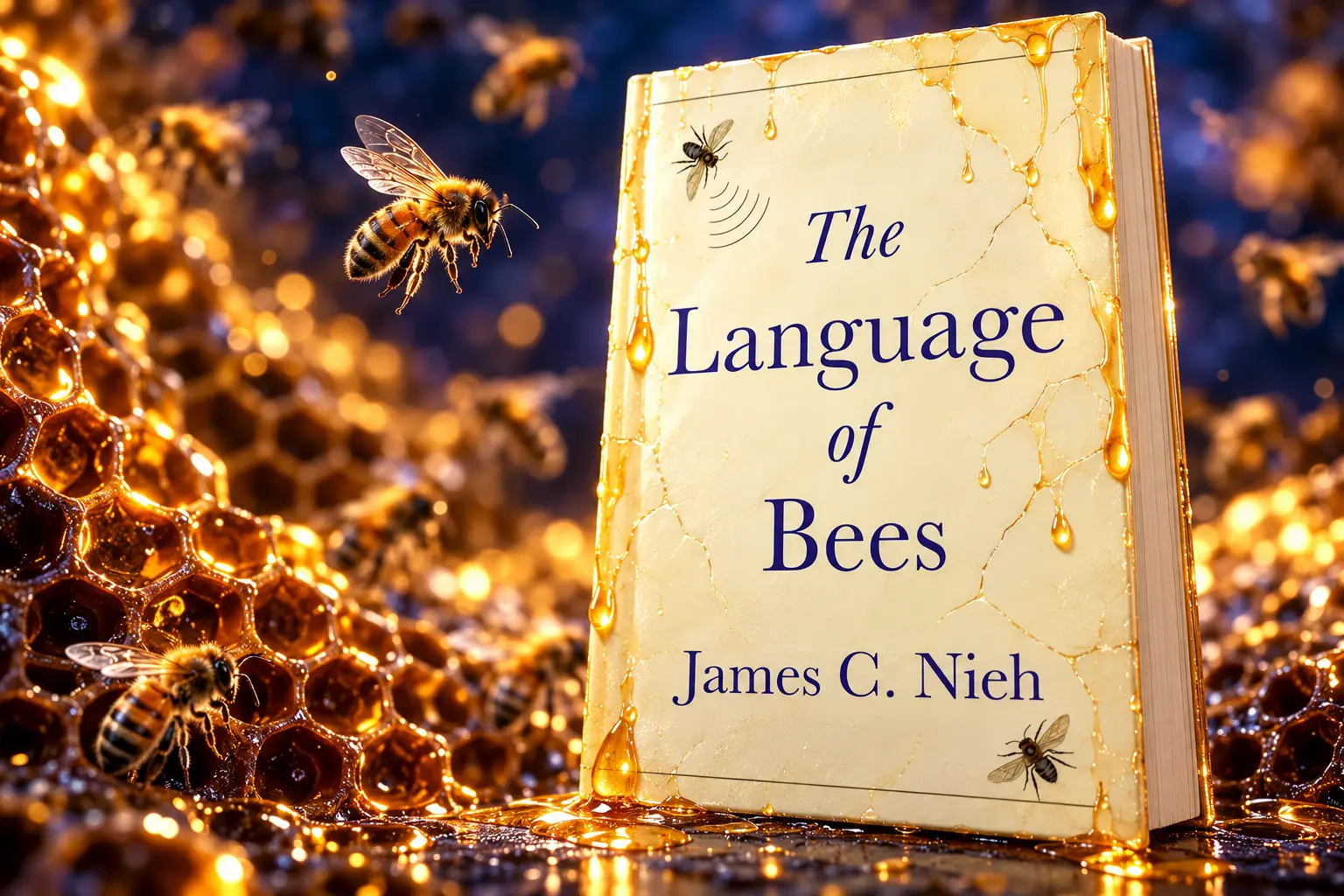
James Nieh’s Language of Bees, out September 15, 2026, follows a hive beep from a failed Concord summer to a warning that grit cannot replace research support.

James C. Nieh’s 288-page book on how bees talk went on sale in the United States on September 15, 2026, the same day he published an essay titled “Science needs failure.” The feeder that launched the work ran dry more than 35 years ago in Concord, Massachusetts, after a senior colleague broke his foot and left an undergraduate alone with a hive.
Princeton University Press priced The Language of Bees at $29.95 (UK edition £25, due November 10, 2026). The essay is the method note the book’s catalog copy already flags: failure and wrong turns, Nieh writes, are how the interesting questions arrive. He also says celebrating that habit is a poor way to ask labs to train people on less money.
A Broken Foot Left Him Alone With the Hive
Donald Griffin, the biologist who helped prove that bats echolocate, had planned to thread a microphone into a beaver lodge that summer at Harvard’s Concord Field Station. The beavers kept their privacy. Nieh, who would finish a Harvard bachelor’s degree in 1991, was left with a honey bee colony meant for a study of sounds produced during the waggle dance.
A returning forager that has found food can run a figure-eight on the comb. The waggle run inside that pattern tells nestmates distance and direction. Nieh was scanning a microphone over those dancers when short piping notes, aimed at the dancer rather than coming from her, pulled him off the plan. Followers sometimes butted the dancer’s body and produced a loud beep. She froze.
Older papers treated the sound as a food-begging call. The bee that beeped almost never got food. Nieh named the pulses stop signals. Working alone, he could not film the hive and also meter traffic at his syrup feeder, so the dish packed and emptied. Congestion, it turned out, is a reliable way to elicit the beeps. Dancers often restarted after a signal, but they ran fewer circuits, and fewer circuits recruit fewer nestmates.
This question was in the back of my mind for over 20 years. I did not figure out the answer that summer, but the “failed” experiment gave me a better question, not the one I had intended to resolve.
James C. Nieh, Professor of Ecology, Behavior, and Evolution, University of California San Diego, in Science Needs Failure
He is now a professor in that department and an associate dean in the School of Biological Sciences, a Fellow of the Royal Entomological Society, and a Hambleton Award winner for bee research. The Concord summer still sits at the front of the new book.
The Beep That Did Not Beg
The first paper came out of Cornell, where Nieh earned his Ph.D. in 1997. Behavioral Ecology and Sociobiology printed “The stop signal of honey bees: reconsidering its message” in July 1993, after receiving it on June 17, 1992. The summary is blunt. Stop signals can come from tremble dancers, dance followers, and waggle dancers. They rarely lead to food exchange. They appear to drive waggle dancers off the dance floor.
Harald Esch’s 1964 reading, a vibrational begging signal, did not survive contact with playbacks and scored behavior. When nectar intake overwhelms the bees that store it, returning foragers search longer before they unload and begin a tremble dance. In Nieh’s sample, tremble dancers produced most of the stop signals on the floor. The working idea was already inhibitory: slow recruitment until the nest catches up.
That is a colony-level brake, not a request for a taste. It also left the harder problem untouched. Why would a bee that is trying to learn a dance try to stop the dancer?
Attack Victims Raised the Signal 43-Fold
The natural trigger showed up when a later, planned feeder study collapsed under fights with other colonies. Attacked foragers came home and unloaded a burst of stop signals onto nestmates still advertising the same dangerous patch. Current Biology ran the result on February 11, 2010, as a report in volume 20, pages 310 to 315. Attack victims produced a 43-fold jump in stop signals. Bees that attacked others, or met no aggression, did not change their output.
THE STOP SIGNAL IN NUMBERS
- Pulse length: About 150 milliseconds, a brief vibration often delivered with a head-butt, sometimes with the sender climbing onto the receiver.
- Pitch: Around 380 hertz, in the same band as other worker piping sounds.
- Alarm pheromone: Exposure raised signaling 14-fold.
- Simulated bite: Pinching a forager’s leg, standing in for an ambush predator, raised signaling 88-fold.
Signalers aimed the pulses at nestmates that had visited the same site, matching them by odor. Waggle dancing for that site fell and recruitment to it stopped. Wolfgang Kirchner’s earlier comb playbacks, cited in the 2010 paper, had already cut waggle-dance duration 59 percent and recruitment 60 percent. What Nieh added was a reason a wild colony would bother: peril at the patch.
UC San Diego undergraduates in an NSF-backed program, Opportunities for Research in Behavioral Sciences, helped run the trials. In the campus release he called the stop sign, then, only the second clear negative-feedback signal found in a superorganism. Positive feedback, the waggle dance, had been the famous half of the loop for decades.
HOW THE QUESTION MOVED
| Year | Paper | What it established |
|---|---|---|
| 1993 | Behavioral Ecology and Sociobiology 33: 51-56 | Stop signals are not begging calls; they push dancers off the floor |
| 2004 | Proceedings of the Royal Society B 271: 1633-1640 | Trigona spinipes scouts steal Melipona scent marks and take the food |
| 2010 | Current Biology 20: 310-315 | Attacks and simulated bites trigger stop signals that shut down recruitment |
| 2016 | PLOS Biology 14(3): e1002423 | Asian honey bees encode hornet size in pitch and attack site in pulse length |
The 2010 paper did not close the file. A 2023 Current Biology report from the same lab showed that receiving a stop signal can lower head dopamine and cut dancing even when the dancer herself never met the danger. The brake has a chemistry.
A Canoe, a Jesus Lizard, and Bullet Ants
Persistence is the other half of Nieh’s method note, and the Panama work is the exhibit. He tried to train foragers of the stingless bee Melipona panamica across water, because an odor trail cannot be laid on a cove. The colony sat on one shore of a small inlet on Barro Colorado Island. The feeder went in a canoe and moved, slowly, to the far bank, 116 meters of open water away.
WHAT BROKE THE FIRST SEVEN TRIES
- The lizard: On the day the bees finally crossed, a Jesus lizard sat on the hive entrance and ate the foragers that had taken weeks to train.
- The toad: A slippery barrier went up. Days later a large toad climbed it and took another meal.
- The rest: Torrential rain, lightning, an angry wasp nest, and bullet ants walking the rope that guided the canoe.
On roughly the eighth attempt the test ran. Newcomers still arrived at the feeder the trained bees had used, not at a matched dish on the same shore. M. panamica can tell nestmates where to go without an odor trail. Later work showed the species does leave a scent beacon at the food itself, with an effective radius greater than 6 meters and less than 12, but that is a local mark, not a highway home.
Colonies of this bee usually hold 500 to 800 adults and nest in hollow trees from northern Colombia to southern Costa Rica. The water gap was a way to subtract one channel and see whether the others still worked. They did. The eighth trip is the version of resilience Nieh is willing to praise: the question was still worth the stings.
Trigona Scouts Prefer a Rival’s Odor
Brazil taught the other lesson. Weeks of setup on communication in Melipona rufiventris died when aggressive Trigona spinipes foragers found the dishes, recruited nestmates, and attacked. The team changed feeder color, scent, and location. The raiders still came, and only after Melipona had started to feed. Three weeks in, the planned season was gone.
They stopped treating the invaders as a nuisance. New trials showed scouting T. spinipes were oriented toward a competitor’s odor marks. Proceedings of the Royal Society B published the paper in 2004 (volume 271, pages 1633 to 1640), with Lillian Barreto, Felipe Contrera, and Vera Imperatriz-Fonseca. At a new site, the aggressors preferred victim odor to their own. M. rufiventris fled T. spinipes marks.
Nieh told the campus news office that the aggressors “rapidly dominated the food source, killing or driving off all of the competitors within ten minutes.” The dishes sat more than 100 yards apart. Once on the food, T. spinipes used threats, grappling, and decapitation. The same bees, he said, will drive Africanized honey bees and even birds off flowers.
The National Science Foundation, the University of California Academic Senate, and the Heiligenberg Chair Endowment at UC San Diego paid for that season. In 1999 Nieh had already floated the idea that hiding location talk inside the nest could be a way to dodge this kind of espionage. The ruined Melipona study became the evidence.
When the Hornet Is Larger, the Pulse Is Higher
The Concord freeze found a second job in Asia. With Ken Tan and Shihao Dong, Nieh showed that the Asian honey bee Apis cerana uses stop signals tuned to hornet threat. PLOS Biology published the open-access paper on March 25, 2016. The world’s largest hornet, Vespa mandarinia, and the smaller Vespa velutina kill foragers and wait at nest doors until defenders are gone, then take the brood.
Up to 30 percent of a poorly defended colony’s workers can die in one of those door attacks. The bees’ reply is a living ball that cooks the hornet. Stop signals add a warning layer. Large-hornet attacks killed more bees and, per attack at colony scale, drew more stop signals. Those pulses ran at a higher fundamental frequency than pulses prompted by the smaller hornet, and the higher pulses did a better job of shutting down waggle dancing.
Context sat in duration. Attacks at the nest entrance produced longer pulses than attacks on foragers out at food. Nest-entrance signals went to dancers and to bees that were not dancing, and they held foragers inside. Alarm pheromone and a live hornet at the door still launched the heat-ball. In the balling trials, the large hornet drew 6-fold more bees than the small one, and 13-fold more of those bees died.
The authors called it the first social-insect alarm signal shown to encode both graded danger and attack context. The famous recruitment dance, which encodes food location, now had a matching inhibitory code for when that location, or the porch, will get you killed.
No Grant, No Eighth Attempt
Nieh draws a line under the anecdotes before anyone can turn them into a morale poster. Resilience, in his telling, is two different moves. Sometimes you run the canoe again because the question is still alive. Sometimes you drop the plan because the bees have handed you a better one. The danger is using that flexibility as polite language for abandonment, or for making do with less, especially for the people still learning the craft.
He wrote the warning into a week when the funding climate for investigator-led field biology is not generous. On May 14, 2026, the U.S. National Science Foundation announced $1.5 billion over the next decade for NSF X-Labs, a bet on independent teams chasing quantum systems and AI-driven scientific instruments rather than a lone professor following a beep for twenty years. Michael Kratsios, director of the White House Office of Science and Technology Policy, tied the push to technological leadership. Nieh’s 2010 peril study, by contrast, ran in part on an NSF program that put underrepresented high-school students and undergraduates into a bee lab.
The Language of Bees walks through waggle dances, stingless-bee trails, eavesdropping, and warfare among colonies of animals less than an inch long. Readers, the catalog says, will also learn that bees waggle-dance better if they have teachers and an audience, a finding Nieh and colleagues reported in Science in 2023. Thomas D. Seeley, author of Honeybee Democracy, called the new book a blend of history, personal experience, and discovery. Lars Chittka wrote that it would change how readers see the hidden world inside a nest.
The press printed 16 color plates and 31 black-and-white figures across 288 pages. That is not a substitute for the next student who needs a field season long enough to notice that the raiders only arrive after the other bees start to feed. Nieh says a smaller or cheaper project can still matter if the question is good. He does not say the canoe should have been cancelled after the lizard.
At Concord he could not salvage the dance-sound study he had been handed. He stopped trying to rescue it and listened to the bees instead. The dish went dry. More than 35 years later, he writes, he is still listening.
Frequently Asked Questions
What is a honey bee stop signal?
It is a brief vibrational pulse, about 150 milliseconds long and centered near 380 hertz, usually delivered by one worker butting her head into another, most often a waggle dancer. Playbacks that vibrate the comb have cut dance duration 59 percent and recruitment 60 percent, and the pulse also turns up in house-hunting swarms, where it helps shut down advertising for a losing nest site, so danger at a feeder is only one of its jobs.
Why did researchers once call the stop signal a begging call?
Harald Esch argued in 1964 that dance followers used the sound to solicit a food sample from the dancer, a reading that fit the idea of trophallaxis as the way recruits taste what they are being sent to find. Direct watches and playbacks found that the beeping bee almost never received food, that tremble dancers produced many of the pulses, and that the reliable effect was to move the dancer off the floor, which is why Nieh renamed it in the 1993 paper.
What is in James Nieh’s book The Language of Bees?
The 288-page Princeton University Press hardcover, ISBN 9780691204895, surveys how honey bees, bumble bees, and stingless bees use scent, vibration, motion, and sound to forage, fight, spy, and defend, and it argues that predators and competitors helped shape those codes. Alongside the fieldwork it includes the failed seasons, and a 2023 Science paper from Nieh’s group on social learning of the waggle dance, the finding behind the catalog line that bees dance better with teachers.
Did Melipona panamica need an odor trail to recruit across water?
No. On Barro Colorado Island, Nieh’s group parked a colony on one shore of a cove and trained foragers 116 meters over open water, where a scent trail cannot be laid, then set a second feeder on the far shore 20 meters from the first. Newcomers still clustered at the dish the trained bees had used, showing that this stingless bee can specify direction without a trail, even though later tests found a short-range scent beacon at the food itself.

A CubeSat Will Age Whisky That Never Comes Home

A Charity Quote Cost Shia LaBeouf the FKA twigs NDA

Looker Turned a Model’s Body Into Ad Inventory

Infinity Ward Bets a Paid DMZ Will Stick This Time

Disney Sidesteps a Kimmel Renewal as Failla Cites Losses

How to Get Pre Boarding on Southwest – Skip the Line with These Tricks

False AI Intel Nearly Put US Crews on a Chinese Ship

Tim Cook’s $4.6 Trillion Apple Still Runs on One Phone

Dunes Air Sues Nora Fatehi Over Its Luxury Jet

OpenAI Posts a Navier-Stokes Proof Clay Has Not Touched
-
 TRAVEL3 years ago
How to Get Pre Boarding on Southwest – Skip the Line with These Tricks
-
 NEWS1 month ago
False AI Intel Nearly Put US Crews on a Chinese Ship
-
 BUSINESS2 months ago
Tim Cook’s $4.6 Trillion Apple Still Runs on One Phone
-
 ENTERTAINMENT1 month ago
Dunes Air Sues Nora Fatehi Over Its Luxury Jet
-
 NEWS1 month ago
OpenAI Posts a Navier-Stokes Proof Clay Has Not Touched
-

 LIFESTYLE3 years ago
How Often Do You Have to Change a Monkey’s Diaper? The Truth About Pet Monkeys
-

 NEWS1 month ago
Australia Treats Cloud Software Payments as Taxable Royalties
-

 LIFESTYLE3 years ago
How Long Does It Take for Armpit Hair to Grow? The Stages of Hair Growth and How to Shave It