
NEWS
The Cabin Came Down on Sepehran’s 30-Year 737
A 30.1-year Sepehran 737 dropped cabin lining after a tyre tread let go at Mashhad, 21 days after a nose-gear collapse and seven days after U.S. sanctions.

A Sepehran Airlines Boeing 737-300 dropped a long run of cabin ceiling panels onto passengers after a tyre tread separated on takeoff from Mashhad on September 15, 2026. No one was hurt. The jet, registered EP-FSU, turned back to Shahid Hashemi Nejad International Airport and everyone later left on a replacement flight to Kermanshah.
It was the airline’s second serious 737 failure at that airport in 21 days, and it came seven days after the U.S. Treasury put Sepehran on a new Iran aviation sanctions list.
The Tread Came Off on the Mashhad Takeoff
Hassan Jafari, public relations director for airports in Khorasan Razavi province, said the Sepehran flight to Kermanshah took off at about 17:30 local time. The tread separated from one tyre as the aircraft left the runway, he said, and the tyre itself had not burst. Once airborne, the pilot told the tower the engine was in an emergency condition and turned back.
The Razavi Khorasan provincial government timed the event at 17:39. Video from inside the cabin shows passengers gripping the headrests in front of them while a long section of interior lining hangs down over the seats. Cabin lights stay on. Overhead bins have sprung. Some bags and loose items fall onto people below. Voices in the cabin rise into shouts and prayers as the jet shakes on the way back in.
Gary Leff, a U.S. travel industry writer who reviewed the footage, said severe shaking can overload the supports that hold interior panels, and that a damaged tyre can also jolt the airframe while it is rolling. He added that maintenance issues may have left the cabin lining ready to fail. The Civil Aviation Organization of Iran is investigating. Airport officials said a runway was closed for a time and then reopened the same day.
WHAT WE KNOW
- The return: The Mashhad-Kermanshah service came back to Shahid Hashemi Nejad after the crew declared an emergency.
- The tyre: Jafari said the tread separated on the takeoff roll and that the tyre had not burst.
- The cabin: Interior ceiling panels and overhead fittings came down; the lights stayed on and the pressure hull was not opened.
- The outcome: Officials said no passengers or crew were injured and that travellers were flown on to Kermanshah on another aircraft.
WHAT IS UNCONFIRMED
- Engine damage: The pilot reported an engine emergency; how much, if any, hardware was hurt has not been published.
- How many flew: A passenger count for the September 15 flight has not been released.
- The cause: Early accounts called it a burst tyre; Jafari’s tread account is the official wording so far, and the civil aviation inquiry is open.
The clip that spread on September 15 is from this return, not from the earlier Mashhad excursion. Mixing the two events is easy because both involve Sepehran 737 Classics at the same airport, but they are different aeroplanes and different failures.
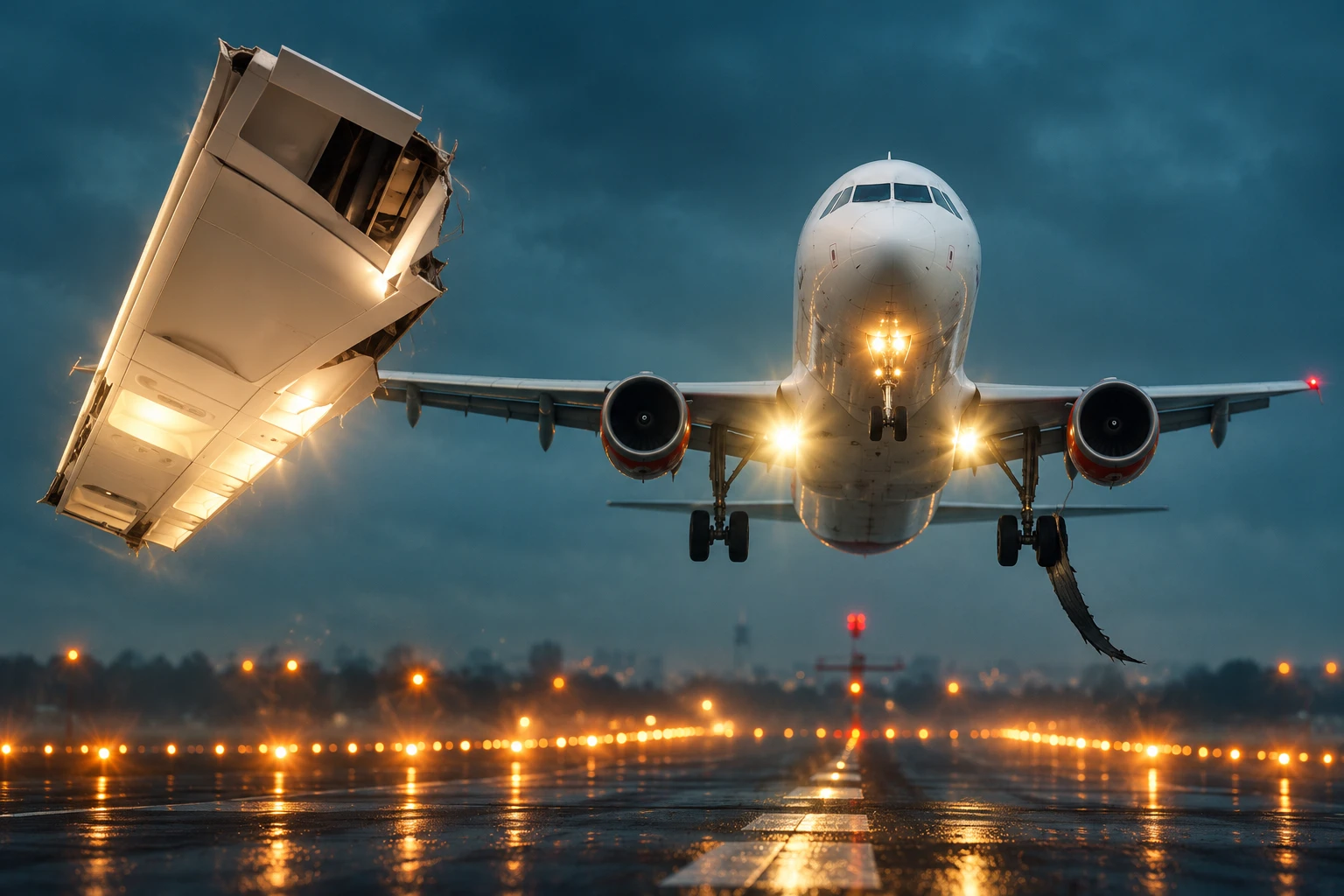
EP-FSU’s Path From Brussels to Mashhad
Fleet files identify the September 15 jet as EP-FSU, a Boeing 737-36M, manufacturer serial 28332, line number 2809, with two CFM56-3C1 engines. It first flew on 29 July 1996 and is listed at 30.1 years. Sepehran took it on 6 May 2023 after a long second-hand life in Europe and Asia.
WHERE EP-FSU FLEW BEFORE IRAN
- Virgin Express: Delivered 16 August 1996 as OO-VEA.
- TAROM: Joined 18 December 1998 as YR-BGY.
- Garuda: Joined 7 April 2003 as PK-GGW.
- bmibaby: Joined 10 April 2007 as G-TOYJ and was withdrawn in September 2012.
- Carpatair: Joined 25 July 2013 as YR-BBA.
- Belavia: Joined 24 May 2014 as EW-407PA and was later stored.
- Sepehran: Registered EP-FSU on 6 May 2023.
Trackers also listed the jet as stored in Tehran from 28 February to 14 April 2026, then in Muscat from 14 to 21 April, before it returned to service on 22 April. Five months later it was the aeroplane whose cabin lining came down on the Mashhad-Kermanshah run. That history does not, by itself, explain a tread failure. It does show what kind of airframe is doing Sepehran’s domestic work: a Classic 737 that has already changed hands across Belgium, Romania, Indonesia, Britain, Belarus and Iran.
21 Days After a Nose Gear Collapse in Mashhad
On August 25, 2026, a different Sepehran jet, EP-FSF, a Boeing 737-500 built as a 737-529, was operating flight IS-4310 from Tehran Mehrabad to Mashhad with 127 people on board. It landed on runway 13L, veered right, and stopped on runway 13R with the nose landing gear collapsed. Airport officials said everyone got off in good health. Iran’s civil aviation body opened an inquiry. Runway 13R and taxiway Q were closed because the aeroplane sat disabled. Fleet trackers later listed EP-FSF as stored at Mashhad after the incident, at 34.3 years.
TWO SEPEHRAN 737 FAILURES AT MASHHAD
| Detail | August 25, 2026 | September 15, 2026 |
|---|---|---|
| Registration | EP-FSF | EP-FSU |
| Type | Boeing 737-500 | Boeing 737-300 |
| Listed age | 34.3 years | 30.1 years |
| Route | Tehran Mehrabad to Mashhad | Mashhad to Kermanshah |
| What failed | Runway excursion, nose gear collapsed | Tyre tread separated, cabin lining fell, return |
| People on board | 127 | Not published |
| Injuries | None reported | None reported |
| Afterward | Stored at Mashhad | Passengers rebooked to Kermanshah |
The August aeroplane is still the one with the collapsed nose gear. The September video is the one with the hanging ceiling. Treating them as a single scare clip hides the pattern that matters for anyone who has to board a Sepehran Classic: landing gear on one jet, tyre and cabin interior on another, same airport, 21 days apart, nobody hurt both times.
Treasury Named Sepehran on September 8
On September 8, 2026, the U.S. Treasury’s Office of Foreign Assets Control, acting under Operation Economic Outcast, named 27 Iranian airlines including Sepehran under Executive Order 13902. The notice listed 36 targets in all and said the campaign was aimed at aviation the Iranian state uses to move weapons, personnel and illicit cargo. It also suspended authorizations that had allowed overflights and let non-U.S. airlines fly U.S.-origin or U.S.-controlled commercial aircraft into Iran. OFAC said it would consider aviation safety-related requests case by case.
Let this be a warning to anyone doing business with Iran’s remaining airlines, all of which we sanctioned today: You are at risk of being cut off from the global financial system.
Scott Bessent, U.S. Treasury Secretary, September 8, 2026
The designations sat on an August 24, 2026 sector determination, the step Treasury called Economic D-Day, which brought aviation under E.O. 13902. EP-FSF’s nose-gear collapse came one day after that determination. EP-FSU’s cabin failure came seven days after Sepehran’s name went on the September 8 list. Leff wrote that a policy change less than a week earlier was unlikely to be the cause of the September return. Aircraft still need a steady supply of tyres, dampers, interior fittings and overhaul work, and that supply has been constrained for years.
WHAT THE SEPTEMBER 8 ACTION DID
- Airline list: OFAC designated 27 Iranian carriers, Sepehran among them, and blocked their U.S. property.
- Flight permissions: It suspended overflight and foreign-airline authorizations for U.S.-origin jets going into Iran.
- Safety path: It said aviation safety requests would be taken case by case, not as a standing licence.
- Procurement alert: FinCEN published a notice on front companies used to buy aircraft parts through third countries.
Iranian carriers have for years used intermediaries in Europe, the Middle East, Africa and Asia to obtain U.S.-origin airframes and components. EP-FSU’s own path, through a Bulgarian camo shop and Tajikistan before the Iranian register, fits that used-jet pipeline. Tightening the last remaining official channels does not instantly peel a tyre. It does make honest, traceable maintenance harder on a Classic 737 that cannot walk into a Boeing shop.
What Iran’s Classic 737s Are Flying On
Sepehran, IATA code IS, ICAO SHI, is based at Mashhad and also uses Tehran Mehrabad and Shiraz. Planespotters, in a fleet file updated on August 27, 2026, gave it 11 Boeing 737s with an average fleet age of 32.2 years, of which eight were in service and three were parked. The in-service 737-300s averaged 31.0 years. The in-service 737-500s averaged 33.6 years. EP-FSU sat in the 737-300 column at 30.1 years. EP-FSF sat in the 737-500 column, already stored after the August excursion.
SEPEHRAN FLEET, LATE AUGUST 2026
- Total 737s: 11 on the books, eight flying, three parked.
- Mean age: 32.2 years across the fleet.
- Classics only: 737-300 and 737-500, no Next Generation or MAX types listed.
- The stored jet: EP-FSF, 34.3 years, kept at Mashhad after the nose-gear collapse.
Those numbers are the bill of materials for a domestic network that still has to move people between Mashhad, Tehran and Kermanshah. The September 15 passengers did not choose a 1996 airframe. They bought a ticket on the airline that flies that airframe, on the day a tread let go and the cabin lining followed.
The Lining Hung and the Lights Stayed On
The footage looks like the aeroplane is coming apart. What actually dropped is interior lining and overhead gear, the plastic and fittings passengers can see, not the metal that holds pressure. The lights remaining on is the plain clue: this was a cabin-interior failure under shaking, on a 30.1-year-old Classic, after a tread separated on takeoff.
Iran’s civil aviation body has not issued a cause. Jafari’s tread account, the pilot’s engine call, and the hanging panels are the facts on the record as of September 16, 2026. The same airline had already left a 34.3-year 737-500 on its nose at the same airport 21 days earlier. Both cabins emptied without injury. The next Sepehran Classic that rolls on a Mashhad runway will do so with those two records still open.

A CubeSat Will Age Whisky That Never Comes Home

A Charity Quote Cost Shia LaBeouf the FKA twigs NDA

Looker Turned a Model’s Body Into Ad Inventory

Infinity Ward Bets a Paid DMZ Will Stick This Time

Disney Sidesteps a Kimmel Renewal as Failla Cites Losses

How to Get Pre Boarding on Southwest – Skip the Line with These Tricks

False AI Intel Nearly Put US Crews on a Chinese Ship

Tim Cook’s $4.6 Trillion Apple Still Runs on One Phone

Dunes Air Sues Nora Fatehi Over Its Luxury Jet

OpenAI Posts a Navier-Stokes Proof Clay Has Not Touched
-
 TRAVEL3 years ago
How to Get Pre Boarding on Southwest – Skip the Line with These Tricks
-
 NEWS1 month ago
False AI Intel Nearly Put US Crews on a Chinese Ship
-
 BUSINESS2 months ago
Tim Cook’s $4.6 Trillion Apple Still Runs on One Phone
-
 ENTERTAINMENT1 month ago
Dunes Air Sues Nora Fatehi Over Its Luxury Jet
-
 NEWS1 month ago
OpenAI Posts a Navier-Stokes Proof Clay Has Not Touched
-

 LIFESTYLE3 years ago
How Often Do You Have to Change a Monkey’s Diaper? The Truth About Pet Monkeys
-

 NEWS1 month ago
Australia Treats Cloud Software Payments as Taxable Royalties
-

 LIFESTYLE3 years ago
How Long Does It Take for Armpit Hair to Grow? The Stages of Hair Growth and How to Shave It