
NEWS
The US Bars Abbas From the UN Hall Again
Washington extends its visa ban on Mahmoud Abbas for a second UNGA, even as European allies tighten settlement-trade measures and Netanyahu is listed in the hall.

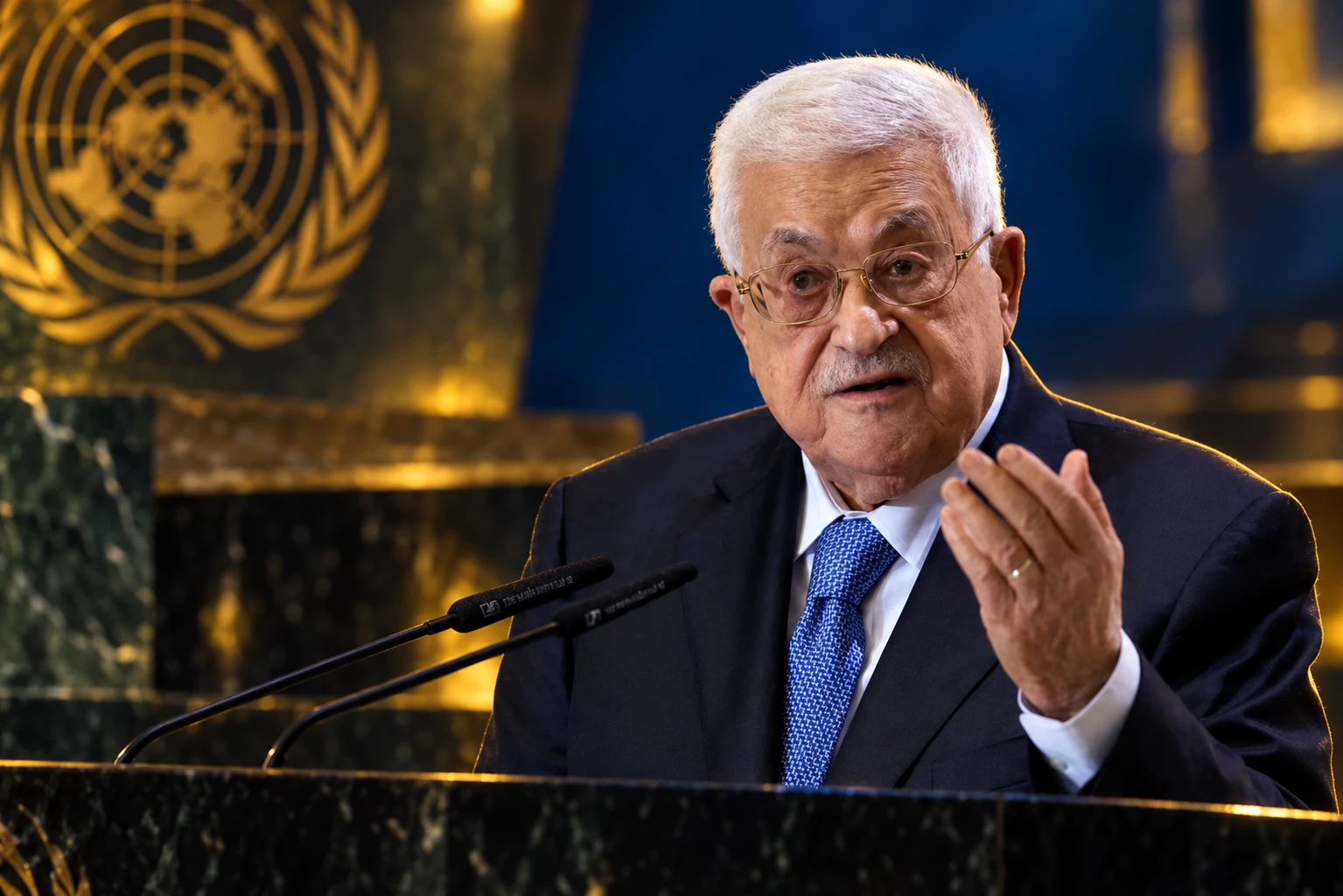
The United States will keep Mahmoud Abbas out of New York for a second year, extending a visa ban on Palestinian officials days before the UN general debate. The State Department said on September 16 that PLO members and Palestinian Authority officials will again be denied entry. Regular staff at the PLO Observer Mission keep a standing waiver, so the New York office stays open while the president does not travel.
Abbas is listed to speak on September 24, the same day as Israeli Prime Minister Benjamin Netanyahu. A video workaround is listed for a vote on September 17, copying the fix the Assembly used in 2025 after the first ban.
Washington Turns a Host Visa Into a Mute Switch
The spokesman’s media note did not name Abbas. Palestinian officials said his office was told on Wednesday that his application was rejected, and that dozens of other PA officials who hoped to travel with him got the same answer. Last year’s sweep hit Abbas and about 80 officials. The pattern is now two UNGA seasons in a row under the Trump administration.
The department told Congress the PLO and the PA had, “once again, failed to live up to their commitments” in the PLO Commitments Compliance Act of 1989 and the Middle East Peace Commitments Act of 2002. It said the United States would extend sanctions that deny visas under section 604(a)(1) of the 2002 law, and that the standing waiver for personnel notified to the PLO Observer Mission would stay in place, “as was the case in the Department’s prior determinations.”
As a consequence of their failure to reform, contrary to their commitments to the United States, and their ongoing activities that undermine the prospects for peace, the United States will extend sanctions that deny visas to PLO members and PA officials.
U.S. Department of State, Media Note, September 16, 2026
The note closed on a national-interest line: hold the PLO and PA “accountable for glorifying terrorism.” That is the public charge. The operational result is narrower. Accredited mission staff can still work in New York. The people who would have filled the hall during high-level week cannot. One Palestinian official who received a rejection notice said the box ticked on his paper was Immigration and Nationality Act section 212(a)(3)(B), a terrorism-related bar described on the form as a permanent ineligibility. It was not clear whether Abbas’s own paper used the same ground.
Hillel Neuer, executive director of UN Watch, put the reform claim in a different frame, writing that Abbas is “now in the 22nd year of his 4-year term.” The original presidential mandate ran four years from the 2005 election. That fight is about Ramallah’s politics. The visa fight is about who is allowed to stand in the General Assembly Hall.
The Charge Sheet Under American Peace Laws
The September 16 note is a compliance finding with a travel penalty attached. It lists four clusters of conduct, written as facts Washington has reported to Congress, not as counts in a court. Palestinian officials reject the terrorism frame and say they have a right to seek accountability against an occupying force under international law. A formal reply to the new note had not been issued in the hours after it landed.
WHAT WASHINGTON PUT ON THE RECORD
- The courts: The department says the PLO and PA have taken the conflict to the International Criminal Court and the International Court of Justice, which it calls an effort to “internationalize” the dispute.
- The recognitions: It says they are “seeking to bypass negotiations through seeking unilateral recognition” of a Palestinian state.
- The stipends: It says they continue “to pay stipends to terrorists” and to the families of people Washington and Israel describe as attackers.
- The textbooks: It says they “glorify acts of terrorism and terrorists in public pronouncements and school textbooks,” and that those steps cut against prior support for Security Council Resolutions 242 and 338.
Those four items are also the conditions under which a host-country visa becomes a foreign-policy tool. Last August, when the first UNGA wave of denials and revocations was announced, the department said the groups had to “consistently repudiate terrorism,” including the Hamas-led attack in Israel on October 7, 2023, and to end what it called incitement in education. The 2026 note says they have not done enough. The PA was built by the Oslo accords. The PLO was recognised in that process as the representative of the Palestinian people after it recognised Israel and renounced violence. Washington’s present claim is that those older bargains are being breached in courtrooms, classrooms, and payment offices, and that the penalty is the podium.
The Assembly Already Built a Video Workaround
Palestine sits in the United Nations as a non-member observer state, the same class of seat as the Holy See. It has no vote in the 193-member Assembly. It does have a standing invitation to take part, and it has a mission already in New York. That is why the waiver matters. Diplomats who are already notified to the observer mission can still walk into the building. The president, travelling from Ramallah, cannot.
In 2025 the Assembly refused to treat that gap as the last word. On September 19 it adopted a resolution allowing a pre-recorded video after visa refusal, to be played in the Hall after an introduction by a representative who was physically present. The vote was 145 in favour, five against (Israel, Nauru, Palau, Paraguay, and the United States), and six abstentions (Albania, Fiji, Hungary, North Macedonia, Panama, and Papua New Guinea). The text applied only to the 80th session and said, without setting a precedent, that the State of Palestine could also use video or a live link at a high-level conference on a two-state solution. Abbas spoke from a screen on September 25, 2025.
TWO UNGA WEEKS, SAME HOST-COUNTRY BLOCK
| Item | 2025 | 2026 |
|---|---|---|
| U.S. decision | July sanctions, then August 29 denials and revocations | September 16 extension of the same visa sanctions |
| Who was blocked | Abbas and about 80 officials | Abbas and dozens of officials |
| Mission waiver | Kept for notified observer-mission staff | Kept again |
| Assembly fix | September 19 vote, 145 in favour, five against, six abstentions | Video-address vote listed for September 17 |
| Abbas slot | Video address on September 25 | Listed for September 24, expected by video |
The 2025 resolution was written as a one-session patch. A year later the same host-country problem is back, and the Palestinian Mission has put a similar text on the September 17 order of business. If it passes, last year’s exception becomes the method. If it fails, Palestine’s high-level week is the diplomats who already hold New York papers, and no presidential speech at all.
What the 1947 Headquarters Agreement Requires
The legal fight is older than this administration. In 1947 the United States and the United Nations signed the Headquarters Agreement, later approved by Congress, under which Washington hosts the organisation in New York. Section 11 says federal, state, or local authorities “shall not impose any impediments to transit to or from the headquarters district” for representatives of members and for people invited by the United Nations on official business. The visa rules in the pact are written to apply “irrespective of the relations existing” between those governments and the United States.
UN independent experts used that clause against the first ban. On September 9, 2025, Special Rapporteur Ben Saul, Special Rapporteur Francesca Albanese, and Independent Expert George Katrougalos said the United States was obliged to respect the right of people invited by the United Nations to travel to headquarters, and that the Headquarters Agreement requires that visas shall be granted whether or not Washington recognises Palestine as a state.
The United Nations Headquarters Agreement of 1947 requires that visas ‘shall be granted’ by the United States, regardless of whether the US recognises Palestine as a State. The US cannot unilaterally impose exceptions or conditions on these obligations.
Ben Saul, Francesca Albanese and George Katrougalos, UN independent experts, OHCHR statement, 9 September 2025
The experts also wrote that the PLO has been entitled, since 1974, to take part in the Assembly upon invitation, and that the United Nations has treated Palestine as a non-member observer state since 2012. They said the PLO and PA “are not responsible for Hamas’ attacks of 7 October 2023,” that seeking relief in international courts is “an entirely legitimate means of pursuing peace and justice,” and that “the US has not denied visas to any Israeli officials accused of international crimes.” Washington’s answer, then and now, is that it can still refuse visas on security, extremism, and foreign-policy grounds, and that MEPCA requires a penalty once a noncompliance finding is sent to Congress. Last year a representative for Abbas called the denials a “clear contradiction to international law and the UN Headquarters Agreement.”
Disputes over host-country practice go to a committee of member states, and an unresolved fight can be sent to arbitration. The Assembly’s 2025 workaround was a political patch, not a ruling on the treaty. Repeating it would again leave the 1947 text where it was: still on the books, still contested, and still unused as a key to the hall.
Twelve Allies Moved From Recognition to Settlement Trade
The State Department’s own charge sheet treats “unilateral recognition” as a reason to keep Abbas off the floor. That complaint landed in a week when the governments that broke with Washington on recognition last year were already onto the next instrument. Britain, France, Canada, and Australia recognised Palestine during the 2025 high-level meetings, part of a broader Western move the United States refused to join. Among the five permanent members of the Security Council, the United States is the holdout.
On September 8, 2026, the foreign ministers of Canada, Denmark, Finland, France, Iceland, Ireland, Norway, Poland, Portugal, Spain, Sweden, and the United Kingdom issued a joint statement on the two-state solution. They said Israeli actions in the West Bank, including settler violence, settlement expansion, and tenders for the E1 project, were undermining a two-state outcome. The United Kingdom, France, and Canada said they would ban trade in settlement goods, and they pointed to steps already taken by Ireland, Spain, the Netherlands, Norway, and Belgium. UK Prime Minister Andy Burnham, French President Emmanuel Macron, and Canadian Prime Minister Mark Carney were named in the text as having agreed that action was needed. The ministers tied the pledge to the New York Declaration adopted a year earlier, condemned the Hamas attack of October 7, and restated a two-state formula of Israel and a “sovereign, democratic and viable Palestinian state” living side by side.
That is the diplomatic weather around the visa. Washington is punishing the PA for seeking recognition outside bilateral talks. A dozen of its usual partners, including three that recognised Palestine at last year’s assembly, are now writing trade limits on settlements into national law. The mute switch can keep Abbas off the marble. It does not pull those governments back to the U.S. line, and it does not stop them using the same New York week to talk about a Palestinian state he is barred from advocating in person.
Netanyahu Still Gets the Hall on September 24
The 81st session opened on September 8. High-level week runs from September 18 to September 28. The general debate from 22 September continues through September 26 and resumes on September 28, under the theme “Restoring trust, managing transformation: a United Nations that delivers for all.” Abbas is listed on September 24. So is Netanyahu. The International Criminal Court has issued an arrest warrant for the Israeli prime minister over alleged war crimes in Gaza. The United States has not answered that warrant with a travel ban. The experts’ 2025 line still describes the present arrangement: no matching U.S. visa penalty on Israeli officials accused of international crimes.
HOW THE MUTE SWITCH WAS BUILT
- July 31, 2025: The State Department reports PLO and PA noncompliance to Congress and imposes visa sanctions under the 2002 peace-commitments law.
- August 29, 2025: Visas for PLO members and PA officials are denied and revoked ahead of the assembly.
- September 19, 2025: The Assembly votes 145 in favour, five against, and six abstentions to play a pre-recorded presidential address, for that session only.
- September 25, 2025: Abbas addresses the Hall by video.
- September 8, 2026: Twelve foreign ministers, including Britain, France, and Canada, pledge restrictions on settlement-goods trade.
- September 16, 2026: Washington extends the visa sanctions and keeps the observer-mission waiver.
- September 17, 2026: A video-address resolution is listed for a vote.
- September 22, 2026: The general debate opens.
- September 24, 2026: Abbas is listed to speak; Netanyahu is listed to speak in person.
The host country will decide, for a second September, who stands at the green marble and who appears as a file. On September 24 that split is scheduled down to the day: the Israeli prime minister in the Hall, the Palestinian president on a screen if the Assembly repeats its 2025 patch, and a New York mission that was never closed.

A CubeSat Will Age Whisky That Never Comes Home

A Charity Quote Cost Shia LaBeouf the FKA twigs NDA

Looker Turned a Model’s Body Into Ad Inventory

Infinity Ward Bets a Paid DMZ Will Stick This Time

Disney Sidesteps a Kimmel Renewal as Failla Cites Losses

How to Get Pre Boarding on Southwest – Skip the Line with These Tricks

False AI Intel Nearly Put US Crews on a Chinese Ship

Tim Cook’s $4.6 Trillion Apple Still Runs on One Phone

OpenAI Posts a Navier-Stokes Proof Clay Has Not Touched

Dunes Air Sues Nora Fatehi Over Its Luxury Jet
-
 TRAVEL3 years ago
How to Get Pre Boarding on Southwest – Skip the Line with These Tricks
-
 NEWS1 month ago
False AI Intel Nearly Put US Crews on a Chinese Ship
-
 BUSINESS2 months ago
Tim Cook’s $4.6 Trillion Apple Still Runs on One Phone
-
 NEWS2 months ago
OpenAI Posts a Navier-Stokes Proof Clay Has Not Touched
-
 ENTERTAINMENT2 months ago
Dunes Air Sues Nora Fatehi Over Its Luxury Jet
-

 LIFESTYLE3 years ago
How Often Do You Have to Change a Monkey’s Diaper? The Truth About Pet Monkeys
-

 NEWS2 months ago
Australia Treats Cloud Software Payments as Taxable Royalties
-

 LIFESTYLE3 years ago
How Long Does It Take for Armpit Hair to Grow? The Stages of Hair Growth and How to Shave It