
BUSINESS
Equal Pay Now Asks More Than the Same Teaching Hours
The Supreme Court told Kerala HSST Junior teachers that identical classroom work is not equal pay.

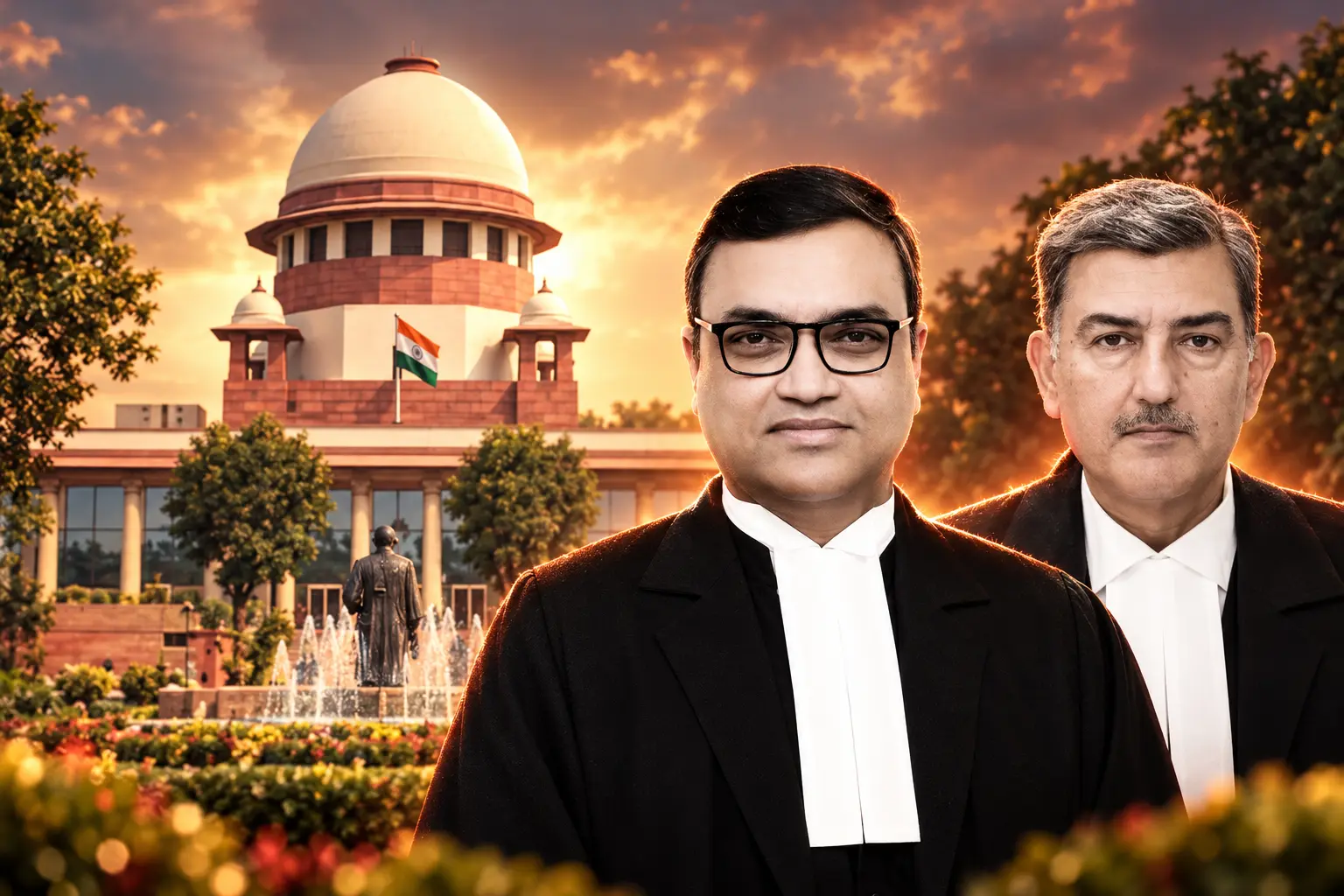
The Supreme Court on 8 September 2026 dismissed pay-parity appeals by directly recruited Higher Secondary School Teachers, Junior, in Kerala’s government-aided schools. Justices Dipankar Datta and Sheel Nagu held that identical classroom duties do not, by themselves, make a case for equal pay.
The teachers, hired under a 13 May 1998 government order, had asked for the full-time scale already paid to colleagues who reached the same cadre by transfer or promotion. Justice Datta wrote that last century’s matching of job titles is no longer the test, and that a claimant must show a full match on recruitment, qualifications, experience, appointment and responsibility.
The Bench Heard the Teachers and Stopped There
The reportable judgment, 2026 INSC 1004, is captioned G.P. Sangeetha and others versus the State of Kerala and others, with a companion appeal by Sharafudden M. versus Indu T.K. and others. The civil appeals were numbered 7565 to 7567 of 2011 and 9060 of 2011, which means the teachers had already spent 15 years in the Supreme Court before the dismissal.
Senior advocates V. Giri and Dr. Menaka Guruswamy argued for the several appellants and were heard at length. The State of Kerala and the Director of Higher Secondary Education were not called upon to answer. That procedural choice is as blunt as the holding: the bench treated the law as settled against the direct recruits once their own counsel had finished.
The dispute had already split the Kerala High Court at Ernakulam. A Single Judge on 22 December 2009 allowed the teachers’ writ petitions and found grave discrimination. A Division Bench on 22 March 2011 allowed an intra-court appeal by the state and reversed that relief. The Supreme Court has now left that Division Bench judgment in place.
Same Hours, Two Pay Packets in One Cadre
The short question, as Justice Datta framed it, was whether pay scales could differ inside one cadre of HSST Jr. teachers when qualifications, duties and responsibilities were admittedly identical. Both groups were teaching the same periods of work as part-time higher secondary teachers. Only one group was drawing full-time pay and allowances.
The higher packet was not a bonus invented for the new post. Promotees and transferees had been full-time permanent teachers in high schools or lower schools, with long service, before they moved up. Direct recruits were, in the High Court’s words, youngsters seeking employment as freshers. The state said the full-time scale kept the status those promotees already held, rather than handing them a fresh advantage over the new hires.
TWO GROUPS IN ONE HSST JR. CADRE
| Point of comparison | Direct recruits | Promotees and transferees |
|---|---|---|
| Route in | Direct recruitment under the 13 May 1998 order | Transfer or promotion from high or lower schools |
| Prior job | Entered as freshers | Full-time permanent teachers with long service |
| Classroom load | Same periods as part-time HSST Jr. teachers | Same periods as part-time HSST Jr. teachers |
| Pay at issue | Sought the full-time scale and allowances | Already paid full-time pay as status protection |
Giri and Guruswamy told the Court that keeping two scales inside one cadre, for the same workload, was discrimination. The bench was not willing to treat matching periods of work as matching value. Experience in rendering service as teachers, it said, was a valid line to draw.
How Equal Pay Changed After Randhir Singh
The Single Judge had relied on a stack of older Supreme Court cases, including Roshan Lal Tandon, railway and police decisions, and Jaipal versus State of Haryana. Justice Datta put it to counsel that those authorities were from the last century, and that the reading of equal pay for equal work had moved.
In 1982, in Randhir Singh versus Union of India, a police driver in Delhi won the argument that the principle was more than a slogan. The Court read Articles 14 and 16 with the Preamble and with Article 39(d), which tells the State to secure equal pay for equal work for both men and women. Matching a designation, teacher with teacher, accountant with accountant, clerk with clerk, driver with driver, could be enough to claim parity.
This bench said that expansive, anti-exploitation reading has been recast as a strict test based on service rules. The shift, it wrote, began with State Bank of India versus M.R. Ganesh Babu in 2002 and ended with the Bihar Secondary Teachers Struggle Committee ruling in 2019. Along the way, three-judge benches in Government of West Bengal versus Tarun Kumar Roy and State of Haryana versus Charanjit Singh warned that the doctrine has no mechanical application, and that equal pay must be for equal work of equal value.
FROM THE 1998 ORDER TO THE 2026 DISMISSAL
- 13 May 1998: Kerala issues the government order under which the appellants were directly recruited as HSST Jr. teachers in aided schools.
- 2005, 2006 and 2009: Direct recruits file writ petitions in the Kerala High Court seeking the full-time scale paid to promotees and transferees.
- 22 December 2009: A Single Judge allows the petitions and finds discrimination.
- 22 March 2011: A Division Bench allows the state’s appeal and reverses that relief.
- 2011: Civil appeals reach the Supreme Court and sit there for 15 years.
- 8 September 2026: Justices Datta and Nagu dismiss the appeals; the file is digitally signed on 17 September 2026.
Teacher unions in other states still campaign as if sharing a designation were enough to win a pay case. This bench says that reading belongs with Randhir Singh’s century, not with the service-rules test it applied to Sangeetha’s cadre.
Experience Became the Line Kerala Could Draw
The Division Bench had already described the object of the state notifications. Full-time pay for promotees, it said, was retention of the status they enjoyed before promotion, a recognition of service in the lower schools. Direct recruits had not held that status. Article 14, the Supreme Court repeated, permits a reasonable classification based on qualities of the people grouped together, and in service matters merit or experience can be a basis for pay in order to promote efficiency.
In the last century, following the decision in Randhir Singh v. Union of India, this Court treated equal pay for equal work as an expansive anti-exploitation principle under Articles 14 and 39(d), where the mere sameness of designation, teacher with teacher, accountant with accountant, clerk with clerk, driver with driver, was sufficient to claim parity. In this century, however, beginning with the decision in State Bank of India vs. M.R. Ganesh Babu and ending with State of Bihar vs. Bihar Secondary Teachers Struggle Committee, the doctrine has been recast as a strict test based on service rules.
Justice Dipankar Datta, Supreme Court of India, G.P. Sangeetha v. State of Kerala, 8 September 2026
Ganesh Babu had already said equal pay cannot be judged by the mere volume of work, because reliability and responsibility can differ even when functions look the same. A bona fide value judgment by the people who fix scales, tied to an intelligible criterion, would not be discrimination. The Kerala classification, this bench held, had that nexus: longer teaching experience on one side of the cadre, freshers on the other.
The teachers pointed to a Calcutta High Court decision in State of West Bengal versus Anirban Ghosh and to the fact that a special leave petition against it had been dismissed. The Supreme Court refused to follow that High Court ruling. Binding precedents collected in the Bihar teachers case had not been placed before the Calcutta bench, it said, and a dismissed special leave petition did not force a different view.
What a Claimant Must Prove for Pay Parity
The working test is now a checklist, not a job-title comparison. Functional similarity of work, the Court said, is no longer enough. A writ court can still step in, but only after a host of factors are lined up on both sides of the comparison.
THE PARITY TEST THE COURT SET OUT
- Source of recruitment: The two groups must have entered through the same channel, not one by direct hire and the other by promotion or transfer.
- Qualifications and experience: Educational qualifications and length of relevant service must match, because either can support a different scale.
- Mode of appointment: The claimant must show appointment through a constitutional process that is comparable, not merely a similar-looking post.
- Responsibility and accountability: The nature of duties, reliability and confidentiality can justify different pay even on the same designation, if the split is bona fide.
- Equal value: The work itself must be of equal value, not only of equal volume or equal hours in the timetable.
If there is complete parity on those points, and equal pay is claimed for equal work of equal value, the writ court can grant relief. Otherwise not. That last clause is the one that ends Sangeetha’s case. The two groups could not claim equivalence in experience as teachers, so experience remained a valid criterion for different scales.
Even employees holding the same posts and doing similar work, the bench noted, may be paid differently where the degree of responsibility, reliability or confidentiality differs, provided the classification is reasonable and tied to its object. Educational qualifications, merit and the fact that an employee did not go through the same recruitment process can each make a difference in an appropriate case.
The Wage Code Still Speaks of Similar Work
The constitutional test in this judgment is a service-law gate under Articles 14 and 39(d). It is not the same track as the statutory gender rule in the Code on Wages, 2019, which subsumed the Equal Remuneration Act, 1976. Section 3 of the Code tells employers there shall be no discrimination on the ground of gender in wages or recruitment for the same work or work of a similar nature, a phrase the labour ministry’s own FAQs extend to transgender employees.
A gazette notification of the Ministry of Labour and Employment appointed 21 November 2025 as the date on which sections 1 to 41 of that Code came into force. Those sections include the gender-pay duty. Sangeetha’s appeals were not a gender claim, and the Code does not decide whether two routes into one government cadre must carry one scale.
The statutory line is still “same work or work of a similar nature.” The Supreme Court’s line for government teachers is complete parity, including experience and the source of recruitment. Direct recruits who teach the same hours as promotees can lose on the second line even when a lay reader would say they do the same job. The appeals were dismissed on those terms, pending applications were disposed of, and the 22 March 2011 judgment of the Kerala High Court now stands.
Frequently Asked Questions
What Is the Case Name in the Kerala Equal Pay Ruling?
The lead caption is G.P. Sangeetha and others versus the State of Kerala and others. A connected civil appeal, Sharafudden M. versus Indu T.K. and others, was heard with it. The file numbers are Civil Appeal Nos. 7565-7567 of 2011 and Civil Appeal No. 9060 of 2011, and the neutral citation is 2026 INSC 1004.
What Did the Court Do With the Calcutta High Court Decision?
The appellants relied on State of West Bengal versus Anirban Ghosh and on the dismissal of a special leave petition against that High Court ruling. The Supreme Court held Anirban Ghosh per incuriam to the extent it conflicted with binding precedents collected in the Bihar Secondary Teachers Struggle Committee case, and said a dismissed special leave petition was not a reason to take a different view.
Does the Code on Wages Change This Result for the Teachers?
No. Section 3 of the Code on Wages, 2019, bars gender discrimination in pay for the same work or work of a similar nature and is a different legal track from an Article 14 claim between two mixed-entry groups in one government cadre. The Kerala appeals were about direct recruits versus promotees, not about pay by gender, so the Code’s similar-work test does not reopen the dismissed civil appeals.
Which Kerala High Court Judgment Now Stands?
The Division Bench judgment dated 22 March 2011 in W.A. No. 1351 of 2010, brought by the State of Kerala and the Director of Higher Secondary Education, stands affirmed. The Single Judge’s common order dated 22 December 2009 in W.P.(C) Nos. 12790 of 2005, 12012 of 2006 and 10520 of 2009, which had granted the full-time scale, remains reversed.
Disclaimer: This article is news reporting and analysis of a decided Supreme Court judgment. It is informational only and is not legal advice, is not an opinion on any pending claim, and is not a substitute for advice on service, pay or writ remedies. Readers who are considering a pay-parity claim, a service appeal or any other legal step should consult a qualified advocate or service-law practitioner who can apply the facts of their own cadre and rules. Case names, dates, file numbers and the status of the Kerala appeals reflect the judgment and related public records as retrieved for this report and may be updated by later orders or corrections.

A CubeSat Will Age Whisky That Never Comes Home

A Charity Quote Cost Shia LaBeouf the FKA twigs NDA

Looker Turned a Model’s Body Into Ad Inventory

Infinity Ward Bets a Paid DMZ Will Stick This Time

Disney Sidesteps a Kimmel Renewal as Failla Cites Losses

How to Get Pre Boarding on Southwest – Skip the Line with These Tricks

False AI Intel Nearly Put US Crews on a Chinese Ship

Tim Cook’s $4.6 Trillion Apple Still Runs on One Phone

Dunes Air Sues Nora Fatehi Over Its Luxury Jet

OpenAI Posts a Navier-Stokes Proof Clay Has Not Touched
-
 TRAVEL3 years ago
How to Get Pre Boarding on Southwest – Skip the Line with These Tricks
-
 NEWS1 month ago
False AI Intel Nearly Put US Crews on a Chinese Ship
-
 BUSINESS2 months ago
Tim Cook’s $4.6 Trillion Apple Still Runs on One Phone
-
 ENTERTAINMENT2 months ago
Dunes Air Sues Nora Fatehi Over Its Luxury Jet
-
 NEWS2 months ago
OpenAI Posts a Navier-Stokes Proof Clay Has Not Touched
-

 LIFESTYLE3 years ago
How Often Do You Have to Change a Monkey’s Diaper? The Truth About Pet Monkeys
-

 NEWS2 months ago
Australia Treats Cloud Software Payments as Taxable Royalties
-

 LIFESTYLE3 years ago
How Long Does It Take for Armpit Hair to Grow? The Stages of Hair Growth and How to Shave It